
Category: Essays
-
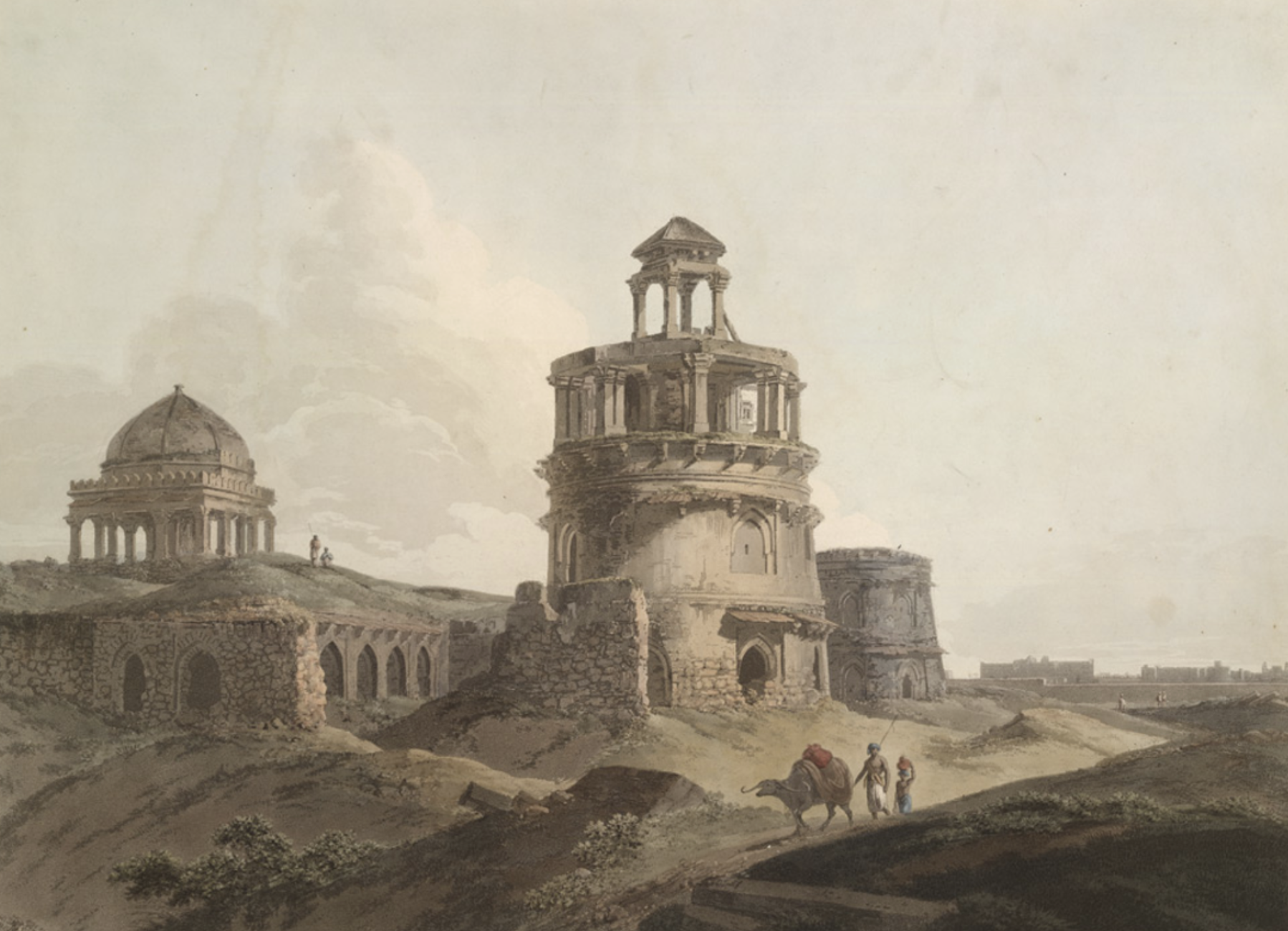
How an Anglo-Gujarati Mufti Kept the Vows of Shāh Walī Allāh in America
This essay charts both the life and the afterlife of Shāh Walī Allāh al-Dihlawī, the preeminent thinker of the late Mughal empire, whose synthesis of revelation, philosophy, and mysticism sought to rescue Islam’s intellectual tradition amid imperial decay. Set within the luminous yet collapsing world of eighteenth-century Delhi, it follows Walī Allāh’s education, his journeys…
-
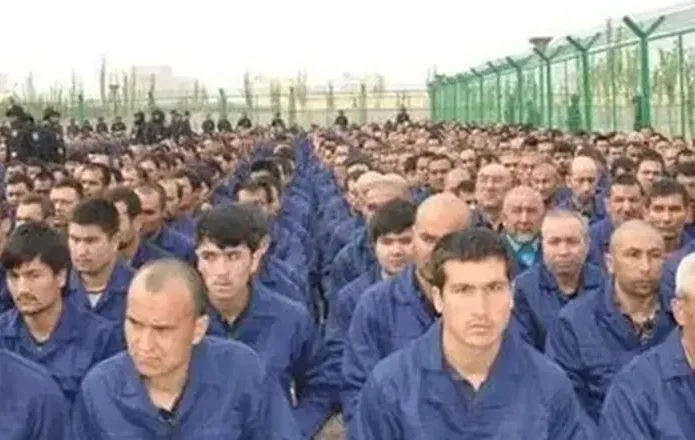
China’s Occupation and Genocide of East Turkistan: Why the World Must Sustain Its Outcry
Uyghur-American advocate Aydin Anwar outlines the severe oppression faced by Uyghurs in East Turkistan, documenting personal experiences and historical context. It discusses the Chinese government’s systematic campaign of genocide, including mass internment, forced sterilization, and cultural erasure, while stressing the need for global awareness and action against these atrocities, which often goes unrecognized.
-

The Mycelial Ummah: An Ontological Framework for a Decolonial and Eco-Theological Islamic Future
The text explores the idea of the “Mycelial Ummah,” a conceptual model merging mycelial networks’ biological principles with Islamic ideals. It advocates for decentralized intelligence in governance, symbiotic economic structures via zakāt, and resilience through interconnectedness, promoting an eco-theological framework that shapes community dynamics in contemporary Islamic thought.
-

The Ghazalian Turn is the Beginning of Islamic Philosophy
If you were to ask a historian of philosophy to give you an elevator summary of the story of philosophy in the Islamicate world, the story would go something like this: “The rapid territorial expansion of early Islam led to an encounter with Greek philosophy; translation ensued; the new philosophy instigated a productive tension between…
-

The Soul: An Exploration through Intuition and Epistemology
The author explores the concept of the Soul, its significance in epistemology, intuition, and ethics, referencing historical theological perspectives. It emphasizes the interconnection between the Soul’s faculties and ethical understanding, highlighting intuitive knowledge’s role in human cognition.
-

On Love, Duty, and Suffering
The phenomenal world is a theater of manifestation of the Divine Names, with all things manifesting some Divine Attribute or aspect. A man and a woman thus bring forth their own symbolisms, thereby manifesting, through nature and action, might, nobility, and beauty. Such is where union and unification present themselves in the image. It is…
-

Understanding the Self Through Muhammad Iqbal’s Philosophical and Political Thought
What is ḳhūdī? For Muhammad Iqbal, one of the foremost celebrated intellectuals and poets of South Asia, his falsafa-e-ḳhūdī (philosophy of the self) is one of the most discussed elements of his intellectual thought. As a philosopher, poet, lawyer, and more, Iqbal is a prominent figure both in South Asian households and in scholarly circles,…
-

Abderrahmane Taha: A Sublime Life of Tajdīd
Taha Abderrahmane is a larger-than-life philosopher from Morocco— his life has spanned a plurality of Muslim crises and he has sought to set forth, through logic, Kalām, language, and Usūl al-fiqh, an entirely new way of living by which non-Muslims may see the dazzling wonder of Islamic civilization, and by which Muslims may abandon all…
-

Language is a Grandmother: The Long and Torturous Death of Urdu in America
Language is a Grandmother is a reckoning with the inheritance of Urdu for Muslims in America, seeking to provoke devastating self-interrogation in a critical moment: What will be the legacy of Urdu in America? What should be its legacy? What is Urdu’s relationship to Islam? The essay twins the life of Urdu with the life…