
Tag: Medicine
-

Whose Body? Islam, Surrogacy, and the Limits of Market Autonomy
Meghan Trainor’s announcement of her third child’s birth through surrogacy is the latest example of the ongoing debate over commercial surrogacy, particularly in wealthy circles. The discussion addresses the theological and philosophical considerations regarding bodily autonomy, consent, and the commodification of reproduction, emphasizing the Islamic perspective that prohibits such practices based on moral principles.
-
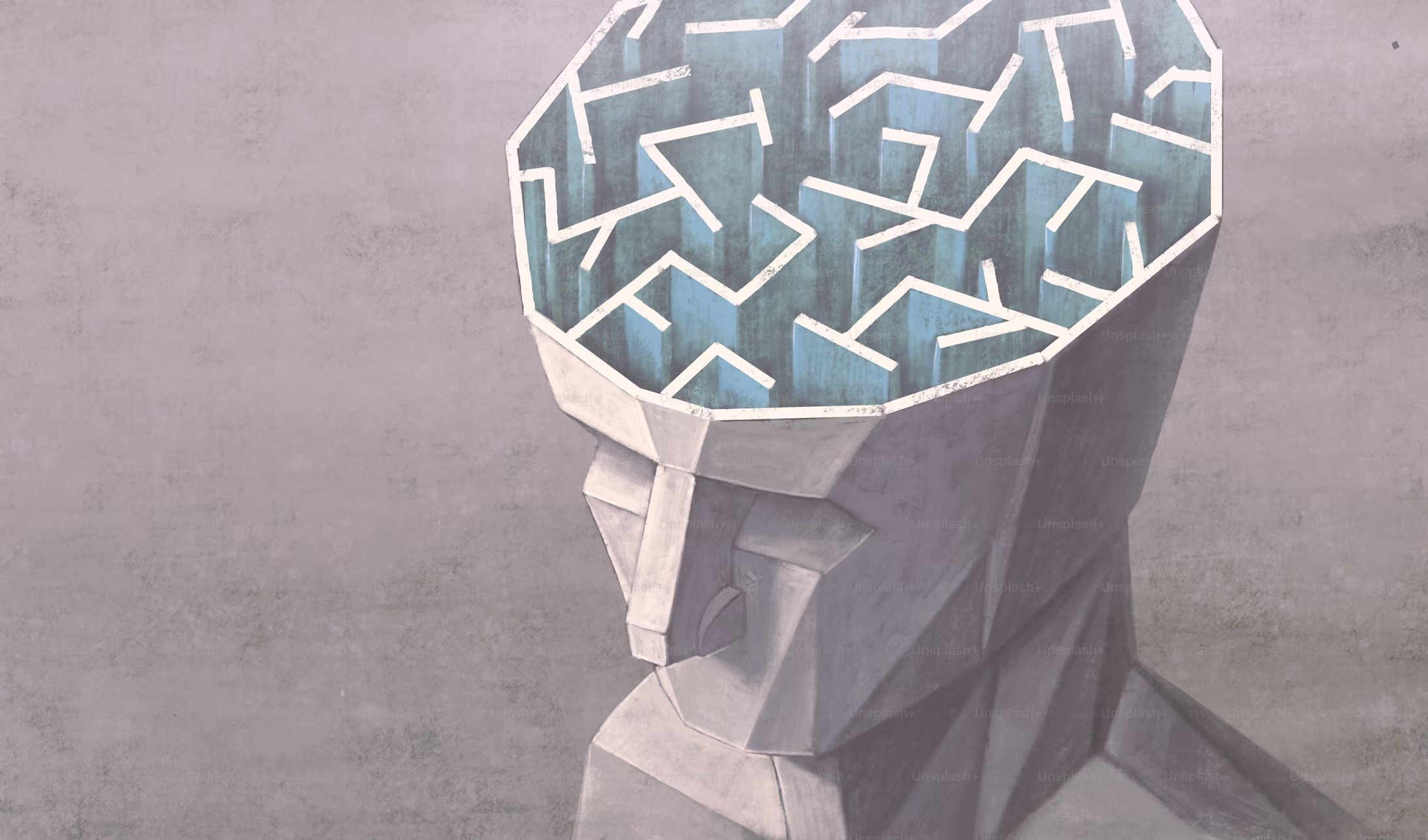
Decolonising Knowledge: Applications in Psychiatry
The author emphasizes the need for Muslims, especially in medicine and psychiatry, to reclaim their intellectual heritage from the effects of colonization, which has led to a secularization of knowledge. He advocates for a holistic understanding of knowledge, merging secular and sacred perspectives, particularly in psychiatric practice, to address modern mental health crises effectively.
-
From Principles to Patients: Darul Qasim College’s Approach to Islamic Bioethics
What is the ‘Muslim’ response to June 24th, when the Supreme Court overturned Roe v. Wade, allowing states to develop their own standards for abortion laws? How can shifāʾ — the all-encompassing cure mentioned in the Quran — inform the modern drug development pipeline? Where can Muslim physicians draw on their desire for ihsān (excellence)…
-
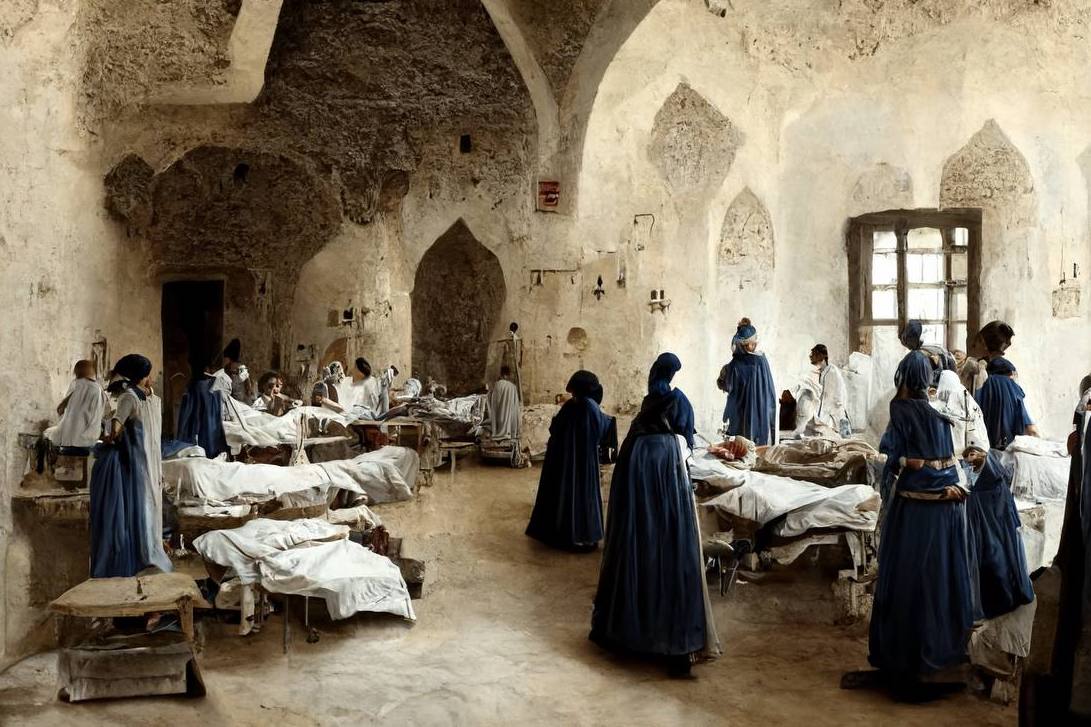
The Historical Nursing Event: Rufaidah bint Sa’ad
As October is Islamic Hertiage Month, it is befitting to discuss an important Muslim figure in the history of nursing: Rufaidah bint Sa’ad. Muslim civilization boasts a rich tradition of medicine; the science of medicine, known in Arabic as Al-Tibb Al-Nabawi (Prophetic Medicine), began with the Prophet Muhammad ﷺ and continues to be practiced today.…
-
Towards Implementing an Islamic Framework in Medicine
A transcript of Shaykh Amin Kholwadia’s lecture delivered in Amman, Jordan in 2017 regarding the impact of Maturidi kalam on bioethics was published this month.[1] Earlier this summer, I released an article on challenges and opportunities for Muslims to become live players in American healthcare. For the theoretical frameworks of scholars and researchers to manifest,…
-

Shaykh Amin Kholwadia on Maturidi Kalam and Bioethics
When a Muslim physician or scientist is going to work and engaging with his duties in life, he’s energetic, motivated, and he’s contributing to the beneficence of the world, then he will be much clearer in his intention and he will be much more sincere. We have a plethora of doctors in the US, but…
-

Islamic Investment in U.S. Healthcare
Medieval hospitals in the Islamic world were backed by endowments (Waqf), and the impoverished were supported through charity (Sadaqah and Zakat-ul-fitr).
-

Why Scientism Shouldn’t Inform Medical Ethics
The ongoing debate regarding the case of Alfie Evans has brought medical ethics once again under the spotlight, with particular scrutiny on the relationship between medical ethics and scientism.