
The state of Jammu and Kashmir has long been considered contentious territory, subject to rivalry between two nuclear powers: India and Pakistan. Both countries claim sovereignty over Kashmir, deeming it a coveted “territory of desire.” While India sees it as an integral part of its secular nationalist identity, Pakistan views the Kashmir issue as an item on its unfinished agenda concerning the Partition and fulfillment of a Muslim state.
In this context, Shahla Hussain’s work, Kashmir in the Aftermath of Partition, presents a fresh perspective on post-partition Kashmir, moving beyond political and ideological narratives. The book highlights the diverse meanings of “Azaadi” (freedom) throughout history, amplifying the voices of local Kashmiris who share a collective sense of Kashmiri identity that transcends national boundaries. It explores the entwined concepts of “Aazadi” and “honor,” while also examining the perception of Kashmiri resistance by the outside world, which views it as a conflict fuelled by external forces rather than a reaction to internal dissatisfaction with the Indian government.
Hussain begins by examining the pre-Partition era, tracing the evolving connotations of freedom for Kashmiris. Under the rule of Mughals, Afghans, and Sikhs, the desire for freedom arose from socioeconomic and political aspirations, driven by a longing to escape oppressive taxation, injustice and discrimination. However, the communal governance and policies of the Dogra rulers exacerbated the plight of Kashmiri Muslims, sparking the flames of desire for political independence.
While territoriality, state sovereignty, and national security have received considerable attention in the context of Kashmir, the concept of freedom within Kashmir’s social-political culture has remained underexplored. This is where Hussain’s work proves valuable, as it unravels the complexities of freedom for Kashmiris from an anthropological perspective. In situating the idea of freedom within a historical framework and giving due consideration to popular discourse, Hussain offers a novel and thorough understanding of Kashmir’s identity and struggles.
A number of historical events are recounted in the course of the book, such as uncovering the National Conference’s failure to secular claim and the discontent among the region’s Muslim majority — events that led to a movement against Dogra rule. The book also examines the emergence of insurgents who underwent torture after challenging the rigged elections of 1987. It concludes with an assessment of Pakistan’s state-sponsored tribal raid and Kashmir’s temporary accession to India in 1947.
Paying special attention to the period following Sheikh Abdullah’s arrest in 1953, the book highlights how successive political regimes collaborated with the Indian National Congress, advocating Kashmir’s integration into India. It also charts the progression of Sheikh Abdullah’s vision, from advocating for an integrated Indian Kashmir to considering an independent Kashmir due to the failures of Indian secularism and the suppression of Kashmiri Muslims.
With the end of Dogra rule, the concept of freedom in Kashmir transformed as the National Conference chose to join India in the hope of preserving Kashmir’s autonomy. However, India had no such intentions and went on to use Pakistan’s interference in Kashmir as cover for political gains, justifying their intervention and suppression of pro-Pakistan elements.
Shifting the focus to the aftermath of the India-Pakistan dispute over Kashmir, the book delves into themes of identity and loyalty within the former princely state of Jammu and Kashmir. It addresses the resentment among Kashmiris, fostered by the realization that the promised freedom resulted in the artificial division of Kashmir and its involuntary entanglement in an international conflict. The book also explores how transnational solidarity movements during the 1960s and 1970s shaped Kashmiri aspirations for freedom, aligning them with anti-imperialist and anti-capitalist frameworks.
A crucial focus of the book is the dive into politics surrounding Kashmir’s resources, particularly the trade routes considered vital for its self-sufficiency. Hussain examines the resistance discourse, shaped by activists, particularly the Plebiscite Front, who aimed to mobilize the marginalized Muslim majority against India’s control over Kashmir. The movement advocated for a plebiscite and emphasized the significance of Kashmir’s natural inter-subcontinental road links in finding a long-term solution that respected local Kashmiri voices.
The partition of Kashmir resulted in severe social and economic devastation. Hussain delves into the political economy of Kashmiri resistance from 1953 to the 1980s, examining how India’s development policies created a class of collaborators and transformed the political and social landscape of Kashmir. During Bakshi’s reign, Kashmir became heavily dependent on aid and grants from India, leading to economic integration in 1954. G.M. Sadiq’s tenure saw the loss of internal autonomy in 1965 when Article 356 was applied to Jammu and Kashmir. Hussain’s work exposes the prevalent corruption rampant during collaborative regimes, where economic benefits were selectively distributed, leading to economic hardships, violence, and exile for many.
The closure of the Jhelum-Valley Road, which severed trade connections, also had a significant impact on the economy. Kashmiris on both sides of the ceasefire line experienced deteriorating conditions and harsh treatment, as depicted in letters exchanged between the two regions. In working her way through this narrative Hussain sheds light on the dire consequences of partition and its effects on the lives and livelihoods of Kashmiris.
When examining the role of Islam in Kashmiri resistance, Hussain explores the significance of religious identity and symbolism in Kashmiri Muslim protests. She contextualizes the articulation of Islamist ideology within the feelings of general disillusionment by Kashmiris towards political elites and the global spread of Islam. Religious organizations like Jamaat-i-Islami gained influence among rural elites, advocating for Kashmir’s integration with Pakistan and shaping its future politics. However, the Pakistani state struggled to handle the influx of Muslim refugees and failed to implement policies for economic modernization and job creation. This neglect resulted in poverty, inequality, and stagnation.
Hussain’s political stance, clearly evident throughout the book, asserts that Kashmir belongs to the people of the region, thereby transcending the statist claims of India and Pakistan. She highlights the role of Kashmiris in the transnational community, shaping international perceptions of the political exclusion experienced by Kashmiris on both sides of the border.
Finally, Hussain highlights the polarization between Hindus and Muslims in Kashmir, stemming from years of violence against Kashmiri Muslims, which led to the displacement of Kashmiri Pandits to other parts of India or the Hindu-majority Jammu region. Hussain underscores that calls for jihad in Kashmir were borne not solely by the fight for Islamic sovereignty, but also as a means to protect Muslim bodies from political violence, rape, and other forms of brutality. The strength of the book lies in acknowledging not only the experiences of Kashmiri Muslims but also the violence and atrocities faced by Kashmiri Pandits in the aftermath of the insurgency. Kashmir in the Aftermath of Partition is a well-written, meticulously researched book, that draws from extensive archival sources, despite the challenges posed by national security concerns. It centers on the experiences and narratives of local Kashmiris, providing a unique perspective on the “Kashmir question,” making it a valuable resource for students, researchers, historians, policymakers, and anyone interested in gaining a deeper understanding of South Asia, the social anthropology of state violence, and the intricate complexities of Kashmir.
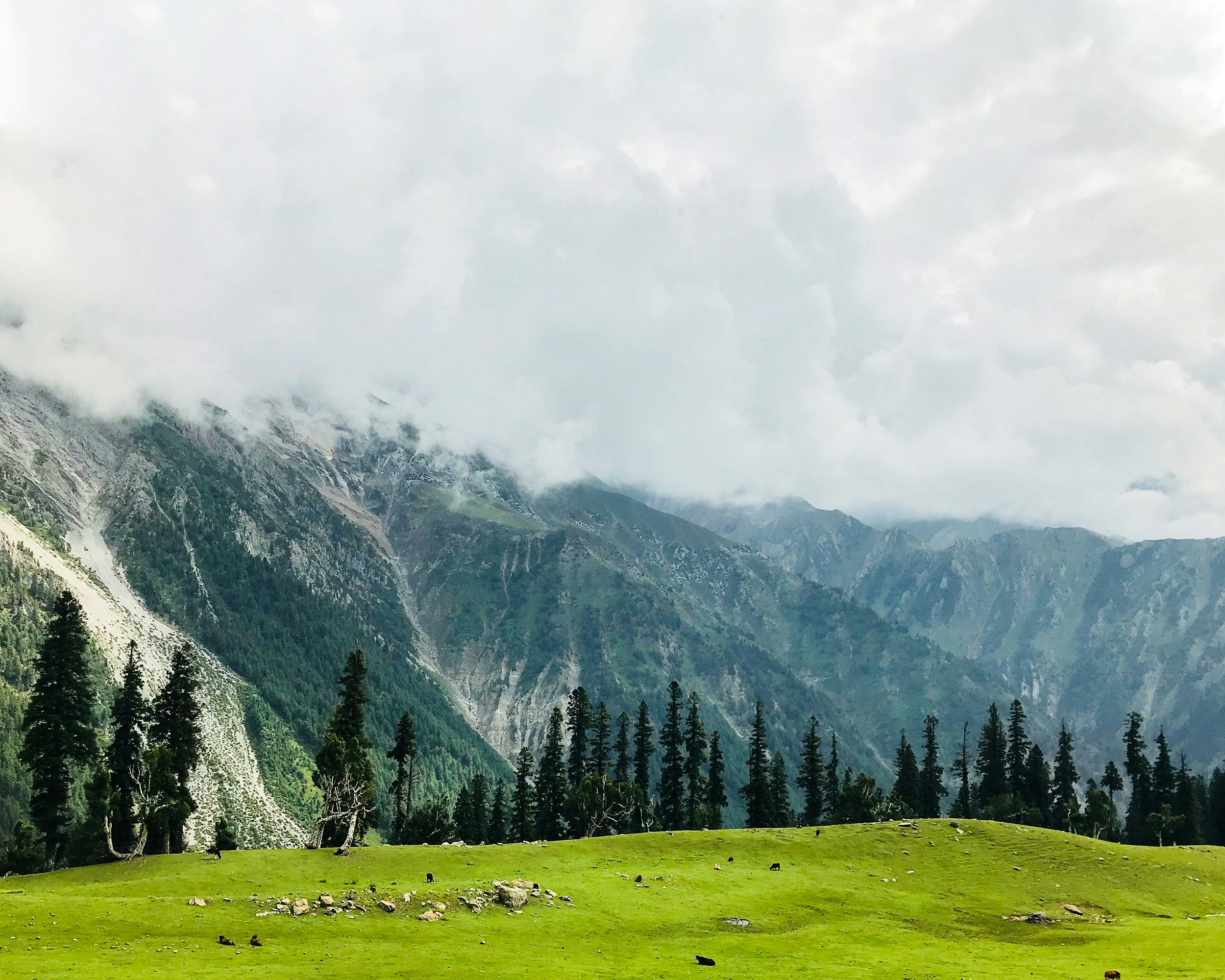
Photo by Bhavesh Sawant on Unsplash
Disclaimer: Material published by Traversing Tradition is meant to foster scholarly inquiry and rich discussion. The views, opinions, beliefs, or strategies represented in published articles and subsequent comments do not necessarily represent the views of Traversing Tradition or any employee thereof.
Muhammad Nadeem
Muhammad Nadeem, Founding Editor ofMountain Ink Magazine, is a freelance book reviewer from Indian Occupied Kashmir

Leave a Reply