
Introduction
In the vast northwestern region of the People’s Republic of China lies Xinjiang, home to the Uyghur people, a Turkic-speaking, predominantly Muslim ethnic group whose historical, cultural, and religious identity diverges sharply from the Han Chinese majority. The Uyghurs are descendants of ancient Turkic tribes and once ruled powerful kingdoms such as the Uyghur Khaganate (744-840 CE) in Central Asia. After the fall of their empire, they gradually migrated to what is now Xinjiang and established vibrant trading cities along the Silk Road. This region, often referred to by Uyghurs as “East Turkestan,” has a long history of autonomy and cultural flourishing, serving as a bridge between Chinese, Persian, and Islamic civilizations.
However, this independence has repeatedly clashed with imperial interests. The Qing dynasty, also known as the Manchu dynasty, was the last imperial dynasty of China, ruling from 1644 to 1912. From the Qing conquest of Xinjiang in the 18th century to its formal incorporation into the modern Chinese state in the 20th century, Uyghurs have often been on the margins of Chinese governance. During the Republican era and under Communist rule, waves of Han migration and centralized policies diminished Uyghur autonomy. Despite two brief periods of independence in the 20th century (1933-34 and 1944-49), Uyghur aspirations for self-determination have been systematically suppressed.
Over the past decade, the Uyghurs have come to symbolize one of the most harrowing humanitarian crises of the 21st century. With mass internment camps, biometric surveillance, religious suppression, and forced assimilation policies in full effect, China’s campaign against the Uyghurs has been described by scholars and activists alike as a form of cultural genocide. China’s strategic manipulation of global counter-terrorism discourse post-9/11 enabled the state to construct a narrative of the Uyghur as a potential terrorist threat, thus providing ideological cover for this tragedy.
Professor Sean R. Roberts in his 2020 book The War on the Uyghurs convincingly demonstrates that the Uyghurs’ situation is rooted in a long colonial history. From the Qing conquest of the region to the current Communist regime, Xinjiang has remained an internal frontier subject to control, surveillance, and settlement. But it was the post-9/11 global War on Terror that allowed Beijing to frame Uyghur resistance as Islamist terrorism. Despite scant evidence, the designation of the Eastern Turkistan Islamic Movement (ETIM) as a terrorist organization by the United States in 2002 allowed China to suppress Uyghur religious and political expression under the curtain of security. Roberts terms this a “self-fulfilling prophecy”: state repression has led some Uyghurs to seek shelter abroad, while a tiny fraction have joined militant struggles in foreign conflicts, further reinforcing Beijing’s narrative.
Yet, as this study argues, the Uyghur response is not primarily in the form of militancy. The majority consists of migration, resilience, and re-rooting. Fleeing China’s policies, tens of thousands of Uyghurs have settled in countries such as Turkey, Kazakhstan, Germany, and the United States. Much like the Prophet Muhammad’s (ﷺ) Hijrah to Medina, which laid the foundation for the first Islamic polity through migration, treaty, and ethical solidarity, these diaspora communities have built mosques, schools, advocacy groups, and media networks to preserve their faith, language, and memory. In cities like Istanbul and Almaty, Uyghurs have created and endured new forms of belonging that challenge state-imposed erasure. These movements not only underscore the trauma of displacement but also represent a form of spiritual and social reconstruction.
Thus, I set the stage for a broader inquiry: how does the Uyghur diaspora illustrate a model for refugee-led integration and social cohesion? Can the Hijrah be reread today not only as a sacred moment in Islamic history but also as a living paradigm for understanding contemporary Muslim displacement? And finally, how does the international community, especially Muslim-majority states, respond with complicity, silence, or solidarity in the face of China’s campaign against one of the most vulnerable Muslim minorities of our time?
Historical Background
Origins of the Uyghur People
The Uyghurs trace their origins to the Uyghur Khaganate (744-840 CE), a dominant Turkic confederation in the Mongolian region that succeeded the Göktürks. This polity represented one of the most organized Turkic empires before its fall due to internal political disputes and the invasion of the Kyrgyz.1
Following its collapse, many Uyghurs migrated into the Tarim Basin, a desert region bordered by the Tianshan Mountains, where they founded city-states such as Kashgar, Khotan, and Turpan. These centers became significant hubs along the Silk Road, facilitating exchanges between Chinese, Persian, Arab, and Indian civilizations.2
Islam began to influence the region significantly in the 9th and 10th centuries, replacing earlier Buddhist traditions. The Karakhanid dynasty, a Turkic dynasty that ruled in Transoxiana from the 9th to the 13th centuries, converted to Islam, marking a turning point in Uyghur religious identity.3 This transformation fostered the growth of Islamic scholarship, Sufi networks, literary works written in Chagatai and later modern Uyghur script, and created a hybrid identity that merged Turkic, Islamic, and Silk Road influences.
The conquest of the Uyghur homeland by the Qing Empire in 1759 marked a significant turning point in Uyghur history. The Qing, a Manchu-led dynasty ruling over China, conquered the region and renamed it “Xinjiang,” meaning “New Territory,” asserting it as an extension of Chinese imperial control. However, Qing rule was met with continuous resistance and intermittent uprisings by local Turkic-Muslim populations who viewed the occupation as an imposition on their political and religious autonomy.1
During the Republican period (1911-1949), instability persisted between warlords and competing nationalist groups. They sought to control Xinjiang, often employing violent means. This era witnessed continued unrest among Uyghur populations and attempts at self-rule.
The Uyghurs twice declared independence in the 20th century. The First East Turkestan Republic (1933-34), based in Kashgar, was short-lived, but it symbolized a bold claim of Turkic-Muslim self-rule grounded in Islamic law, using Arabic-scripted Uyghur language and promoting Islamic education. This republic was soon crushed by Chinese Muslim warlord Ma Zhancang as part of the broader KMT-aligned Chinese military effort.1
A decade later, with Soviet support, the Second East Turkestan Republic (1944-49) emerged in the Ili Valley near the border of Kazakhstan. While Soviet advisors heavily influenced the administration, the republic sought to build Turkic unity and religious-cultural autonomy.2 However, Stalin’s political deals with Mao Zedong led to the republic’s negotiated dissolution in 1949, when its leaders died in a mysterious plane crash on the way to Beijing. This led to the region’s incorporation into the People’s Republic of China.4
Communist Policies and the Xinjiang Conflict
Following the establishment of the People’s Republic of China in 1949, the Chinese Communist Party (CCP) rapidly moved to consolidate control over Xinjiang. Initial policies involved extensive land reforms that aimed to redistribute land from landlords to peasants, but these also disrupted traditional Uyghur agricultural and social structures.1
The conventional Uyghur agrarian system was rooted in communal land tenure, kinship-based labor cooperation, and the management of scarce irrigation resources through local networks. CCP land reforms, influenced by Marxist-Leninist principles, forcibly redistributed land, eliminating religious endowments (waqf), abolishing local elites (such as beys and aqsaqals), and replacing centuries-old practices with state-directed collectivization. This not only upended economic livelihoods but also weakened the authority of elders and religious figures who were custodians of social cohesion and conflict resolution within Uyghur villages.
In addition, the dismantling of mahalla (neighborhood) councils and local customary law led to a breakdown of social norms and trust networks. Families who had traditionally cultivated land together under Islamic moral frameworks were now absorbed into unfamiliar work units with mandatory political indoctrination. The introduction of Han agricultural settlers under the state’s reclamation projects further exacerbated this disruption, as Uyghurs were often pushed to marginal lands or into state-run collectives where they lost autonomy over both economic and cultural practices.5
The state promoted atheism and closed many religious schools, restricting Islamic education and spiritual expression. Further, beginning in the 1950s and continuing for decades, large-scale state-sponsored migration of Han Chinese into the region was encouraged as part of a broader strategy to integrate Xinjiang more fully into the nation-state, significantly altering the demographic balance.4 Subsequent policies under President Xi Jinping’s leadership since 2013 intensified, including mass surveillance, the abolition of Islamic education, bans on traditional dressing style, and linguistic Sinicization policies replacing Uyghur-language instruction with Mandarin. Reports from international organizations and investigative journalists indicate forced labor in factories, the systematic destruction of mosques and Islamic sites, and programs aimed at severing Uyghur children from their families and faith through state-run boarding schools.6 Such measures have led to widespread international concern and accusations of cultural genocide.7
Migration Patterns and Diaspora Formation
The migration of Uyghurs from Xinjiang intensified markedly after the 2009 Urumqi riots, which were a flashpoint in the long-standing ethnic tensions between Uyghurs and Han Chinese in the region. The violence and the harsh government response, including mass arrests, surveillance expansion, and curfews, created a dramatic climate of fear and repression that pushed many Uyghurs to seek refuge abroad. The Chinese government’s “Strike Hard” campaign, a series of nationwide anti-crime campaigns launched by the Chinese government against so-called separatism and extremism, further accelerated this migration by criminalizing ordinary expressions of Islamic faith and Uyghur cultural identity.4 Human Rights Watch reported that surveillance tools such as facial recognition, DNA sampling, and monitoring of digital communications were employed to track and suppress dissent.8
Central Asia, particularly Kazakhstan and Kyrgyzstan, became the first destinations for Uyghur refugees due to geographic proximity and shared Turkic linguistic and cultural heritage. Many Uyghurs have historical ties to these regions, where smaller Uyghur communities existed even before the recent migration. However, political pressures from China have led Central Asian governments to increasingly restrict Uyghur activism and visibility. In Kazakhstan, for instance, some Uyghur activists have faced detention or deportation.9
Turkey has emerged as a significant hub for Uyghur migration due to deep-rooted linguistic, ethnic, and religious relations. As of 2023, Istanbul hosts the largest Uyghur diaspora outside of Central Asia.8 The Turkish government has generally been more welcoming than other states, granting shelter and allowing the formation of Uyghur political organizations, media outlets, and educational institutions.4 However, Turkey’s increasing political and economic ties with China have led to growing fears among Uyghurs about surveillance and possible deportation. Nonetheless, the Uyghur community in Turkey remains vibrant, actively advocating for international awareness and policy intervention.3
Uyghur migration has also extended into Europe and North America in countries such as Germany, the U.S. and Canada. These countries offer relatively strong refugee protection and legal pathways for permanent settlement. In Germany, Uyghurs have engaged in human rights activism, legal battles for refugee status, and collaboration with international NGOs.10 Similarly, in the U.S. and Canada, Uyghur diasporas have organized conferences, protests, and policy campaigns targeting China’s policies in Xinjiang. Yet, diaspora life is not without its struggles: many Uyghurs face challenges in language acquisition, employment, and trauma recovery, alongside fears for family members left behind.
Routes, Networks, Smuggling, Resettlement Challenges
The routes Uyghurs take to escape China are often treacherous, involving illegal border crossings, smugglers, and long overland treks through Southeast Asia. Many have transited through countries such as Thailand, Malaysia, or Pakistan, where they risk detention or deportation to China. The 2015 deportation of over 100 Uyghurs from Thailand back to China drew international condemnation and highlighted the vulnerability of Uyghur refugees in transit countries.8
As China’s restrictions on Uyghur mobility tightened, many Uyghurs seeking to escape suppression in Xinjiang turned to informal migration routes facilitated by underground networks and smuggling operations. These routes typically moved southward through China’s Yunnan province into Southeast Asia, passing through countries like Vietnam, Thailand, and Malaysia. From there, Uyghurs attempted to reach safer destinations such as Turkey. These journeys were filled with danger: migrants faced exploitation by smugglers, detention by foreign authorities. In some instances, entire families traveled with minimal resources, relying on word-of-mouth connections and support from diaspora communities or sympathetic NGOs. These migration routes were neither systematic nor safe, evolving in response to geopolitical pressures, repression, and human trafficking.
Upon arrival in host countries, resettlement posed a new set of challenges. In places like Turkey, Uyghurs encountered a mix of solidarity and difficulties: while there were significant efforts by civil society and government agencies to support them, legal uncertainties and language barriers limited long-term integration. In Southeast Asian countries, Uyghurs often found themselves in detention centers for extended periods, facing statelessness and threats of return to China. Moreover, China’s diplomatic pressure on other nations to deny shelter or deport refugees complicated resettlement efforts. Even in Western countries, Uyghurs faced surveillance, financial insecurity, and difficulties in family reunification due to China’s refusal to issue documentation.
Social Cohesion in the Diaspora
In the aftermath of forced migration, Uyghur communities in the diaspora have placed considerable importance on establishing their own institutions to preserve religious, educational, and cultural identity. In cities like Istanbul and Almaty, Uyghur-led mosques have served as safe places that re-establish faith-based cohesion and ensure the continuity of traditional practices.11
The presence of religious institutions also affirms the Uyghurs’ ability to reclaim spaces for spiritual expression denied to them in their homeland under restrictive Chinese policies, which have severely curtailed religious freedoms and targeted Islamic practices. Moreover, these diaspora mosques contribute significantly to intergenerational knowledge transfer, with older community members teaching language, history, and Islamic ethics to younger generations, thus preserving Uyghur identity and resilience after migration.
Some examples regarding Uyghur social cohesion in different fields include the Eyüp Sultan Mosque in Istanbu, a prominent Uyghur-led mosque that functions also as a community center for religious education and cultural events. The Uyghur Academy in Almaty, Kazakhstan, also offers education focused on Uyghur language, history, and culture, helping younger generations maintain their heritage in the diaspora. In the political arena, the World Uyghur Congress acts as an international political organization representing Uyghur interests, advocating for human rights, cultural preservation, and autonomy.
Additionally, cultural memory among the Uyghur diaspora is preserved and transmitted primarily through language, food, and oral traditions.12 Many Uyghur communities abroad have established weekend language schools, such as in Istanbul and Almaty, to teach children to read and write in Uyghur. Uyghur diasporic groups continue to pass down epic poetry like “Dastan of Alpamysh” and folk stories that celebrate resilience and justice. Storytelling sessions in mosques or cultural centers serve as intergenerational exchanges that reinforce values and communal memory.13
Case Studies
Istanbul
Over the past decade, specific neighborhoods in Istanbul, particularly in Zeytinburnu and Sefaköy, have become known as Uyghur enclaves where the community actively maintains its traditional lifestyle and language. Within these districts, Uyghur-owned shops, restaurants, and mosques form a visible cultural landscape, including the Özgürlük Mosque and the Uyghur School in Istanbul.14
Istanbul has emerged as a stronghold for Uyghur political activism. Organizations like the East Turkistan Education and Solidarity Association and the Uyghur Academy Foundation play crucial roles in raising international awareness, producing scholarship, and supporting Uyghur refugees, with frequent protests near the Chinese consulate, along with public events and World Uyghur Congress platforms.15
Almaty
In Almaty, Kazakhstan, the Uyghur community lives as a recognized minority within a broader Turkic cultural and linguistic landscape. As noted earlier, this shared ethnic and linguistic relationship with the Kazakh population has eased their integration and provided a supportive environment for the preservation of Uyghur identity. For example, the Uyghur-language schools in Kazakhstan are unique examples in Central Asia where ethnic education is not only permitted but also institutionally supported.16
Moreover, the Uyghur diaspora in Almaty actively participates in local political and cultural life, while also maintaining strong transnational ties with Uyghur communities in other parts of the world. The existence of Uyghur cultural associations and media outlets in Kazakhstan, such as “Meshrep,” provides a platform for advocacy and dialogue, although political sensitivities about China and Kazakhstan’s strategic alignment with Beijing have sometimes limited their public activism.
Comparative Reflection with Prophetic Hijra
The Hijrah of the Prophet Muhammad (ﷺ), the migration from Mecca to Medina in 622 CE, is employed here as a moral lens for interpreting contemporary forced migration in religious terms, rather than as a historical comparison. Indeed, while the Hijrah of the Prophet Muhammad (ﷺ) was a religious migration motivated by God, its central importance includes its founding ideals: protecting the persecuted, building righteous communities, the moral debt owed by migrants to host societies, and constructing a more just, plural society.
A key aspect of the Hijrah was the rebuilding of a community in Medina on the basis of a covenantal relationship between the Muhājirūn (migrants) and Anṣār (hosts), made possible through the Ṣaḥīfat al-Madīnah. This provided a set of principles of shared responsibility, legal safeguarding, economic solidarity, and a recognition of differences on the grounds of religion and tribes. In this way, the Hijrah can be seen to provide a theoretical link to contemporary issues of refugee resettlement and social cohesion. Contemporary models of civic inclusion, such as rights-respecting inclusion and host-refugee reciprocity, correspond to these original Islamic principles, but in a legal language that is thoroughly secular. In other words, when Uyghur refugees set up mosques, schools, etc., they are engaging in a form of ethical community-building that corresponds to the Hijrah principle of social inclusion based on mutual belonging and social contribution.
However, whereas the Prophetic Hijrah culminated in the establishment of a sovereign state with normative status, the Uyghur hijrah takes place in the context of fragmented global asylum, citizenship, and bordering. Uyghur refugees do not enjoy the prerogatives of sovereignty, as they are relegated to navigating state-of-origin juridical structures, civil society, and transnational advocacy networks in order to gain shelter. I’d argue that this divergence between these two hijrahs is precisely why the analogy between them holds significance. Where the Uyghur diaspora is approached from the moral vantage point of hijrah, this study seeks to reclaim forced migrations as wellsprings of human agency, strength, and social rebuilding in the face of particular injustices.17
Conclusion
In addition to the cultural, economic, and ethnic cleansing they have faced under different authorities, Uyghurs have endured years of unethical pressure and portrayals as “terrorism helpers” and conflict makers.
The historical and sociopolitical roots of the crisis are deeply connected with the history of imperial conquest, colonialism, and modern governance. From the Qing dynasty’s initial conquest of Xinjiang to the Chinese Communist Party’s current repressive policies, the Uyghur people have faced cycles of marginalization and cultural suppression. China has exploited global discourses of counter-terrorism—especially after 9/11—to recast Uyghur identity as a security threat. The labeling of peaceful cultural expression as extremism has organized mass internment, forced labor, biometric surveillance, and the destruction of mosques and religious texts.
Despite the brutal repression, the Uyghur response has been one of resilience and cultural preservation. This is a stark example of how identity, memory, migration, and resistance intersect under modern conditions of surveillance, displacement, and cultural attack. We need a renewed global solidarity with the Uyghurs as a principled stand for religious freedom, minority rights, and the right to memory. Just as the Hijrah became a turning point in Islamic history, the Uyghur diaspora’s struggle offers a living model of perseverance and communal rebirth amid oppression.
Disclaimer: Material published by Traversing Tradition is meant to foster scholarly inquiry and rich discussion. The views, opinions, beliefs, or strategies represented in published articles and subsequent comments do not necessarily represent the views of Traversing Tradition or any employee thereof.
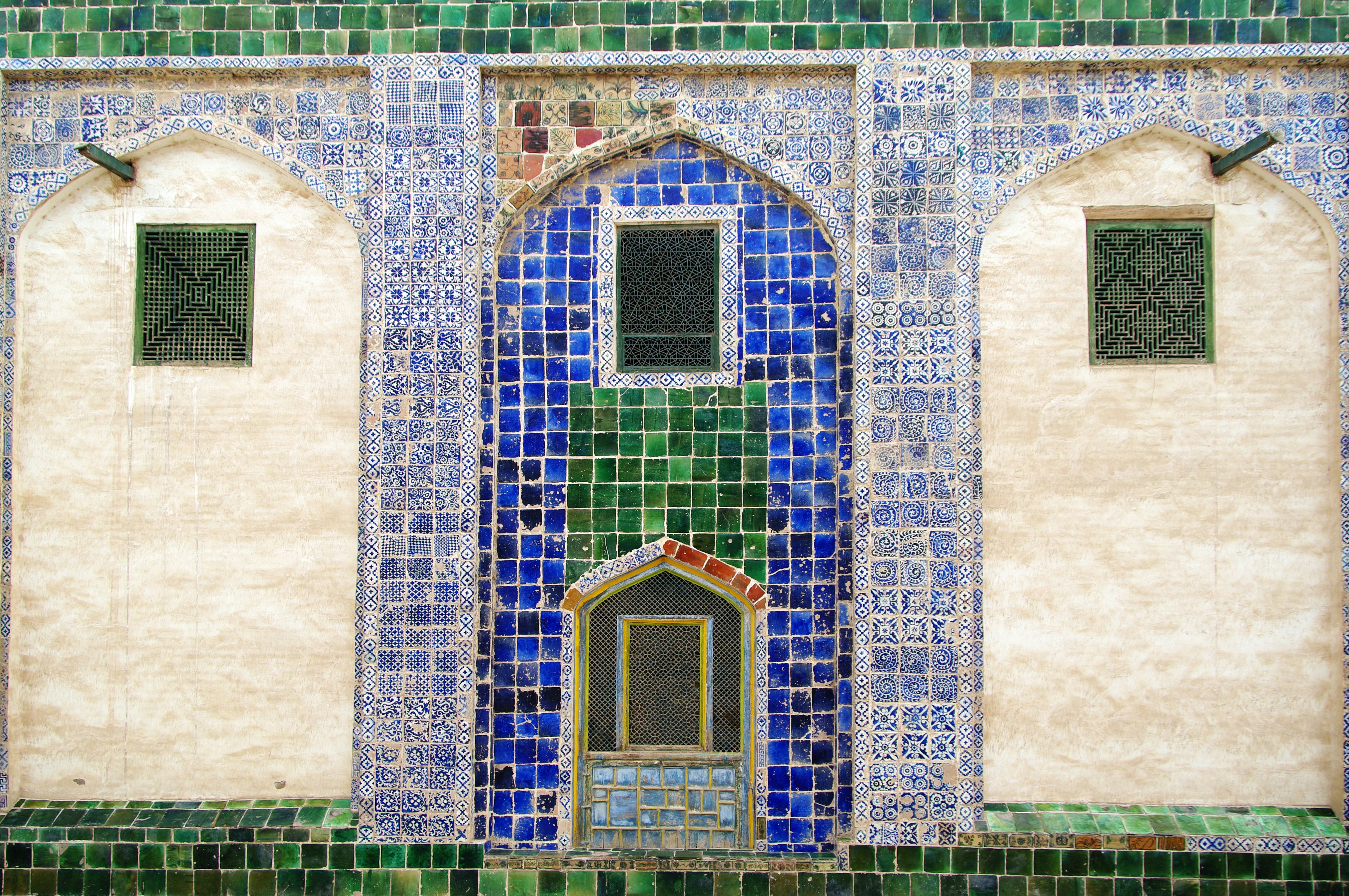
Photo by Walter Frehner on Unsplash
Works Cited:
- Millward, J. A. (2007). Eurasian Crossroads: A History of Xinjiang. Columbia University Press. [↩] [↩] [↩] [↩]
- Thum, R. (2023). The Sacred Routes of Uyghur History. Harvard University Press. [↩] [↩]
- Gladney, D. C. (2004). Dislocating China: Muslims, Minorities, and Other Subaltern Subjects. University of Chicago Press. [↩] [↩]
- Roberts, S. R. (2020). The War on the Uyghurs: China’s Internal Campaign Against a Muslim Minority. Princeton University Press. [↩] [↩] [↩] [↩]
- Brophy, D. (2021). China Panic: Australia’s Alternative to Paranoia and Pandering. Black Inc. [↩]
- Amnesty International. (2021). “Like We Were Enemies in a War”: China’s Mass Internment, Torture, and Persecution of Muslims in Xinjiang. https://www.amnesty.org/en/documents/asa17/4137/2021/en/. [↩]
- Zenz, A. (2019). “Thoroughly Reforming Them Towards a Healthy Heart Attitude”: China’s Political Re-Education Campaign in Xinjiang. Central Asian Survey, 38(1), 102–128. [↩]
- Human Rights Watch. (2021). Break their lineage, break their roots: China’s crimes against humanity targeting Uyghurs and other Turkic Muslims. https://www.hrw.org/report/2021/04/19/break-their-lineage-break-their-roots/chinas-crimes-against-humanity-targeting. [↩] [↩] [↩]
- Millward, J. A. (2007). Eurasian Crossroads: A History of Xinjiang. Columbia University Press. [↩]
- Amnesty International. (2021). “Like We Were Enemies in a War”. https://www.amnesty.org/en/documents/asa17/4137/2021/en/. [↩]
- Roberts, S. R. (2020). The War on the Uyghurs. Princeton University Press. [↩]
- Millward, J. A. (2007). Eurasian Crossroads; Bovingdon, G. (2010). The Uyghurs: Strangers in Their Own Land. Columbia University Press. [↩]
- Dwyer, A. (2005). The Xinjiang Conflict: Uyghur Identity, Language Policy, and Political Discourse. East-West Center. [↩]
- Mahmut, A. (2021). Cultural Genocide of the Uyghurs. The Muslim World, 111(2), 295–311. [↩]
- Byler, D. (2021). Terror Capitalism. Duke University Press. [↩]
- Brophy, D. (2021). China Panic. Black Inc. [↩]
- Ramadan, T. (2007). In the Footsteps of the Prophet: Lessons from the Life of Muhammad. Oxford University Press. [↩]
Mohammed Anas Otteth
Hadith scholar at Darul Huda Islamic University, India.
Leave a Reply