
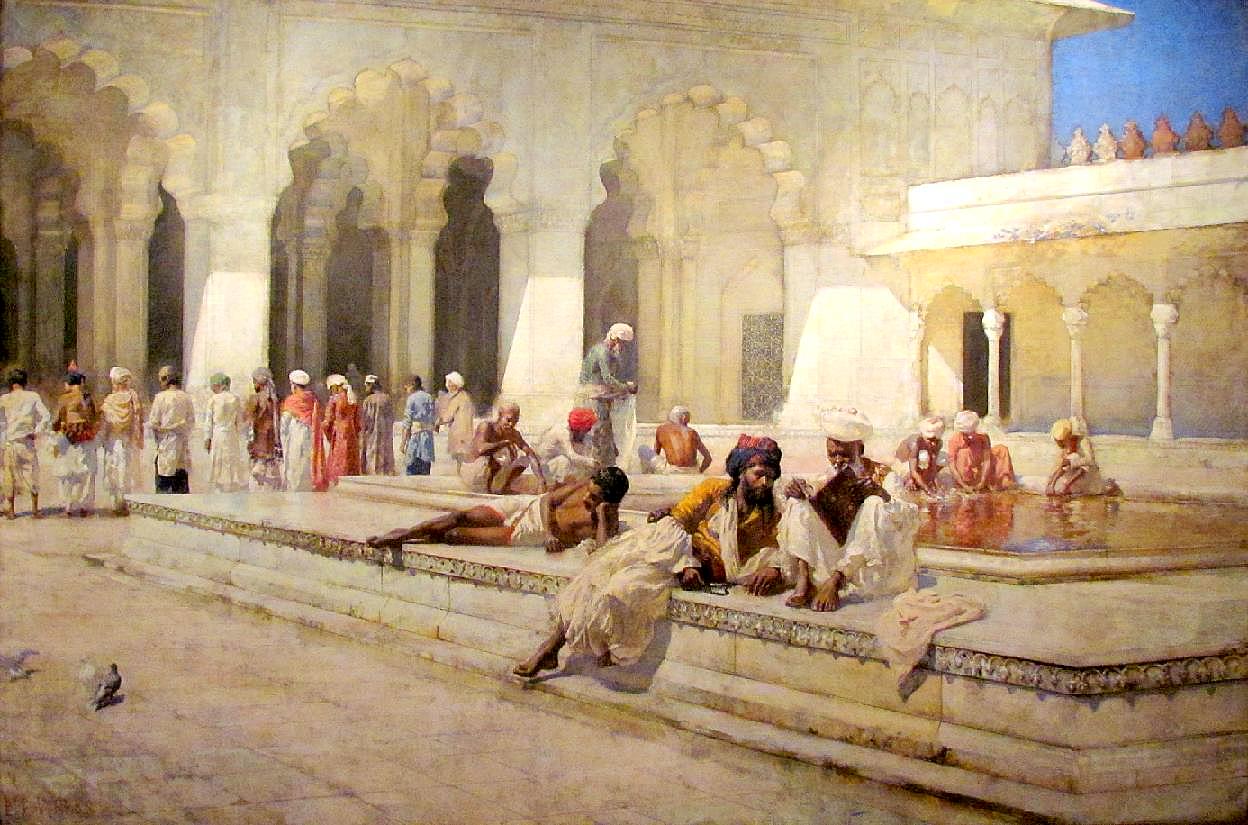
The Encyclopedia of Islam defines Orientalists in Islamic studies as, “all impartial scholars of Islam, Muslim societies and cultures, whether of Western or non-Western, Muslim or non-Muslim origin and whether they work in the West or elsewhere.”1 As it stands, this definition is one that has been informally tweaked in recent years to include “non-Western,” “Muslim,” and working “elsewhere.” The Encyclopedia acknowledges as much, stating that the definition prior to the 20th century read “non-Muslim Western scholars of Islam.”2 This updated definition reflects a pivotal change in Orientalist understandings of the nature of their field, brought about in part by Dr. Edward Said’s revolutionary book, Orientalism. Despite this transformative legacy, Dr. Donna Landry notes that “the discourse of Orientalism, the discursive machine for constructing an Orient, making statements about it, and ruling over it, continues apace.”3 As a result, there remains a stark divide between orientalists and non-orientalists in the field of Islamic studies. This divide largely plays out between scholars belonging to the West and scholars belonging to the East. I chose to say “belonging to” because while there are many non-orientalist voices in Western academia, the vast majority of them have some Middle Eastern or Muslim background. What follows is a brief history of Orientalism, the effect of Dr. Said’s Orientalism on the field, and a look at the players of the divide and their opinions.
Writing for the Encyclopedia of Islam (which non-orientalists argue exemplifies everything that Orientalism represents), Dr. Waardenburg provides a useful timeline of the progression of Orientalism. It can be argued that the history of the oriental study of Islam by the West has its origins in the Roman Catholic Church.2 The Church undertook studies of Islam in an effort to familiarize itself with the “great adversary” of Christianity, an image that became popularized around the 11th century.1 A limited study of Islam by Europeans continued until the fall of Constantinople in 1453 when Europeans felt a greater need to understand Islam and Muslim societies due to the proximity of the Ottoman Empire and the resulting political and economic needs.2 As a result, departments for Arabic and Islamic studies were established in European universities for this very purpose.1 Throughout this time, due to the Christian zeitgeist, there was always an air of opposition to Islam, even at universities, which were markedly religious.2
This adversarial attitude allegedly began changing around the time of the failed final siege of Vienna by the Ottomans in 1683.2 Now that the Ottomans were not a viable threat to Europe, Islam was also losing its image of being a dangerous threat to Christianity and as a result, the approach to studying Islam became that of interest instead of opposition2. Over the centuries, this change of approach resulted in new types of books on Islam, Christian converts from the lands of Islam assisting in research, and the establishment of institutions for the practical teaching of Middle Eastern languages1. This continued until the 19th century, in which Islamic studies as a specific field of inquiry spread in Europe due in part to the greater accessibility of Islamic historical literature and manuscripts that were sent back from the colonized lands over the centuries.2 Another reason for this growth was the greater organization of universities and the plethora of research grants in that era in both Europe and the U.S.1
After WWII, oriental studies departments across Europe and America changed in significant ways. Firstly, universities began to gradually appoint researchers from Muslim countries themselves.2 Secondly, fields of research became much more specific, such that one could not be a scholar of the whole field of Islamic studies as was possible in the past.2 Thirdly, orientalists gained new perspectives on Islam and Muslims through recently gained Muslim political independence as well as Muslims’ assertion of their identity and autonomy.2 With these small but meaningful changes, this was the situation of Orientalism and oriental studies until the watershed moment of 1979, to be explained shortly. It should be noted that this brief overview of the history of Orientalism is specifically how Western scholars perceive and narrate their own history. It would be useful to research the history of Orientalism from the perspective of Muslims, but that goes beyond the scope of this paper.
Turning to 1979, the world of Western scholarship of the “Orient” faced a rude awakening upon the publishing of Dr. Edward Said’s magnum opus, Orientalism. In this monumental work, Said heavily critiqued Western understandings of the East in terms of history, culture, and politics. One of Said’s critics, Daniel Varisco, writes, “More than any other individual scholar in recent history, Edward Said laid bare the discursive ideological undertones that have infested public and academic representation of an idealized ‘Orient.’”4 In other words, the field of Oriental studies was rotten to the core with racism that regarded the “Orient” as this backward object of inquiry and ignored the lived experiences and perceptions of those in the “Orient.” Said saw Orientalism as “a supremacist ideology of difference, articulated in the West to justify its dominion over the East.”5 In his work, Said provided evidence for his observations in the form of examples from a diverse array of scholarship and literature beginning with the Enlightenment and found across Europe. Further than that, he specifically exposed the façade of orientalist scholars as simply being “truth-seeking;” they were complicit in spreading Western supremacy and racism in their scholarship, going so far as to assist Western governments in their colonization efforts.5
In Europe, the reaction to Orientalism was that of fierce pushback against Dr. Said’s allegations, resulting in harsh reviews of the book and cruel comments against Dr. Said, whereas in America it was the exact opposite. The book became a best-seller, inspiring numerous academic engagements with its contents.6 Moreover, junior American academics inclined toward leftist, postmodern, and postcolonial ideologies took Orientalism as their manifesto to challenge their seniors and the status quo in academia6. In fact, senior American academics began to acknowledge that they had been blindsided for some time by “the epistemological blinders which Said called ‘Orientalism.’”6 The book also changed the demographics of Middle East studies departments across America in that more and more Arab and Muslim scholars were assigned senior positions and even given preference over those without any Middle East background.6 Dr. Said himself acknowledged the lasting legacy of his work in 1993, noting that an “important ideological transformation” had occurred in the field of Middle East studies.6
Given the lasting influence of Dr. Said’s work, it is only natural that orientalists authored tirades lambasting his perceived allegations and defending their field of study. Among these orientalists, two authors stand out for their works in this regard. One is Dr. Robert Irwin and his For Lust of Knowing: The Orientalists and Their Enemies, and the other is Ibn Warraq (pseud.) and his Defending the West: A Critique of Edward Said’s Orientalism. In his work, Dr. Irwin dedicates only a single chapter to refute Orientalism, which he contends is full of mistakes and misrepresentations and then spares the rest of his book for discussing significant works produced by Orientalists that were ignored by Dr. Said. Ultimately, he argues that Orientalists were not enablers of imperialism but rather scholars with a deep passion for learning about the “Orient.”7 On the other hand, Ibn Warraq’s work accuses Dr. Said of misrepresenting Western civilization in totality. He puts forth the claim that the West is allegedly guided by three core values that are sorely lacking in the “Orient:” rationalism, universalism, and self-criticism.8 Although the argument in both works that Dr. Said misrepresented his subject matter might hold some weight, what is undeniable is the revolutionary effect his book had on the field of Orientalism such that even the terms “Orient,” “Orientals,” “Orientalist,” and “Oriental studies” have all fallen out of favor. However, the two works above, as well as others, prove that Dr. Said’s Orientalism did not silence the field’s proponents and that the divide between Orientalists and its critics remains alive and heated.
In his aforementioned work defending Orientalism, Dr. Irwin provides a list of Orientalism’s “enemies.” This list is particularly useful because it provides us with those individuals and academics whose critique of Orientalism was substantial enough to warrant earning them the label of its “enemy.” This shows that besides Dr. Said in the 20th century, several individuals before and after him have substantially critiqued Orientalism, furthering the divide between the two sides of Orientalists and their critics. What follows is a brief look at some of these individuals and their critiques. The first individual is the historian and journalist Kurd ‘Ali (1876-1953 CE) who was one of the first to challenge the approach of Orientalists.9 He wrote a two-volume work in an attempt to correct the misconceptions of the Orientalists titled al-Islam wa al-Hadarah al-‘Arabiyyah (Islam and Arabic Civilization).9 He also refuted the false notions that Arabs were unscientific in their nature and frequently challenged Christian missionaries and scholars.9 In the same era as Kurd ‘Ali, another critic of Orientalism was the influential Polish Jew convert to Islam, Muhammad Asad (1900-1992 CE).9 He used his literary skills as a journalist to write Islam at the Crossroads in which he championed Islam and traced the racism, imperialism, and hostility of the Orientalists back to the Crusades.9 Another convert from the same era was Rene Guenon (1886-1951 CE), who wrote Orient et Occident. In this work, Guenon criticized the errors of Orientalists, their failure to even attempt to understand Islamic texts or consult the people whose civilizations they were studying, and their service for the domination of Eastern cultures.9
Other Muslim critics of Orientalism from the same period include the activist Sayyid Qutb (1906-1966 CE), the author and convert Maryam Jameelah (1934-2012 CE), and the historian A. L. Tibawi (1910–1981 CE). Tibawi in particular was influenced by the aforementioned Kurd ‘Ali’s writings and wrote harsh articles denouncing how Islam was taught by Orientalists, how Orientalists hid a political agenda behind their research, and how Orientalists did not include contemporary Muslim academics as contributors in their encyclopedic works.10 In fact, some have argued that Dr. Said drew heavily from Tibawi’s writings, albeit without acknowledgment.9 Contemporary Muslim critics mentioned by Irwin include the academic Syed Hossein Nasr (b. 1933 CE) and the academic and convert Hamid Algar (b. 1940 CE). Besides the above-mentioned Muslim critics, there have also been some secular, non-Muslim critics as well. This includes the historian Abdallah Laroui (b. 1993 CE) who targeted specific Orientalists for their academic approaches and the political scientist Anouar Abdel-Malek (1924-2012 CE) who condemned Orientalists’ “othering” of Islam.9 Dr. Irwin observes that Dr. Said drew heavily from Laroui and Abdel-Malek as well.9
After Dr. Said’s Orientalism, many Muslim scholars have been inspired to take on Orientalists with varying approaches. The academics Dr. Ziya-ul-Hasan Faruqi, Dr. Ahmad Ghorab, and Dr. Ziauddin Sardar have all challenged Orientalism from a distinctly Muslim and polemical stance, authoring multiple works for this purpose.9 On the other hand, others such as Dr. Fazlur Rahman (1911-1988 CE) and Dr. Muhsin Mahdi (1926-2007) took a more academic approach by challenging subtle and specific Orientalist methodologies. Rahman criticized “Western reductionist approaches” to understanding Islam, arguing that it was out of a “cultural arrogance” found in the West9 while Mahdi reproached Orientalists’ conceit in producing the Encyclopedia of Islam without any input from the Muslim world.9
As we have seen, since the time of Kurd ‘Ali there have been numerous voices of dissent to the mainstream orientalist approach to the study of Islam. It is worth noting that the majority of these voices are Muslim and the few which are not, are of Arab background. This shows how the divide between Orientalists and their major critics largely plays out as a divide between those of the West and those of the East, regardless of whether they live and work in the West or not. This fact should not be dismissed as being trivial, as it reveals that Western scholars still as yet need to perform further self-criticism if they are to move beyond the mistakes of their orientalist forebears.
Setting aside the revelatory accusations made on Orientalism by Dr. Said, there are still a plethora of critiques of Orientalists found across the board in the writings of non-orientalists. One major critique is that they lack the appropriate tools—such as proficiency in Arabic—and background knowledge in the Islamic sciences to draw accurate conclusions.11 Secondly, they lack sympathy, modesty, and a willingness to understand their subject of Islam and Muslims correctly.11 Thirdly, they lack any concern for improving the condition of the people and societies they study.1 Instead, their studies are used by neo-imperialist powers to further undermine Islam and its societies. Fourthly, they do not include Muslim voices and perspectives in their works, as mentioned above. And if they do include Muslims, they choose to only include those who align with the West’s ideological views, ignoring “orthodox” Muslims. All of these are not minor critiques and as such, cannot be dismissed as being polemical accusations from offended Muslims.
To further understand critiques from non-orientalists, one should look no further than the writings of Dr. Muzaffar Iqbal, the founder-president of the Center for Islam and Science, Canada, and one of Orientalism’s prominent critics in contemporary times. In his review of the Encyclopedia of the Qur’an, edited by Dr. Jane McAuliffe, Dr. Iqbal brings to the fore several of his critiques of orientalists. He unequivocally states:
Thus, while the current academic writings on Islam are no longer the sole dominion of the erstwhile Orientalist, the study of Islam as a subject alongside other religions in the relatively new departments of religious studies, as well as in the older and well-established area study departments and departments of languages and literature at numerous British, European and North American universities, has umbilical links with the Orientalism of yesteryears.12
In other words, he argues that current non-Muslim scholars of Islam rely on the arguments of their forebears i.e., the original orientalists in constructing their arguments, who in turn relied on the polemical works of the Middle Ages.12 Put differently, Dr. Iqbal contends that current scholars’ claims to impartiality are baseless due to the fact that their works include the biases and racism of their polemical predecessors. This situation is not helped by the fact that contemporary Western academics fail to bring in the perspectives of “orthodox” Muslims. Dr. Iqbal reproaches the editor of EQ for claiming that it brings together a “plurality of perspectives” when only 20% of the contributors are Muslim and those too profess to be “secular” Muslims.12 He contends that if one accepts the claim that there is a “plurality of perspectives,” even then, all those perspectives are derived from the framework that “negates, ignores, or considers irrelevant” the Muslim position on the origin of the Qur’an.12 Another critique Dr. Iqbal levels at the EQ that applies to Orientalism in general, is the minimization of “well-established Muslim understandings by giving more importance to peripheral or Orientalist’ writings.”12 Dr. Iqbal also notes a complete disregard of courtesy toward Muslims and their beliefs, stating that:
Even though one does not expect academicians to write from the perspective of a believer, academic fairness and scholarly norms demand a minimum level of courtesy toward the beliefs of one fourth of humanity; if nothing else, they can at least acknowledge what the Qur’an actually says on the topic before plying their trade of pejorative comments.
Other critiques highlighted by Dr. Iqbal include a scant familiarity with Muslim source material and therefore a reliance on secondary sources as well as a disregard for the hierarchy of knowledge and authorities in Islam.12 All of these critiques by Dr. Iqbal are significant and cannot be ignored, thus requiring a great deal of reassessment on the part of contemporary orientalists for their academic approach.
Unlike many in the field of Islamic studies in Western academia today, Dr. Andrew Rippin is one of the few who shows a level of awareness for the critiques of Orientalism and the resulting divide between the two camps. This is despite the fact that non-orientalists such as Dr. Gibril Fouad Haddad have accused Rippin of falling into the same tropes as orientalists of old.13 To his credit, trying to find a definition for Western scholarship that evades accusations of Orientalism, Dr. Rippin defines it as “the critical dispassionate (i.e., non-polemical) search for knowledge, unconstrained by ecclesiastical institutional priorities.”14 Dr. Rippin mentions that some in the academy have used the term “disinterested scholarship” for this, but he insightfully acknowledges that this “‘disinterested scholarship’ is actually prompted by many conscious and subconscious political and social preconceptions and ideologies, many of which continue to reflect the ethos of the colonialist eras.”14 In fact, it has been observed that academics try to excuse their conclusions that Muslims might object to with this easy claim of “disinterestedness.”14 He further concedes that the claim that Islam is studied from a “secular” perspective is inaccurate as “secularism, like religion, is a position with associated values for which the claim to universal truth is no more valid than it may be for religion itself.”14 These instances of self-critique as a Western scholar of Islam are commendable on Rippin’s part and should serve as inspiration for others in the field.
On the other hand, when writing about the reception Euro-American scholarship on Islam has received by Muslims, Dr. Andrew Rippin argues that “true” scholarship has been muddied by “pseudo-academic Islamophobic approaches” which are apparently academic but highly polemic in reality.15 In his opinion, Muslims incorrectly cast suspicion on the whole of Euro-American scholarship on Islam by misconstruing the polemical work of Islamophobic academics as representing the whole.15. Granted, Rippin admits that another reason for this distrust is due to the “one-sided nature of the scholarly enterprise” which he explains is the result of treating the subjects of research as “objects.”16 Another perspective of Muslims that Rippin acknowledges is that they argue that non-Muslims should not try to explain Islam and its religious texts as they are bound to misrepresent it.16 Rippin attempts to counter claims such as these and others of Orientalism by noting that research on Islam as a historical subject occurs in other parts of the world and that many academics in the West are professed Muslims16 Thus, in his opinion, one cannot accuse Euro-American scholarship of being antagonistic to Islam and Muslims due to similar scholarship taking place in other parts of the world and because of Muslim involvement in their enterprise.
To conclude, the field of Islamic studies in Western academia has a problematic history that began with the efforts of the Church to understand its enemy and culminated in the racist and ethnocentric methodologies of Orientalism. Although these methodologies were criticized by Muslim scholars in the past, it was not until Dr. Edward Said’s Orientalism that the field faced an effectual reckoning. Said’s seminal work exposed the biases inherent in traditional orientalist approaches, and as such, served as the impetus for reassessing Western academic methodologies in the study of Islam. This work received the ire of many hardline orientalists who vehemently contested Said’s arguments. On the other hand, Said inspired other Muslims to also take up the cause of critiquing Orientalism, which continues to this day, as the Western academic study of Islam still exudes traces of Orientalist notions and methodologies. As a result, the divide between orientalists and their critics persists, often along regional and cultural lines of the West and the East. The critiques against Orientalism extend beyond academic methodologies to issues of language proficiency, cultural sensitivity, and representation of diverse voices. As the discourse continues, scholars need to engage in self-reflection, acknowledging the complexities of their positions and fostering a more inclusive and respectful dialogue in the pursuit of a comprehensive understanding of Islamic studies.
Photo by David Hoffman on Flickr
Disclaimer: Material published by Traversing Tradition is meant to foster scholarly inquiry and rich discussion. The views, opinions, beliefs, or strategies represented in published articles and subsequent comments do not necessarily represent the views of Traversing Tradition or any employee thereof
- Waardenburg, J.D.J. 2012, MUSTASHRIKUN, Leiden, Koninklijke Brill NV. [↩] [↩] [↩] [↩] [↩] [↩]
- Waardenburg, J.D.J. 2012, MUSTASHRIKUN, Leiden, Koninklijke Brill NV [↩] [↩] [↩] [↩] [↩] [↩] [↩] [↩] [↩] [↩]
- Landry, D. 2013, “Said Before Said,” in Palgrave Macmillan eBooks. https://doi.org/10.1057/9781137341112.0008. [↩]
- Varisco, D.M. 2007;2011;2012; Reading Orientalism: Said and the Unsaid, University of Washington Press, Seattle. [↩]
- Krämer, M. 2001, Ivory Towers on Sand: The failure of Middle Eastern studies in America. http://ci.nii.ac.jp/ncid/BA58091741. [↩] [↩]
- Krämer, M. 2001, Ivory Towers on Sand: The failure of Middle Eastern studies in America. http://ci.nii.ac.jp/ncid/BA58091741 [↩] [↩] [↩] [↩] [↩]
- Irwin, R. 2006, For lust of knowing: the orientalists and their enemies, Allen Lane, London;New York; [↩]
- Warraq, I. 2007, Defending the West: a critique of Edward Said’s Orientalism, Prometheus Books, Amherst, N.Y. [↩]
- Irwin, R. 2006, For lust of knowing: the orientalists and their enemies, Allen Lane, London;New York;. [↩] [↩] [↩] [↩] [↩] [↩] [↩] [↩] [↩] [↩] [↩] [↩]
- Irwin 2006: 484 [↩]
- Waardenburg 2012: 747 [↩] [↩]
- Iqbal, M. 2008 “The Quran, Orientalism, and the Encyclopaedia of the Quran,” Journal of Qurānic Research and Studies, 3(5), pp. 5–45. [↩] [↩] [↩] [↩] [↩] [↩]
- Haddad, G. 2016 “A response to Andrew Rippin’s review of The Integrated Encyclopedia of Qurʾān, Volume I,” Islamic Sciences, 14(1 [↩]
- Rippin, A. 2006, “Western scholarship and the Qur’ān” in The Cambridge Companion to the Qur’ān Cambridge University Press, pp. 235-252. [↩] [↩] [↩] [↩]
- Rippin, A. 2012, “The Reception of Euro-American Scholarship on the Qur’an and Tafsīr: An Overview (Editorial Preface),” Journal of Qur’anic Studies, vol. 14, no. 1, pp. 1-8. [↩] [↩]
- Rippin, A. 2012, “The Reception of Euro-American Scholarship on the Qur’an and Tafsīr: An Overview (Editorial Preface)”, Journal of Qur’anic Studies, vol. 14, no. 1, pp. 1-8. [↩] [↩] [↩]
Syed Ahaz Bin Atif
Syed Ahaz B. Atif is a graduate of the the seven-year ‘alimiyyah program at Darul Uloom Zakariyya in Johannesburg, South Africa. After graduation, he completed a one-year postgraduate specialization in Arabic literature, poetry, and translation. He is currently pursuing a Bachelor’s degree in Middle East Studies at Georgia State University as well as an Honors degree in Islamic Studies at the University of South Africa.
Leave a Reply