
Disclaimer: This article is not ignorant about the harms of a fascist leader and should not be used as a means to encourage discussions on “lesser evil” politics. Moreover, I must instruct YOUNG readers and leaders who belong to certain communities tied to such leadership to also call in any leadership that has publicly misrepresented the community in their endorsement of a party or controversial leader without due diligence. A call in by conscious young people and a public callout by leaders is important to anyone or group that publicly endorsed known and unapologetic fascist leaders and leadership in the past.
يَا أَيُّهَا الَّذِينَ آمَنُوا لَا تَتَّخِذُوا بِطَانَةً مِّن دُونِكُمْ لَا يَأْلُونَكُمْ خَبَالًا وَدُّوا مَا عَنِتُّمْ قَدْ بَدَتِ الْبَغْضَاءُ مِنْ أَفْوَاهِهِمْ وَمَا تُخْفِي صُدُورُهُمْ أَكْبَرُ ۚ قَدْ بَيَّنَّا لَكُمُ الْآيَاتِ ۖ إِن كُنتُمْ تَعْقِلُونَ﴾ [ آل عمران: 118]
O believers! Do not associate closely with others who would not miss a chance to harm you. Their only desire is to see you suffer. Their prejudice has become evident from what they say—and what their hearts hide is far worse. We have made Our revelations clear to you, if only you understood. [Qur’an 3:118]
It’s the night of October 13th, 2024, Eastern Standard Time. I have just witnessed my first video of “barbecued” women and children burning barely six feet away from a man who has no tears to shed, in the dark nights of a horror with no movie screens in front of him. This is happening seven days past the anniversary of October 7, as I have in the past avoided confronting the horror and carnage to preserve the will within me and a symbol of my Muslim identity—the will to never capitulate and to remain resilient.
Nevertheless, I am obliged to write. The bitter distaste I have felt over the past 15 months stems from verified publications that some of our Sunni leaders and respected community members—those who are supposed to represent the moral conscience of America— chose to embrace willful ignorance under the guise of “tradition.” These leaders have chosen to ignore both secular BDS movements and religious “American Palestinian” mandates, not only to disengage from problematic alliances but to avoid the mistake of taking a trip to Israel. Such a trip will certainly be regrettable, given the charade of the so-called ‘Charlatan Accords,’ cloaked in a prophetic name by its organizers and allies. A culmination of examples as such misguided endeavors eventually became a catalyst for the events of October 7 as acknowledged by the western administrations, the intelligence community, and everyone across the aisle of a prolonged injustice toward the people of the Levant (Al Sham).
This is a pre-brief and a summarized article, a precursor to a possible lengthy “Community Report” (CR) that I have undertaken (along with veteran observers) for the sake of sanity within our bruised and healing community. It acts as a ‘Call-In’ to community leaders, particularly scholars of theology and jurisprudence, to take-heed and address the discord across our communities. The greatest casualty of these long-standing divisions is, inadvertently, the theological and moral significance of Palestine to our faith—let alone its custodians, its environment, and its displaced families. This call will advocate for the creation of a sound political theory or liberation theology rooted in consensus from our shared heritage, one that rejects inclinations that lead us to vulnerability or complicity with saboteurs. At the very least, we need a vision that protects us from being sabotaged by those we have historically allied with, driven by socio-cultural or nationalistic entitlements.
The CR will also call for a few key imperatives and resolutions to be upheld as “sacred pacts,” based on our sources of revelation and commonalities across cultures. First and foremost, it aims to consolidate and regroup against the clear-cut agenda-driven forces working against us. It will also address leaders and the future generation, who may be ignorant of these values, consciously or subconsciously, while recognizing the current realities that can no longer be ignored. For far too long, these issues, whether related to Palestine or other modern theological dilemmas, have been neglected due to academic fatigue, procrastination, or the suburban corporate mindset of feeling removed from the consequences of inaction. Many scholars have called for discussions on these issues, but the commitment to follow-up and meaningful action has been lacking, resulting in widespread apathy.
What we are witnessing now is a repeat of the political missteps of the past—similar to those made by some Muslim community members who supported the GOP in the 2000 election (approximately 78%), without due consideration for the religious imperative of seeking shura (good counsel) with the broader Muslim community, especially African Americans.1 The repercussions were felt in the post-9/11 era, with mass surveillance, deportations, and the cancellation of visas for Muslim scholars, creating a leadership vacuum.
The “Domestic Issue”: Is November 5th a Referendum?
The shortsighted strategy of centering community planning around election dates as the “trump card” for change and progress is problematic. The hysteria surrounding the second coming of Trump surely pales in comparison to the genocide happening under the watch of the global policeman—America—during the Democratic administration. The Biden administration has left us in a moral quandary, with little to no faith that any Democratic candidate will truly address the needs of Americans, both domestically and abroad, beyond tokenism. For the first time, there is vividly no illusion of “lesser evil” in practice, as there is no indication that Trump could outdo Biden in failure other than by aligning with the Netanyahu wing of the U.S. establishment.
The leadership’s Pro-Harris resolution from certain community leaders responds to the anxieties of the American people or, at worst, to the “Abandon Biden” rhetoric without articulating a strategy.2 In the CR, I problematize this decision-making as part of a broader disengagement and apathy that has festered for far too long at the expense of many and now the Palestinian vanguards of the Levant (Al-Sham). This disengagement has “bewitched” even scholars who should be leading their congregations on the prophetic path. Five years ago, many of us would have been dumbfounded by their response when confronted about Palestine in situations whereby a typical excuse was, “Yes for Palestine, BUT we have ‘domestic issues’.”
As someone who has benefitted from scholars and the leadership of many, especially those considered “indigenous” to Islamic knowledge, it is a duty to point out these ominous problems that cannot be ignored. It is not Qur’anic to let two wrongs make a right. Moreover, it is clear that the signatories of the ‘Pro-Harris letter’ represent a specific demographic that is equally disconnected from the realities of many American Muslim sentiments. These leaders were often out of touch with the plight of communities that they should be serving, making it even more complex for the larger Muslim community to navigate. It is the role of students of knowledge, familiar with these communities, to present the truth to these leaders from the very sources they know.
A significant note of concern is one of the signatories who has normalized relationships with Zionist allies under the guise of interfaith cooperation, further complicating the situation. This figure’s involvement in leading du’as with Zionist allies, while sidelining Palestinian politicians highlights a dangerous level of apathy. My biggest fear—as a person with an islamicate memory outside of the west—in all this is the setting of a poisonous precedent to a generation of Muslims I care about:a people who do not have a lineage of Islam independent of the experiences of the horror of the American state and trauma from the historic barbarism of a western civilization. The ramifications on their theology of reliance and steadfastness cannot be quantified or stated at the moment.
Barely two months ago, an example of an Imam I barely just reviewed on video—at an east coast masjid session—was one of the signatories casually alluded and lamented about this “Devilish predicament” of a two-party supremacy system, only to be a signatory to a diametrically opposite and subservient position to what he preached in the mosque at a gathering of the seniors. At the same time, even if this dissonance was shared with barely less than 0.5% of the inner city neighborhood and urban community congregation, it would still suffice a reason to panic and be anxious by such a pronouncement.
The problem is not with having a choice to vote for Harris—it is presenting that choice as the best option from a clerical leadership council accountable to Allah (s.w.t.), while being fully aware of the inefficacy of the two-party system. This is by the same leaders who have lamented the system’s flaws in the past but now endorse it without a cost evaluation and a strategy to mitigate the inevitable evil to come from it.
To summarize a tweet from the assassinated professor and poet Re’faat Alareer on December 4, 2023 after quoting Kamal Harris’s cliche tweet questioning the “how” of Israel’s atrocious “defense of itself”:
“The Democratic Party and Biden are responsible for the Gaza genocide perpetrated by Israel.”3
An Open Call Against Soliciting Voices of Pro-Harris and Establishment Sentiments
As a young man with melanin pigmentation, the call by the Imams, whom I identify somewhat as an extension of my leadership and my teachers from across the walks of the country, is problematic for certain reasons summarized below:
- Tradition Continues: The predecessors of different movements in the past were more disenfranchised than us yet didn’t seek to declare a holy temporary alliance with any establishment party without a plan, strategy, or action in the case of failure. Pro-Harris campaign edicts from the Imams and leaders echo an unconditional projection of the “Obama Campaign” euphoria over her consciousness. The fact that she may have empathy and the capacity within her doesn’t mean that, in political parlance, she shall be gifted with all of the tools and truths to execute.
- The Role Of The “Ansar”: Embracing the monikers of the Seerah—as rightfully deserved—entails fully understanding its context and accepting the reality of the fact that it entails submission to the will of Allah to the highest degree. When we revisit history, the role of the Ansar historically wasn’t that of a group who merely helped the “immigrants” upon arrival but withstood the Qadar of Allah at times where they could have chosen to settle for self-preservation.
- Empathy: Ask The Palestinian Sibling Before You Vote: Because, as young people, we are to make a commitment to not descend from yesterday’s “Ansar and Muhajirun” model into the tribalism of ‘Aws versus Khazraj’ that emptied the leadership of the tribes prior to Islam’s arrival in Madinah. We can go further and beyond than to replicate the mistakes of the past. The echoes of Surah Fussilat, verse 34, should be convenient to deter us from agents of a past who don’t meet the realities of the mixed challenges and priorities of many Muslim youth today in the community:
وَلَا تَسۡتَوِي ٱلۡحَسَنَةُ وَلَا ٱلسَّيِّئَةُۚ ٱدۡفَعۡ بِٱلَّتِي هِيَ أَحۡسَنُ فَإِذَا ٱلَّذِي بَيۡنَكَ وَبَيۡنَهُۥ عَدَٰوَةٞ كَأَنَّهُۥ وَلِيٌّ حَمِيمٞ
Good and evil cannot be equal. Respond ˹to evil˺ with what is best, then the one you are in a feud with will be like a close friend… [Qur’an 41:34]
Rather, the Qur’anic perspective of ‘progression’ or a proper retort—without undermining firmness in principles of self-determination—is to embrace the spirit of Ali-Imran, verse 159.
فَٱعۡفُ عَنۡهُمۡ وَٱسۡتَغۡفِرۡ لَهُمۡ وَشَاوِرۡهُمۡ فِي ٱلۡأَمۡرِۖ فَإِذَا عَزَمۡتَ فَتَوَكَّلۡ عَلَى ٱللَّهِۚ إِنَّ ٱللَّهَ يُحِبُّ ٱلۡمُتَوَكِّلِينَ
It is out of Allah’s mercy that you ˹O Prophet˺ have been lenient with them. Had you been cruel or hard-hearted, they would have certainly abandoned you. So pardon them, ask Allah’s forgiveness for them, and consult with them in ˹conducting˺ matters. Once you make a decision, put your trust in Allah. Surely Allah loves those who trust in Him. [Qur’an 3:159]
Understanding that we suffer as a body even when the body parts don’t experience pain equally is a prophetic exhortation. Inferring from the Hadith of Nu’man Bin Bashir, the death of the body itself spells the end of functionality for all its parts. An action item to defeat the devil between us, entails consulting with the young Palestinians and your peers just as much as we expect of the elders to make shura within themselves, then submitting to Allah irrespective of decisions made afterwards.4
- “In Your Hands [Oh Allah] is All Good”: After the pandemic, I strolled right in time to catch a Houstonian favorite young Imam by the name of Imam Abdullah Rasheed on the pulpit. The Imam was not in the sloganeering euphoria about “all power belonging to us” as activists and people of entitlement, especially after the protests and tribulations that had followed. Rather, self determination was a key imperative of the message. But the Khutbah didn’t strike a nerve until he quoted Ayah 26 from Surah Ali-imran below:
قُلِ ٱللَّهُمَّ مَٰلِكَ ٱلۡمُلۡكِ تُؤۡتِي ٱلۡمُلۡكَ مَن تَشَآءُ وَتَنزِعُ ٱلۡمُلۡكَ مِمَّن تَشَآءُ وَتُعِزُّ مَن تَشَآءُ وَتُذِلُّ مَن تَشَآءُۖ بِيَدِكَ ٱلۡخَيۡرُۖ إِنَّكَ عَلَىٰ كُلِّ شَيۡءٖ قَدِيرٞ
Say, “O Allah, Owner of Sovereignty, You give sovereignty to whom You will and You take sovereignty away from whom You will. You honor whom You will and You humble whom You will. In Your hand is [all] good. Indeed, You are over all things competent.” [Qur’an 3:26]
The message became apparent: It cannot be by our sole effort, entitlement and reliance on “building power” that we would ensure the manifestation of good. If that could be clear as daylight, then what is to be said about allyship with the one who is giving platitude to our course and has the bigger power to ignore or trample over us? Over whom we lack the ability to hold perfectly accountable for the demands that we seek both at home and elsewhere?
This is not a call for continuous communal abnegation amidst different levels of disenchantment and desolate situations among mixed Muslim American communities. This is a call to not let the guards down at Uhud and to sustain the patience and restraint while employing other means of carrot and stick methods that don’t warrant us sabotaging the efforts made over the decades past. The test of the people of Uhud was their desire, while for us today it is the fear cast in our hearts towards learned helplessness or capitulation towards the symbols of modern Jahiliyya or Quraysh.
Micah 6:8 – Construct A World of Justice
“How about Christian families”? Yes, they matter too because they make up the majority of many of our families and friends.
At a guest invitation of Shaykh Omar Suleiman’s session with Dallas, Texas, Reverend Douglas Heynes titled “Palestine and Politics,” this was how he opened the session with his daughter:
“He has shown you, O mortal, what is good. And what does the LORD require of you? To act justly and to love mercy and to walk humbly with your God.”
Reverend Heynes “remixed” reflection points out to the expectations from God after empowering a people with his blessings. What is not to be expected is disbelief in return and in denial of His blessings, but one that “constructs a world of justice” which is fueled by compassion for everyone.
The values shared above don’t apply to Muslims alone but are clearly Abrahamic in nature. But even at that, since America is a “Christian country,” the moral imperative is not to capitulate to the oppressor through shortcuts but rather to work towards creating the moral arch most desired by God. Hence, righteousness is a family and neighborhood ventures are not restricted to Muslims alone. One cannot afford to be led by fear when it takes a band to travel farther.
As Reverend Munther Isaac opened his speech at the historic Riverside Church with Matthew 5:6:
“God blesses those who hunger and thirst for righteousness/justice, for they will be satisfied.”
Community Report (CR) Recommendations:
This is what I hold to be true and due for a necessary call in:
وَٱلَّذِينَ ٱسۡتَجَابُواْ لِرَبِّهِمۡ وَأَقَامُواْ ٱلصَّلَوٰةَ وَأَمۡرُهُمۡ شُورَىٰ بَيۡنَهُمۡ وَمِمَّا رَزَقۡنَٰهُمۡ يُنفِقُونَ
And those who respond to their Lord, establish prayer, conduct their affairs by mutual consultation, and donate from what We have provided for them… [Qur’an 42:38]
1. Forging Towards a Sociocracy: A discursive system of governance or body of pertinent decision-making pulling from different Muslim communities, mosques, or groups across segments and representations of Muslim American life.
2. Call for Intra-Community Conferences: Encourage subgroups to begin articulating discussion and converging points of unification regarding a political theology and their vision for Palestine as an “Islamicate issue” alongside other ‘Ummatic’ issues and areas of concern (Sudan, Congo, etc.).
3. Resolution on Interfaith/Multifaith Coalitions: Urge communities to engage with togetherness in discussing advertised enemies of Palestine disguised under “interfaith” or “multifaith” coalitions.
4. Special Resolution Post-October 7: Highlight the responsibility of American Muslims to own their identity without embracing American exceptionalism.
Empathy versus Whataboutery
To the disgruntled and disenfranchised communities of America:
يٰٓاَيُّهَا الَّذِيْنَ اٰمَنُوْا كُوْنُوْا قَوَّامِيْنَ لِلّٰهِ شُهَدَاۤءَ بِالْقِسْطِۖ وَلَا يَجْرِمَنَّكُمْ شَنَاٰنُ قَوْمٍ عَلٰٓى اَلَّا تَعْدِلُوْا ۗاِعْدِلُوْاۗ هُوَ اَقْرَبُ لِلتَّقْوٰىۖ وَاتَّقُوا اللّٰهَ ۗاِنَّ اللّٰهَ خَبِيْرٌۢ بِمَا تَعْمَلُوْنَ (المائدة 🙂
O believers! Stand firm for Allah and bear true testimony. Do not let the hatred of a people lead you to injustice. Be just! That is closer to righteousness. And be mindful of Allah. Surely Allah is All-Aware of what you do. [Qur’an 5:8]
Tough times bring the best out of people and their characters. This is a call to the men and women of excellence among us. To step out and display our versatility in teaching people how to center multiple yet coexisting frontiers of justice without promoting the spirit of “oppression olympics.” The seeking of Allah’s pleasure through the display of Taqwa without expecting immediate reciprocity is most paramount.
To the leaders and the scholars, if there appears is a disproportionate attention towards “Palestine” or the Levant, then the imperative is to dissociate ourselves from the narcissistic reasons in which people may choose to do so while focusing on the spiritual reasons from the sunnah and its prophecies tied to our Islamic heritage. With the innumerable ahadith on the virtues of the Levantine, it is an absolute level of disservice when a community leader regurgitates communal sentiments that fan them embers of ethnic or racial victimization of their community, partly due to the lack of familiarity of the trials and tribulations associated with Al Sham and its impact on the Ummah in general.5 There should always be a place to have such tough conversations while remaining just to the teachings of Allah and His Messengers’ prophecies.
Finally, it is the duty of scholars and academics within environments organized by a common sociocratic leadership body to commit to thinking through both temporary and final statutes regarding these emerging topical issues on a consistent and periodic basis, especially in accordance with the changing dynamics of the world today. The youth of the Ummah are arching toward morality, a blessing of Allah that must be tapped into in a post-October 7 universe. These issues, especially those requiring engagement with the enemies of Palestine and justice in the Levant, must be dealt with substantially without hampering their courses, particularly those of activists. There are numerous naive and duplicitous positionings that defy modern and archaic engagements of strategy, especially for minority Muslim communities across the globe. Further solidifying these mistakes with misaligned positions or personalized fatwas, without considering the repercussions or future implications of sabotage by the enemy, is a dereliction of duty by the Ulama, leadership, and all stakeholders.
Having a feedback mechanism is important. It is also crucial to listen to perceptions from outside communities that share our identity (e.g., Canada, Mexico, the East of the Atlantic) to gauge feedback on how we represent the prophetic body, even when our positions may be justified by context, precedence, or necessity. Turning “rest stop,” positioned Fiqh, into “permanent residence,” positioned Fiqh, or vice versa, is an act of sabotage to the sheer will of a people striving toward excellence in deliberation, especially as a group.
To conclude, this writer does not see their affiliation, group, or lineage as superior to the Palestinian imperative. Nor do they view the liberation of Palestine strictly through the lens of “state politics,” the establishment of a state, or any form of nationalism permeating the Ummah. Palestine is the litmus test for many of our existences, an “ailment” cured through our worship and actions toward our Creator.
I pray to Allah for justice worldwide, for resilience within our communities, to bridge hearts toward being dutiful to Him, and to aid us in forming formidable ranks against the criticism of the critics.
I leave you with this Ayah from Ali-Imran:
ٱلَّذِينَ قَالَ لَهُمُ ٱلنَّاسُ إِنَّ ٱلنَّاسَ قَدْ جَمَعُوا۟ لَكُمْ فَٱخْشَوْهُمْ فَزَادَهُمْ إِيمَـٰنًۭا وَقَالُوا۟ حَسْبُنَا ٱللَّهُ وَنِعْمَ ٱلْوَكِيلُ
“Those to whom the people (i.e. the hypocrites) have said, ‘The people( the enemies) have mobilized against you, so fear them.’ the warning only made them grow stronger in faith and they replied, “Sufficient for us is Allah, and [He is] the best Disposer of affairs... [Qur’an 3:173]
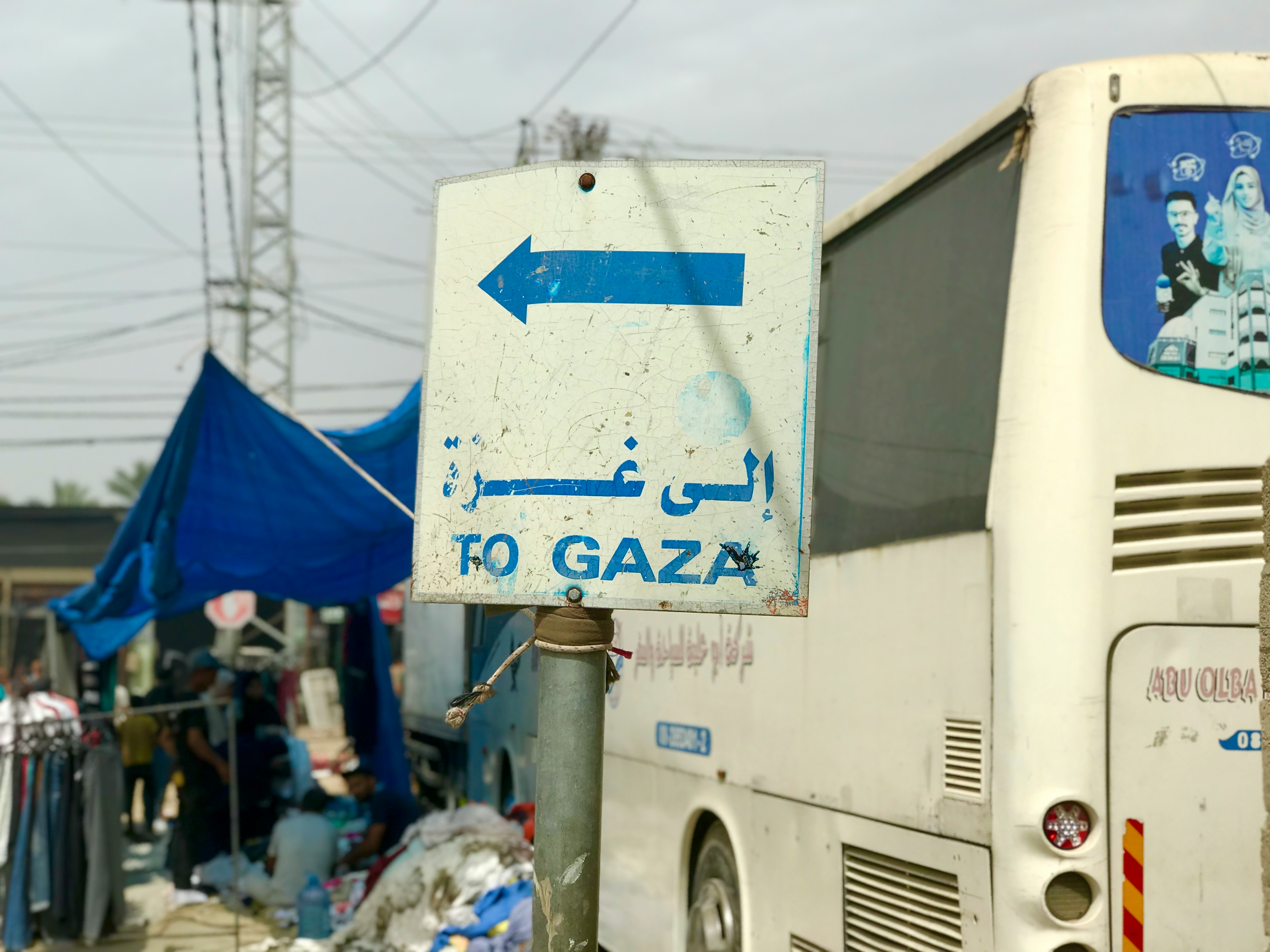
Photo by Emad El Byed on Unsplash
Disclaimer: Material published by Traversing Tradition is meant to foster scholarly inquiry and rich discussion. The views, opinions, beliefs, or strategies represented in published articles and subsequent comments do not necessarily represent the views of Traversing Tradition or any employee thereof.
- CAIR. “Survey Shows Bush Support Drops Among Muslim Voters -.” CAIR, https://www.cair.com/cair_in_the_news/survey-shows-bush-support-drops-among-muslim-voters/. Accessed 15 October 2024. [↩]
- Muslim Imams and Leaders Letter to the Community on the 2024 Elections, https://www.documentcloud.org/documents/25194305-muslim-imams-and-leaders-letter-to-the-community-on-the-2024-elections-vfinal [↩]
- X (formerly Twitter). @itranslate123. https://x.com/itranslate123/status/1731538938181964279?s=46 [↩]
- Al-Nu’man ibn Bashir reported: The Messenger of Allah, peace and blessings be upon him, said, “The parable of the believers in their affection, mercy, and compassion for each other is that of a body. When any limb aches, the whole body reacts with sleeplessness and fever.” [↩]
- Al-Rabbat, Abdullah. The Merits of Al-Sham. Independently published, 2021. [↩]
Ayatullah Muhammad
Ayatullah Muhammad is a versatile ‘Street-Student’, an Islamically-oriented and solution-focused coach and counselor, and a tech consultant.

Leave a Reply