
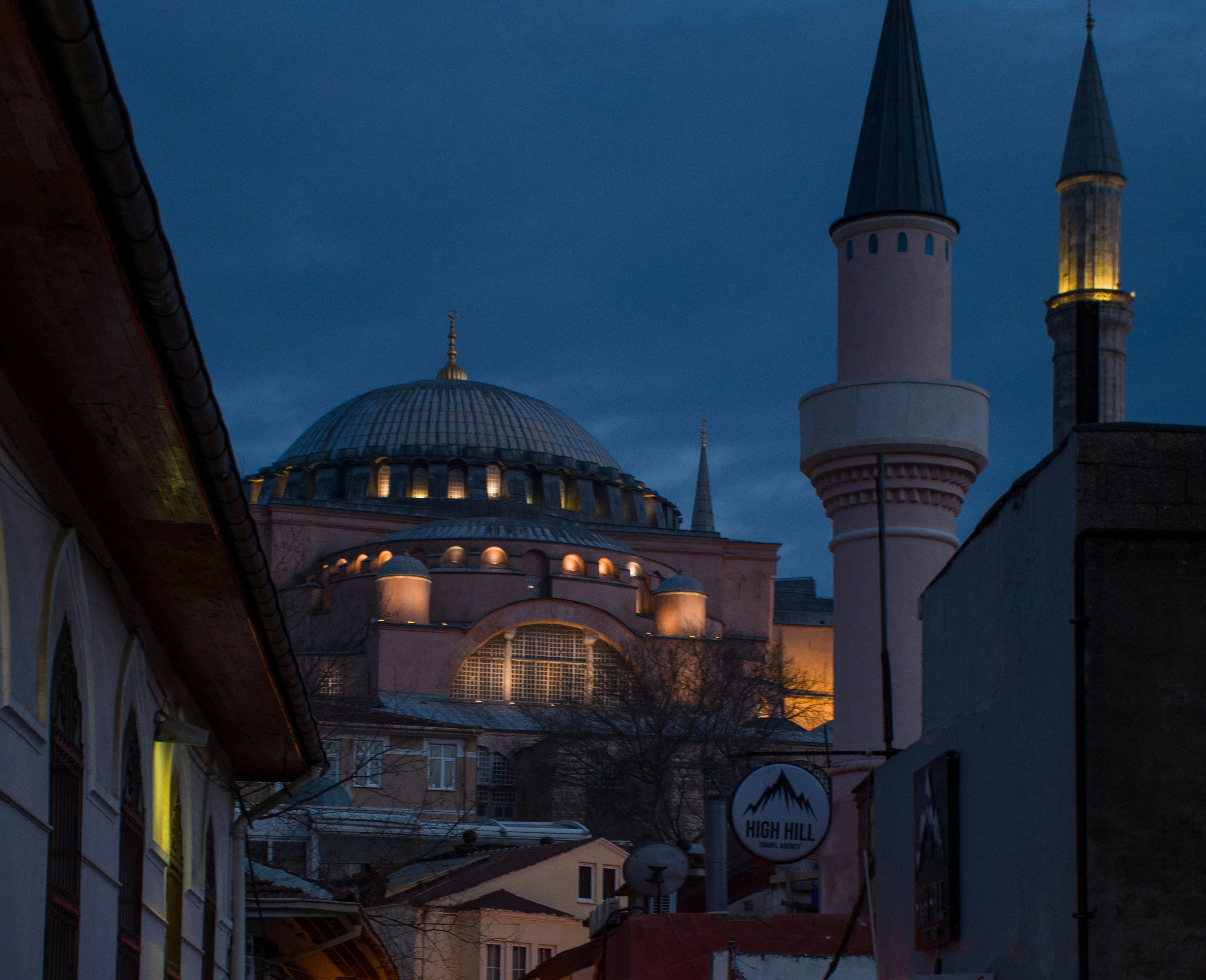
During the 2020 pandemic lockdown, a friend who had taken my recommendation to watch “Dirilis Ertugrul” shared his impressions with me. “I appreciate the Islamic elements they portray,” he remarked, “but as entertainment, I found those dream sequences tedious—Suleyman Shah appearing in Ertugrul’s dreams, sometimes Ibn al-Arabi showing up…it became quite irritating.”
I responded that while I understood his frustration, it stemmed from perceiving these elements as mere “fantasy” in what was ostensibly historical fiction. “These scenes draw inspiration from actual historical events,” I explained. “To dismiss them entirely is to overlook one of the most distinctive and beautiful elements of Ottoman civilization—the role dreams played in guiding leadership and shaping cultural expressions.”
The Islamic tradition holds a rich corpus of theories on imagination and visionary experience, especially among Sufis and Muslim scholars. From the advent of Islam to the present, dreams have played a vital role in the religious life of Muslims across all social strata, functioning as sources of spiritual, social, and political motivation. Despite the reticence of earlier generations of positivist scholarship, recent studies have highlighted the enduring significance of dreams in Muslim religious and cultural life, particularly through the extensive literature of dream interpretation and visionary experience.1
According to Sahih al-Bukhari, the Prophet Muhammad’s earliest revelations came through dreams: as narrated by Aisha (ra), “The first way in which revelation began for the Messenger of Allah, peace be upon him, was through true dreams during sleep.”2 These ru’ya ṣāliḥa (good dreams) marked the beginning of the prophetic mission and established dreams as a divinely sanctioned medium in Islamic tradition.
Islamic epistemology classifies dreams into three types: ru’ya ṣāliḥa (true and righteous dreams from Allah), ḥulm (disturbing or false dreams often arising from one’s lower self or Satan), and deceptive dreams from Shayṭān meant to confuse and distress. This triadic framework remains foundational to Islamic understandings of dream authenticity, guiding both interpretation and religious engagement with visionary experience.3
From these origins, dreams have remained central to Muslim spirituality. In Sufi hagiographies and beyond, visions of the Prophet continue to inspire and guide. The desire to encounter the Prophet in dreams endures in the devotional lives of many Muslims, reflecting a broader tradition in which such visions have shaped religious practice and even historical developments.
This article explores how the Prophet Mohammed (ﷺ) lived within the civilisational features of the Ottoman Empire through the medium of dreams. By examining specific cases where prophetic dream visions influenced Ottoman actions, resistance, literature, and architecture, I will demonstrate how these spiritual experiences translated into tangible cultural and institutional expressions. Through this analysis, we can better understand the distinctive role that dreams played as a connection between divine guidance and imperial action in shaping one of history’s most significant Islamic civilisations.
To fully comprehend the significance of prophetic dreams in Ottoman civilization, I propose a theoretical framework that I term “hierophanic motivation.” Drawing on Mircea Eliade’s concept of hierophany—the manifestation of the sacred in the profane world—this original framework provides analytical tools to understand how dreams featuring Prophet Muhammad functioned as points of contact between the divine and temporal realms, generating authoritative directives that shaped Ottoman civilization.4
Hierophanic motivation operates through several key mechanisms in the Ottoman context. First, dreams of the Prophet (ﷺ) provided direct divine sanction for imperial projects, policies, and personal transformations. The Prophet’s appearance in dreams conferred legitimacy and authority that transcended ordinary political or religious justifications. Second, through these dreams, the temporal distance between the Prophet’s era and Ottoman present collapsed, allowing direct communication between the prophet of Islam and Ottoman leadership. This established a sense of continuity and divine guidance across centuries. Third, unlike abstract theological concepts, hierophanic dreams provided vivid, sensory experiences that motivated concrete actions. The tactile and visual nature of these experiences translated into tangible cultural productions, from architecture to literature. Finally, as we will see in cases like those of Kātib Çelebi and Evliyā Çelebi, hierophanic dreams could dramatically redirect intellectual and creative energies, serving as pivotal moments in the production of Ottoman cultural artifacts.
Historians reading Ottoman chronicles often dismiss dreams as mere fiction, overlooking their significance for contextual history, interpretive potential, and their impact on Ottoman society. Through the lens of hierophanic motivation, these narratives deserve scholarly attention as reflections of civilizational features and historical drivers of concrete action.
Dreams were narrated as objective reality, with their veracity and interpretations largely unquestioned in official records. While oneirocritic literature occasionally acknowledged societal skepticism, such objections never diminished the explanatory power chroniclers attributed to dreams. The Sultan, as embodiment of the state, was considered the natural recipient of divine guidance through dreams. Once communicated to advisors and documented, significant dreams spread through court circles, though not all royal dreams became public record. This selective preservation suggests dreams functioned as legitimate sources of divine wisdom.5 Chronicles also document dreams of court elites which prompted and motivated notable actions.
Classical oneirocriticism distinguishes between theorematic and allegorical dreams. Theorematic dreams require little interpretation, presenting clear divine messages (sometimes called “chrematismos” in Greek tradition when featuring divine figures). Allegorical dreams, conversely, require extensive interpretation due to their symbolic and metaphorical nature.6
Dreams in historiographical contexts fundamentally operate along two distinct dimensions: motivative and interpretive. This article deliberately focuses on the motivative dimension, examining how dreams directly inspired and prompted action rather than how they were decoded. This emphasis aligns with the primarily theorematic character of the dreams featuring Prophet Mohammed (ﷺ), where the directive nature of the vision—rather than its symbolic meaning—drove historical developments in the Ottoman context.
The most prominent dream in Ottoman history is arguably that of Osman I, experienced while he was staying at the house of Sheikh Edebali.7 This dream is recounted as follows:
ʿOsmān Ghāzī prayed and wept for a while before sleep overcame him. He lay down and drifted into slumber. Among those present was a revered sheikh, known for his miraculous deeds, earning the faith of the people. Though he was a dervish, his asceticism was internal, as he possessed wealth, goods, and animals. His home was never empty; it was always filled with torches, banners, and guests. ʿOsmān Ghāzī would visit him from time to time.
One night, as ʿOsmān Ghāzī slept, he had a dream. In it, he saw a radiant moon emerge from the saint’s chest, moving toward him before entering his own chest. At that very moment, a great tree sprouted from his navel, its vast shadow stretching across the earth. Within this shadow lay mountains, and from their foothills, streams of water gushed forth. People drank from these waters, used them to irrigate their gardens, and even directed them to create flowing fountains. Then, he awoke.
While the legitimacy of this dream is contested among early Ottoman chroniclers,8 it exemplifies the allegorical dream type requiring interpretation, as evidenced by Sheikh Edebali’s explication of the vision as divine bestowal of sovereignty upon Osman and his descendants. The symbolic nature of this founding dream stands in notable contrast to the more direct, non-allegorical prophetic visions reportedly experienced by subsequent Ottoman rulers.
Among the most explicit manifestations of divine communication in Ottoman history are the prophetic dreams associated with imperial architectural projects. A striking example is the dream of Sultan Selim II concerning the construction of the Selimiye Mosque. According to the seventeenth-century Ottoman traveler Evliya Çelebi’s monumental travelogue Seyahatnâme, the Prophet Muhammad (ﷺ) himself appeared to Selim in a dream, directing him to construct his mosque in Edirne rather than Istanbul.9 This divine directive exemplifies the continuing tradition of prophetic dream inspiration in Ottoman architectural patronage.
What makes this case particularly noteworthy is its chronology. Historical evidence suggests that this prophetic visitation likely occurred before Sultan Süleyman the Magnificent’s death in 1566, as the chronogram for the Selimiye Mosque’s foundation yields the date 1564-65. This timing indicates that the dream vision preceded Selim’s accession to the throne, suggesting a form of divine pre-approval for his future imperial project. Despite this early divine sanction and the construction’s commencement, the magnificent Selimiye Mosque—widely considered architect Sinan’s masterpiece—was completed only after Selim II’s death.
This account reinforces the pattern of hierophanic motivation in Ottoman architectural patronage, where dreams featuring the Prophet Muhammad directly influenced imperial building projects. The Selimiye example further demonstrates how such dreams functioned as legitimizing devices, particularly significant for Selim II who followed in the footsteps of his illustrious father, Süleyman the Magnificent.
A comparable narrative, though of questionable historical authenticity, surrounds the construction of the Süleymaniye Mosque. According to this account, Sultan Süleyman had a dream in which Prophet Muhammad provided specific guidance regarding the mosque’s location and design. The following morning, the Sultan summoned the chief architect, Mimar Sinan, and took him to the designated location. Remarkably, Sinan began describing the mosque’s design in precise detail, as if anticipating the Sultan’s instructions:
“O my Sultan! We shall build the mosque here, in this manner. The sanctuary will be in this spot, the pulpit will be positioned there, and the lectern will be placed over there.”
The Sultan, recognizing that Sinan’s description matched exactly what the Prophet Muhammad (ﷺ) had shown him in his dream, remarked with surprise: “O chief architect! It seems you are already aware.” Sinan then revealed that he too had experienced the same dream: “My dear Sultan! I was right behind you (in the dream).”
Unlike allegorical dreams requiring interpretation, this prophetic vision was explicitly directive in nature. The dream served not merely as inspiration but as a divine architectural blueprint, motivating both sultan and architect to construct what would become a masterpiece of Ottoman architecture, crystallizing the empire’s golden age in enduring stone.10
The Ottoman Empire exhibited extraordinary devotion to the Prophet Muhammad (ﷺ), a reverence that permeated all levels of society from the imperial court to ordinary subjects. This Prophetic piety found its most profound expression in the spiritual governance of exemplary sultans like Murad III, Ahmed I, and Abdülhamit Khan II, whose leadership was deeply influenced by Sufi teachings that had become integral to Turkish Islamic practice.
As Ottoman historian Dr. Mehmet İpsirli documents, the very identity of the Ottoman state was inseparable from its Islamic foundation. Bernard Lewis’s observations reinforce this, noting how the Ottomans’ deep reverence for Islam manifested in their institutional nomenclature—the empire itself was “Memalik-i Islamiye” (Nation of Islam), its ruler the “Padishah-i Islam” (Sultan of Islam), its military the “Asakir-i Islam” (Soldiers of Islam), and its religious authority the “Şeyhülislam” (Scholar of Islam).11
One of the most defining characteristics of Ottoman Turkish culture was their profound love for the Prophet Muhammad (ﷺ). This devotion was nurtured through literary works that became essential reading throughout the empire. After the Quran itself, “Vesiletü’n-Necat” (“Opportunities for Salvation”), composed in 1409 by the early Ottoman scholar Süleyman Çelebi, emerged as one of the most widely read and cherished texts in Ottoman society. This devotional masterpiece, often simply referred to as “Mevlid,” became a cornerstone of Ottoman spiritual life.
This profound devotion extended beyond formal institutions into the broader cultural and literary landscape of the empire. The Turkish people, with their rich oral traditions and attentive listening culture, embraced a wealth of devotional literature celebrating their beloved Prophet. Works such as the Envarü’l-aşıkın”, Muhammediya, Ahmediye, Kara Davud, and Muzakki Nüfus became central to Ottoman spiritual practice, offering pathways for both rulers and subjects to nurture their connection with Prophet Muhammad, whom they regarded not merely as a historical figure but as a continuing spiritual presence, guardian, and symbolic sovereign of their empire.
The prophetic motivation in producing literature through the dreams is also noteworthy as some significant Ottoman intellectual figures derived profound literary motivation through dreams featuring the Prophet Muhammad (ﷺ), illustrating the close relationship between visionary experiences and scholarly production. Kātib Çelebi (1609–1657), one of the Ottoman Empire’s most prolific intellectuals, provides a compelling example of this phenomenon. After dedicating the majority of his scholarly career to secular fields including historiography, geography, and biography, he reportedly experienced a transformative dream near the end of his life in which the Prophet Muhammad (ﷺ) himself admonished him to devote greater attention to the Prophet’s name in his work. This divine intervention through the dream medium redirected his intellectual focus toward more explicitly religious scholarship.12 Similarly, Evliyā Çelebi (1611–after 1683), the renowned traveler and narrative master, frames his monumental ten-volume travelogue with an opening dream sequence in which he encounters the Prophet Muhammad (ﷺ) and his Companions at prayer in an Istanbul mosque. When Evliyā approaches after serving as mu’ezzin, he mistakenly requests seyāḥat (travel) rather than şefā’at (intercession)—a fortuitous error that prompts the Prophet’s smile and bestowal of both gifts, thus divinely sanctioning Evliyā’s subsequent journeys and literary production. ((Çelebi, Evliyâ. Seyâhat-nâme. In Evliyâ Çelebi Seyahatnâmesi, edited by Ahmed Cevdet, vol. 1, 28–32. Dersaâdet [Istanbul]: İkdam Matba‘ası, 1896–1938.))
Among the most remarkable episodes of prophetic dream motivation in Ottoman history is the defense of Medina by Fahreddin Pasha (1868–1948) during the final years of the Ottoman Empire. As the commander of the Hejaz region during World War I, Fahreddin Pasha’s unwavering determination to protect the Prophet’s city against British-backed Arab forces was, according to his own account, spiritually reinforced by a visionary experience of the Prophet Muhammad himself.
On the night of the fourteenth of Dhu’l-Hijja, amid the immense strain of his command and the growing threat to Medina, Fahreddin Pasha experienced a profound dream. In this vision, he found himself among unknown men working in a small square, when a majestic figure appeared before him. The man, radiating sublime authority, placed his left arm under his robe and, in a gesture of protection, commanded, “Follow me.” As Fahreddin took a few steps forward, he awoke suddenly. Overcome with emotion, he proceeded immediately to the Prophet’s Mosque, where he prostrated in gratitude before the sacred tomb.13
This dream was more than a mere nocturnal experience—it became the defining moment of his resistance to colonial powers. Fahreddin Pasha interpreted this vision as a direct charge from the Prophet (ﷺ) himself, affirming his duty as Medina’s protector. From that point onward, he considered himself under the Prophet’s supreme command, strengthening the city’s defenses, fortifying roads, and preparing for an inevitable siege. Despite relentless British and Arab pressure and dwindling resources, he refused to surrender, declaring, “I would never bring the Turkish flag down from Medina Castle with my own hands. If you want this castle to be evacuated, better to bring another commander out here.”
Fahreddin Pasha’s prophetic dream and subsequent actions exemplify the continued role of visionary experiences in Ottoman military and political decision-making. His steadfast defense of Medina, under the conviction of divine mandate, reflects the deep-seated Ottoman tradition of prophetic dream guidance—an enduring civilizational feature that shaped not only imperial policy but also the personal motivations of its leaders. Ultimately, his resistance, though overcome by geopolitical realities, stands as a testament to the power of prophetic dreams as historical catalysts, sustaining faith and action even in the empire’s twilight and as a strong motivation to resistance against colonialism.
Contemporary secular epistemologies frequently subject religiosity to critical scrutiny when examining historical outcomes, particularly when evaluating perceived failures. This analytical asymmetry—whereby religious motivation faces heightened skepticism when associated with negative consequences while being minimized or dismissed when linked to positive civilizational developments—represents a significant historiographical bias. The Ottoman case study of prophetic dreams demonstrates how hierophanic experiences functioned not as irrational diversions but as productive catalysts for tangible cultural, architectural, and political achievements. What distinguished Ottoman civilization’s approach was its sophisticated integration of spiritual and temporal domains, where prophetic dreams operated within established institutional frameworks rather than against them. This theoretical intervention challenges the false dichotomy between “rational” secular motivation and “irrational” religious inspiration that pervades much modern historical analysis. By acknowledging the generative capacity of hierophanic motivation in shaping Ottoman civilizational features, we can recognize the complex interplay between divine inspiration and human agency in historical processes. This balanced perspective allows us to better appreciate how seemingly ephemeral experiences like prophetic dreams could manifest in enduring cultural expressions that defined one of history’s most significant imperial traditions.
Disclaimer: Material published by Traversing Tradition is meant to foster scholarly inquiry and rich discussion. The views, opinions, beliefs, or strategies represented in published articles and subsequent comments do not necessarily represent the views of Traversing Tradition or any employee thereof.
- Green, Nile. “The Religious and Cultural Roles of Dreams and Visions in Islam.” Journal of the Royal Asiatic Society 13, no. 3 (November 2003). [↩]
- Al-Bukhari, Muhammad. Sahih al-Bukhari. Vol. 1, Hadith 3. Book of Revelation. n.d [↩]
- Al-Naysaburi, Muslim ibn al-Hajjaj. Sahih Muslim. Vol. 4, Hadith 2263, p. 1773. Kitab al-Ru’ya (Book of Dreams). n.d. [↩]
- Eliade, Mircea. The Sacred and the Profane: The Nature of Religion. Translated by Willard R. Trask. New York: Harcourt, Brace & World, 1959. [↩]
- Hagen, Gottfried. “Dreaming Osmans: Of History and Meaning.” In Dreams and Visions in Islamic Societies, edited by Özgen Felek and Alexander Knysh, Albany: State University of New York Press, 2012. [↩]
- Shulman, David, and Guy G. Stroumsa, eds. Dream Cultures: Explorations in the Comparative History of Dreaming. Oxford: Oxford University Press, 1999 [↩]
- Aşıkpaşazade. Aşıkpaşazade Tarihi. Edited by Halil Yavuz and Kemal Saraç. [↩]
- Özdemir, Lütfi. Ottoman History Through the Eyes of Aşıkpaşazade. Bartin University, 2013. Retrieved from ResearchGate. [↩]
- Evliyâ Çelebi, Seyahatnâme 3.246. [↩]
- Topbaş, Osman Nuri. The Ottomans: Its Prominent Figures and Institutions. Istanbul: Erkam Publications, 2023. [↩]
- Lewis, Bernard. Istanbul and the Civilization of the Ottoman Empire. Norman: University of Oklahoma Press, 1989. [↩]
- Kâtib Chelebi. The Balance of Truth. Translated with an introduction and notes by G. L. Lewis. London: Allen and Unwin, 1957, 145–46. [↩]
- Kandemir, Feridun. Medine Müdafaası. Istanbul: Nehir Yayınları, 1991, 530. [↩]
Murshid Amarayil
A dedicated researcher and scholar with a deep interest in civilisational studies, Ottoman history, and socio-religious studies.

Leave a Reply