
الدُّنْيَا سِجْنُ الْمُؤْمِنِ وَجَنَّةُ الْكَافِرِ
The world is a prison-house for a believer and Paradise for a non-believer.1
It was late at night. I was about to take a very important decision in life, and as an action as natural as opening my eyes, I glanced into twitter. Syria has been liberated!
I scrolled the feed with joy and confusion. I knew something was wrong in Syria, but I didn’t know the details. Then I started seeing these images from a certain Saydnaya Prison Complex in Damascus.
What followed were more and more gruesome and heart-melting images, videos, stories. I saw images of the mutilated body of Shaheed Mazen Al-Hamada (I hadn’t known who he was); the devils on duty had tried to melt his dead body using acid like they had done in the case of thousands at Saydnaya. They couldn’t erase the nur (light) or the smile of a shaheed (martyr) from his face. I saw other pictures from the complex. On them were verses from the Qur’an praying to the Lord of the Worlds, asking for steadfastness, verses reassuring that Allah (ﷻ) is with us always no matter what darkest corner of universe we are in.
Needless to say, it would be an understatement to say it changed my life. The pain of the prisoners, like the brandishing of cattles, left an unmistakable mark at the center of my heart, one that would not heal, one I hope never stops hurting until the moment I die.
I was ashamed, too. Ashamed of my ignorance about the levels of persecution my Muslim brethren have been undergoing in Syria. What am I, if not brain-dead, if I do not recognise a part of my body aching, and indeed they and all the Muslims in the world are like a body. Our peghambar (Prophet, peace be upon him) ascribed the metaphor onto us. Or was my heart hardened by so much self indulgence and I remained in my single body, as our Neoliberal masters allowed us to be? All praises to the Almighty, for he opened my eyes, and then I realised that my eyes had blinds on them, blinds that selectively ignored the incarcerated brethren from us. It was not that I didn’t care about them, but I got sucked into my life, like all of us into the luring vortex of the dunya (this world). I didn’t remember them in prayers, unless they were on the news, I didn’t think about them unless it was right in my face (book).


Alhamdulillah, Allah (ﷻ), in the days following, set me upon a path where my newly opened eyes started recognising my incarcerated brethren. Once I was on this path, I was like a man waking up from paralysis, This writing, I would say is an act of Shahadah, Witnessing, as Asim Qureshi and Walaa Quisay note in their book, When Only God Can See: The Faith of Muslim Political Prisoners:
“We write this book as believing Muslims – bearing witness not just to atrocity but to laughter and resilience. Joshua Ralston writes in his paper on the centrality of bearing witness to Muslim and Christian faith traditions: ‘The primary criteria for becoming a Muslim is to recite the Shahada, a term that means testimony or witness and derives from the Arabic root for witness: sh-h-d … For both Christians and Muslims, to bear witness is a key component of what it means to live in faithful submission to God.’ This article of faith intrinsically links the witness of God’s oneness to justice: “Allah bears witness that there is no deity but God, and so do the angels and those with knowledge – that God is maintaining creation in justice. There is no deity except God, the Exalted in Might, the Wise.”2
The book was my starting point in thinking about Muslim political prisoners. It deals with the faith of Muslim political frisoners and shuttles between the stories of the unjustly captured prisoners at the Guantanamo Bay and at several prisons in Egypt under the Post-Mursi government.
Please, take the time out of your precious lives and read this poignant book. It is told through various narratives from the prisoners themselves, structured around distinct sub-themes of faith, ranging from tales of torture and death to visions of dreams and djinns. The prisoners testify that the prisons “serve little purpose other than to dehumanise and destroy, and were it not our certainty that God can see and control all that takes place.”3
One is not only amazed by the attitude of the prisoners despite going through all the humanly imaginable tortures, especially at the Guantanamo Bay, where America sets standards of torture that the rest of the world imports, but also the clarity of their speech that makes one’s heart filled with Iman. What makes the Muslim prisoner so resilient? If the true goal in life is recognition, and true recognition about life as the Prophet ﷺ enlightens us is in recognising that this world is a prison-house for a believer, then what is the status of believers who are in prison all over the world for solely recognising this truth? One cannot even comprehend the level of Iman these prisoners have with the Tawfīq of Allah (ﷻ), so much so that they show not even America, the biggest temple of nation-state, and its carceral system that is way far from their own claimed standards of human rights, can contain the Muslim soul that is tied to Allah.
Body, Being and Transcendence: Why the Carceral Nation State Fails to Tire the Muslim
The answer lies at the root of being. What is the ontological imagination of the highly securitised nation state of the human and his being?
The Western Enlightenment conceives of the human as composed of two distinct elements: the body and the mind. The body to be disciplined through force and the mind through logic. This logic is very much understood in the way it acts on the body of the Muslim that they even doubt to be defiant. As Quisay and Qureshi remind us: “It is crucial to understand that the charge of terrorism is not regarded merely as a criminal act, but as an embodiment of a criminal identity capable of engaging in criminal acts.” (Quisay, Walaa, and Asim Qureshi. When Only God Can See: The Faith of Muslim Political Prisoners. Pluto Press, 2024.)) This charge is acted out on the bodies, where bodies are captured from across the globe on suspicion without little to no evidence and is then subsequently subjected to torture. Darryl Li describes this as a sovereign underground run by the United States and enacted worldwide through the Global War on Terror through a network of prisons and black sites from Guantanamo to Abu Ghraib and it’s this logic of captivity and subsequent torture that is enacted on the Muslim body.4
Now when a subject resists to adhere to a subject position that is allowed to them, what does the carceral state do? It unleashes its irritation of not being able to control or restrict the Muslim subject, who being from a different Universalism, one different from the one posited by the Global War on Terror, ((Li 196)) will never fit in. It tries very hard to inflict punishment on the Muslim’s body and mind through captivity, torture and even chances to betray their fellow brethren. Yet it fails, as we see in countless experiences of Muslim political experiences continuing their lives with dignity with just the verses: قُل لَّن يُصِيبَنَآ إِلَّا مَا كَتَبَ ٱللَّهُ لَنَا, that, “Nothing will befall us except what Allah has ordained for us.” This experience is so ubiquitous in the Muslim world that it is the first thing any believing Muslim will think upon reflecting on incarceration. What makes the Muslim so capable of surviving the deifying logic of the carceral nation state?
In the introduction of the book, Qusaiy and Qureshi quote the tenth century Muslim philosopher Ibn Sina, according to whom the human does not need to refer to a body or senses to recognise that they exist. Amid his confinement, Ibn Sina argued that the human soul—separated and independent from the human body—is the means “by which God communicates His truth to the human mind, and indeed imparts all order and intelligibility to nature.” The Muslim has a soul and recognises that it has a soul and that the soul is directly under his Lord. No one can control it, and as long as the soul is safe, no power on Earth, not the demigods of self-proclaimed democracies like the American, Israeli, Indian or any nation-state can harm his soul. The nation-state will never understand this and even if it does, it will never be able to harm the Muslim’s soul as long as the Muslim himself is aware of it and puts his trust in Allah.
Farah El-Sharif’s essay titled the ‘Anatomy of Tyranny’ puts this in the most elegant way possible. After her explanation of the anatomy of the beast that the security state is, says:
“We have understood the anatomy of tyranny, but what is the anatomy of a human being? In the material sense, a body, a heart, a brain, sure. But in the metaphysical sense, the human being possesses that which terrifies the security state. Something that monstrous regimes can never have: a soul. Light.”…… “What are we now if not a feverish, dying, ailing body? The only healing tonic, the remedy this body so sorely needs, is the light that already exists within each of us: to remember our untapped, uniting power that is tethered to the throne of the One. That is a power that is beyond regulation. Beyond control. It exists beyond the confines of prison states and torture chambers. It is freedom”5
The recognition of this soul and its lord does creates angels out of men. That despite all odds, despite the panopticon of the prison, the Muslim prisoner recognises that the prison is only laying bare the dunya to him; it frees him from the shackles of the body and the mind; he is free to worship Allah and thus truly recognising the words of the Messenger ﷺ. That, in actuality, the whole of dunya is the prison, and they, the prisoners are free inside. In the prisons, where the gaze of the Lord is truly recognised, the call of Allah comes to them and they respond.
Incarceration and the Indian Experience
What surprised me the most about my own ignorance was that a lot of leaders and members of our community in India are now in jails across the country, from Tihar to Viyyur. I did my master’s degree at a historic protest site, Jamia Millia Islamia in Delhi (the epicentre of the Anti CAA protests), where the wrongly accused student leaders Sharjeel Imam and Gulfisha Fatima among many others are still incarcerated, despite an alarming lack of evidence in both the cases.
Yet alarms are snoozed until they become unbearable, and then they are broken in slumber frustration. The Indian model of incarceration, it quickly became clear to me, was based on torture, intelligence forces, surveillance, bureaucracy and propaganda like El-Sharif describes the anatomy of the security state.
But there was something peculiar about the Indian State, its inefficiency. What scares most people, even at the lowest levels of law keeping, is the dreadful act of being entered into the judicial system. I remember when I was arrested once along with 20 other brothers; they wrote down my name at least ten times on paper by hand. Once this process of getting into the files begin, whether you are innocent or not, the inefficiency of the system in India will ensure that your torture begins right away. In India, incarceration is done through inefficiency. Your punishment begins the moment you’re in the system. The state is much aware of it, hence the draconian laws like the Unlawful Activities Prevention Act (UAPA).
I was reading the recently released memoir by Razik Rahim, an activist from Kerala who was wrongly accused and was jailed under UAPA. The book, titled Thadavarakkalam, reminded me of Kafka at times, where the repeated questions are repeated countless more times as each agency takes over the case and the case diary, along with the court proceedings, are explained in detail. One thing Raziq Sahib had what Kafka’s Josef K. didn’t, and the only thing that made him strong and patient in the face of a system that uses inefficiency as torture (obviously apart from actual torture), was that he had a soul that believed in Allah. His story inspires all of us with its sheer trust in Allah and the calmness followed by it. So much so that he shares his story of starting an Arts Troop at the Jail called ‘Freedom Band’ under which they made dramas, orchestrated programs, and even made a documentary. He revived the jail’s library, picked up a lot of skills, and organised the community within the prison. If one is not reminded of the fact that he is in prison in between, the tone in which Sahib talks is one of optimism, one of activism, one that is based only on the desire to show Allah: My Lord, only You can see me here, but that is enough for my life to have any value, meaning, and purpose.
One particular instance from the book worth recalling is a powerful reminder that a kind friend gives to Raziq Sahib, where he says: “Raziq Bhai, consider each moment you spend at the court as Ibadah, an act of worship, Allah will record this as a deed worthy of reward.”
Subhanallah, as the Prophet ﷺ expresses, the matter of the Muslim evokes a strange and unfathomable wonder in one’s self. In a reply letter to his daughter, there is this instance of the PFI leader E Abubacker (or Abu Sahib as he is adoringly called), quotes this ayah to reassure his daughter, and I believe in extension, all of us including himself: قُل لَّن يُصِيبَنَآ إِلَّا مَا كَتَبَ ٱللَّهُ لَنَا, that “Nothing will befall us except what Allah has ordained for us.”
What prison can hold men like these who believe that all the world’s a prison and true freedom exists in submission to Allah no matter where you are, what condition you are in? The Ustad of the Jail for us in India is Sheikh Abdunnasir Maedany, about whom my father Dr. A.I. Vilayathullah had written in verses:
They who put you behind bars
For years over a dozen now,
Are killing you inch by inch,
Muscle by muscle, limb by limb,
Organ by organ, cell by cell,
For you were alive in full,
Not dead like many others!
Sheikh Abdunnasir Maedany,
We're proud you do not regret this fate
Unlike many stupid around you suppose,
Who think life piled upon life of comfort
Is the path to success and glory!
Sheikh Abdunnasir Maedany,
May the Almighty lord help you
Make your days and nights in the prison
A most enjoyed time in his remembrance,
Chanting loudly or in whispers:
Subhanallah, Alhamdulillah, La Ilaha Illallah,
Like Yusuf, the mighty messenger of Allah,
Who, in his distressful days in prison,
Was invigorated by the chanting of his lord's glory
And inwardly praying: My lord, the prison I am in
I do prefer to what they're inviting me to!6
Maedany Usthad, as he is called by us, the beloved students of his, if not of his training, then of his never tiring tongue that called for justice, has taught the Indian Muslim what it takes to do politics in India as a Muslim and shown us what the price one has to pay. In Usthad’s case, it was his body, bit by bit, and his time. Yet, he remains strong and gives us strength. The Muslim experience in Indian jails, is something that one has to bear witness to, from Ustad Maedany and E Aboobacker to the graceful youth following their lead like Sharjeel Imam and Gulfisha. The young and the old are training in the Madrassah Yusufiyah, and by Allah’s promise, none of this will be in vain.
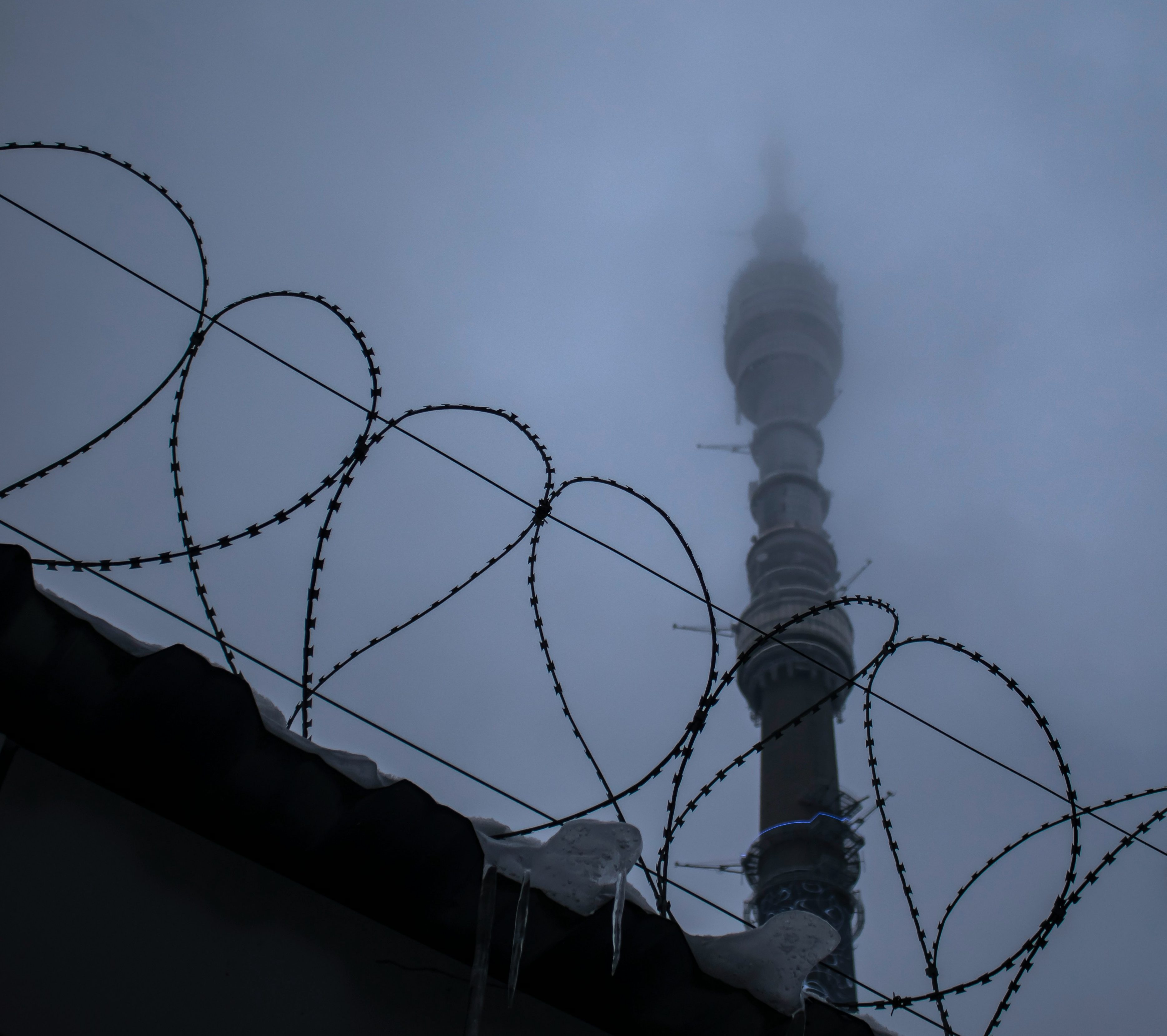
Photo by Nikita Nikitenko on Unsplash
Disclaimer: Material published by Traversing Tradition is meant to foster scholarly inquiry and rich discussion. The views, opinions, beliefs, or strategies represented in published articles and subsequent comments do not necessarily represent the views of Traversing Tradition or any employee thereof.
- Riyad As-Salihin 469 – The Book of Miscellany – كتاب المقدمات – Sunnah.Com – Sayings and Teachings of Prophet Muhammad (صلى الله عليه و سلم). https://sunnah.com/riyadussalihin:469. Accessed 4 May 2025. [↩]
- Quisay, Walaa, and Asim Qureshi. When Only God Can See: The Faith of Muslim Political Prisoners. Pluto Press, 2024. [↩]
- Quisay, Walaa, and Asim Qureshi. When Only God Can See: The Faith of Muslim Political Prisoners. Pluto Press, 2024. [↩]
- Li, Darryl. The Universal Enemy: Jihad, Empire, and the Challenge of Solidarity. Stanford University Press, 2020. [↩]
- Court [↩]
- “Sheikh Abdunnasir Maedany – Sheikh Abdunnasir Maedany Poem by Ahamad Ilyaas Vilayathullah.” Poem Hunter, 22 Jan. 2013, https://www.poemhunter.com/poem/sheikh-abdunnasir-maedany/. [↩]
Zaki Hamdan
Zaki Hamdan RN is a PhD Candidate in Cultural Studies at The English and Foreign Languages University, Hyderabad. He writes regularly at https://zakirahmani.substack.
Leave a Reply