
Traversing Tradition has been delighted to interview Aaliyah Ahmed, Head Curator at Our Cape Town Heritage (OCTH).
Aaliyah Ahmed is a BSocSci graduate from the University of Cape Town, majoring in History and Anthropology. Thereafter, Ahmed obtained a BA Honours Degree from the Michaelis School of Fine Art majoring in Art Curatorship. During her honours year, Ahmed produced a thesis and exhibition titled, “The Prayer Mat We Share”, which looked at how one specific prayer mat highlighted multiple narratives and lived experiences of Muslims around the world. Ahmed is the Head Curator at Our Cape Town Heritage (OCTH), a non-profit organisation based in Cape Town, South Africa. OCTH focuses on preserving the heritage, history and culture of marginalized communities within Cape Town whilst educating and providing visual literacy to these communities. Ahmed currently resides in Cairo, Egypt, where she completed her Arabic Language program at Aleem Center.
1. What are the primary responsibilities and functions of an art curator within contemporary museum practice/gallery?
There are many types of curators within contemporary museum practice and as such, responsibilities and functions will vary depending on the role itself. For example, museum curators and gallery curators have slightly different responsibilities. Museum curators are in charge of the museum collections, which they then have the freedom to choose and curate for displays. They are also in charge of the acquisition of artworks from artists, private collectors, or galleries. Some museum curators have specializations in a specific time period of art, or might even focus on one specific artist.
Curators are in charge of selecting artworks that work well together, conceptually or technically, and it is up to the curator to create a narrative that connects all of these artworks together in ways that might not be so apparent to the general public. The curator communicates what the artist or artwork is trying to say to the audience.
There is an aspect of conservation for some museum curators whereby they will ensure that the artworks or objects are being stored correctly in storerooms with the right temperature and are being categorized correctly. Curators will also do walk-abouts with the attendees of the museum to explain what the exhibition is about and might go into detail about each artwork.
Globally, museums have been associated with national identity, which means the curator usually will choose works that intentionally represent the identity of the nation state. They will choose what is worth remembering in the historical record of a country and it is for this reason that museums and museum curation is political in nature. However, due to decolonial museum practices, this has slightly changed, yet this is still very much an important point in museums.
Gallery curators do the same thing, but their curation is based slightly more on artists that will be able to make more sales for the gallery (i.e. are more profitable). In general, galleries have slightly more freedom as they are usually private companies, so each gallery has a different focus, theme or style of art that they choose to focus on and it is up to the gallery owner to make that decision.
2. In what ways do curatorial practices in South African institutions shape public understanding of Islamic history and contemporary Muslims?
After Apartheid (1948-1994), the institutionalized segregation and discrimination in South Africa, certain cultural institutions and museums were founded in order to represent the different communities and groups of people that were not highlighted in the past. The reason why I mention this first is because, although we do not have any institution that “specialises” in Islamic history, Muslims have always been discussed and present in South Africa’s public history. Whether it be through the first Muslims in South Africa that arrived as indentured slaves, or political exiles during colonialism, or the dozens of Muslim South Africans who fought for South Africa’s freedom during Apartheid, they formed part of the fabric of South African society.
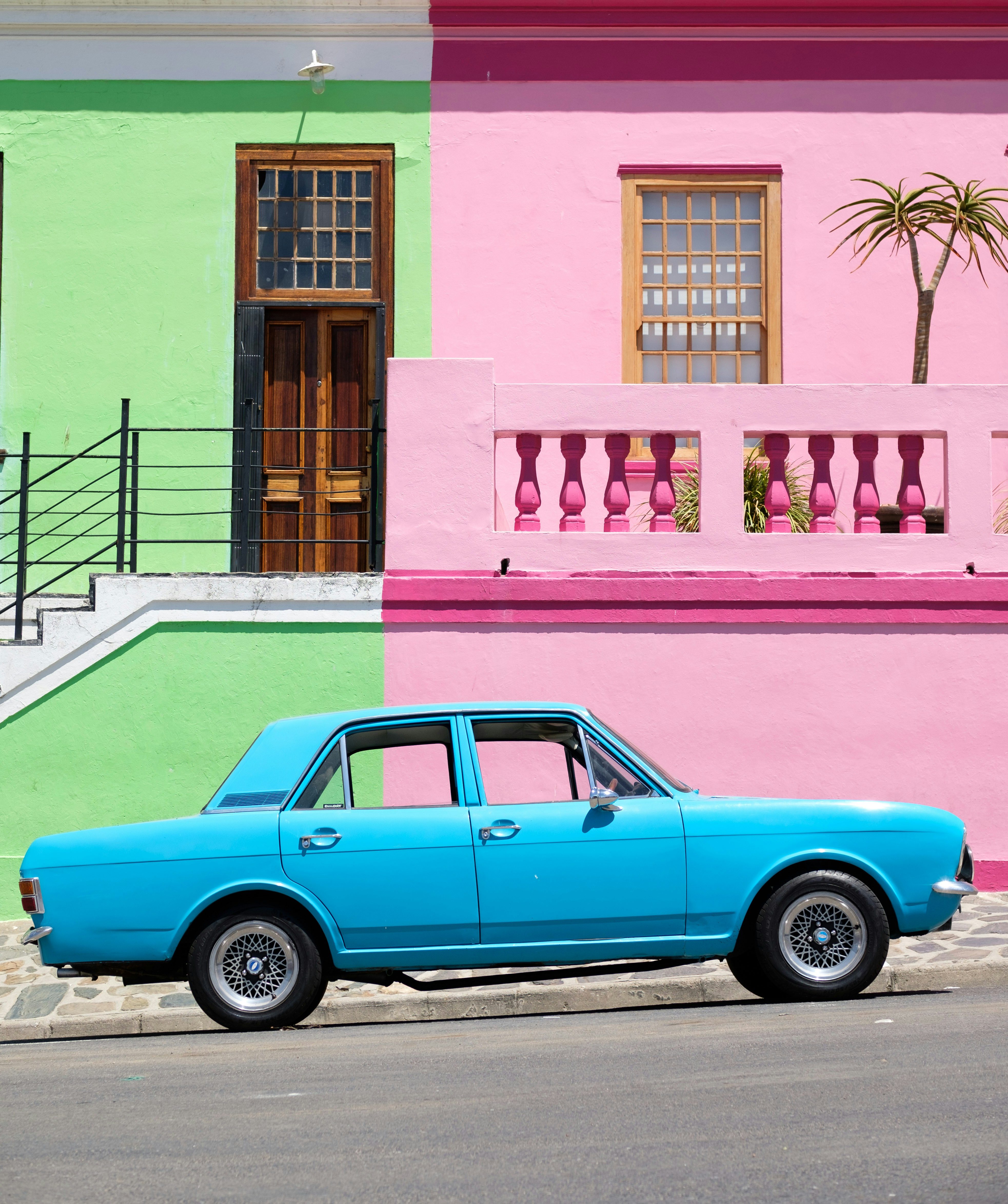
Therefore, when Museums were established post 1994, Muslims and Muslim narratives were included in these museums. For example, the Iziko Bo-Kaap Museum, one of the oldest homes built in the Bo-Kaap area (historically where many Muslims lived from mid 1600s until now), was turned into a museum in 1978 to showcase the local Islamic culture and heritage of the community it is situated in.
The District Six Museum, established in 1994, was dedicated to represent the District Six community, in which many muslims lived and thrived before the Group Areas Act in the 1950s.
The Robben Island Museum, established in 1997 and formerly a prison, had exhibitions and displays of the activists who fought for South Africa’s freedom, including many Muslims such as Achmat Cassiem and Ebrahim Ismail Ebrahim. However, during colonial rule, Robben Island was used as a prison, and Muslims such as Sayed Abdurahman Motura, an exiled Muslim freedom fighter in the mid-1740s, and Imam Abdallah ibn Qadi Abdus Salaam (known as Tuan Guru), a Muslim leader who was imprisoned for his anti-colonial activities, were both held at Robben Island. Both are well-known historical figures in South African history and within the Muslim communities for their devoutness to Allah, as they were trained Muslim leaders and scholars.
When I was younger, I remember going to an exhibition at the Apartheid Museum in Johannesburg, established in 2001, where I viewed an exhibition about Ahmed Timol, another anti-apartheid activist. This is all to show that Muslims in South Africa have always had an impact on South African history, and on “Islamic history” within South Africa. Many curators, cultural practitioners, museums, and cultural institutions recognize the work of all of these individuals. There is an existing footprint of the impact Muslims had in the shaping of contemporary South Africa, and generally speaking, Muslim South Africans and South Africans alike are not unaware of these histories, and in fact recall the victory in these histories with pride.
As a Muslim community, and partly with the help of these institutions, we are proud to be Muslims in South Africa, and many Islamic traditions have been upheld. Having said all of this, there is still a lot of work that needs to be done in the Muslim communities in South Africa. Islam has become a symbol of identity, which inherently is not a bad thing; however, more work needs to be done when it comes to understanding who these great Muslims were who stood up for justice. We, as a community, should not just look at them as historical figures, but we should look into the beliefs that they followed, and what motivated them to hold onto their faith despite severe and brutal conditions. Where did they get their inner strength from? How can we lead lives that honour them, not just outwardly but inwardly too?
Now, looking at contemporary art spaces, there has not been much representation of Muslims in these spaces. Unfortunately, Muslims who get into these spaces tend to portray realities or lived experiences that defy the experiences of the average Muslim lived experience. I believe this to be the case, as most cultural institutions nowadays tend to operate within a postmodern framework which prefers the individual experience and subjective reality. However, there are a few Muslim artists who explore their faith and identity on universal terms, which is more relatable to the community. Therefore, contemporary curatorial practices, if within a postmodern framework, choose to focus on unique stories which might not resonate with the rest of the Muslim majority.
There are one or two institutions who focus on Islamic Art and have yearly exhibitions where they display Islamic calligraphy and geometry, and run workshops. These tend to be private institutions funded and started by Muslims. There are Muslim artists that explore their faith and identity and who use the art form of calligraphy to paint the insides and outsides of mosques. There are lots of murals, which are considered public art, where Muslims will leave their mark. Even the maqams, the shrines of religious figures, become sites of artistic expression, as within these shrines are calligraphy and other ornaments that beautify the space.
There have been Muslim artists who have exhibited in group shows in South Africa; however, only in 2025 did one of South Africa’s top art schools have an exhibition solely focusing on Islamic Art. This comes to show that although we have left a mark on South African history, it is only recently that attention and curiosity has been put on the art made by Muslims which has been influenced by Islamic principles, not just about Muslim identity still governed by Western philosophical paradigms. Thus, there is lots of work that needs to be done where, within the art world, we differentiate what is art reflecting Islamic principles and beliefs and what is art created by Muslims, as the two are not the same.
3. In your experience, how has apartheid’s cultural legacy shaped current museum practices in South Africa?
Museums, by their nature, are colonial projects. Museums were spaces where European colonialists would gather what they found to be “exotic” from the lands they colonised and would display it to their audiences back home to be marvelled at. Within this practice there is an aspect of “othering,” spectacle, and removing objects from their natural environment, and what it might mean to the community it originates from.
These old museums would house different specimens, taxidermy, and various objects that they wanted to study. These studies were very much painted with misinterpretations, power dynamics, and preconceived ideas imposed on peoples and objects, which portrayed the community in a negative light. Apartheid was a product of a colonial mentality and therefore they both call to very similar ideologies. Museums then became spaces where the material objects or possessions of the ruling class, nobility, and elite were displayed. Through this, it perpetuated the “grandeur” of these people, yet did not portray anything about the working class or the rest of the society or community.
Museums globally have been associated with national identity, which means the curator usually will choose works that intentionally represent the identity of the nation-state. They will choose what is worth remembering in the historical record of a country, and it is for this reason that museums and museum curation are very political in nature. Consequently, in South Africa, many museums are aware of this history and are choosing to adopt decolonial art practices to remedy the issues that arise from this history. If you go to smaller towns in South Africa, their museums still preserve a colonial history whilst ignoring the vast narratives that existed before colonialism, from individuals whose families have lived in that specific area for many generations. These museums do not engage with the original community members of these smaller towns, yet tend to highlight the colonial rule of the Dutch and British in these areas.
Museums in South Africa today are looking at ways to incorporate more works by individuals from communities that have been marginalised. Museums are also incorporating more diversity into their teams to bring in broader perspectives and deeper understanding.
4. What ethical considerations guide you when representing faith-based or culturally intimate narratives in public exhibitions?
One thing that I try to keep in mind is representing the community, faith, or culture for what it is, not what people think it should be. When talking about faith-based narratives, I have found that they are only accepted into contemporary spaces if they are spoken about in terms of “reimagining,” “redefining,” or “reconstructing,” which are terms thrown around in the art world. These ideas, which do have some value, can sometimes distort or flatten the lived experience. Therefore, I try to represent the community based on what they actually practice and to correctly portray the principles and values upheld in the community, not just the versions that are palatable to institutions.
Part of the ethical considerations is knowing when a story needs to be told, when it’s not your story to tell, and when you need to work in collaboration with someone else in order to do justice to the community you are trying to portray. Sometimes certain experiences within communities are not “up for grabs” and don’t always need to be accessible to the general public, as it diminishes the sanctity of the activity or practice in the community. As a curator, your work can either explore certain aspects of a community that are not well known, or a curator can unintentionally, or intentionally, perpetuate and reinforce certain stereotypes without contextualising why and when these stereotypes were created.
5. Much of postmodern art rejects grand narratives, which many Muslims view as in tension with Islamic art is the latter is inherently tied to a metaphysical truth claim. Is there room for transcendence or the sacred in contemporary art discourse, which is often dominated by secular theory?
There is definitely room for transcendence or the sacred in contemporary art discourse, and we do see artists and cultural institutions speaking about the sacred. Usually these institutions are funded and started by Muslims themselves, for example the Islamic Art Biennale in Jeddah, Saudi Arabia.
Overall, there are not many Muslim artists in the contemporary art scene that are interested in talking about the sacred in the real sense of the word. Many Muslims today have adopted a more secular worldview, which then makes sense when we look at their artwork and see an expression of that worldview. There are many Islamic artists in the world today, but they tend to stay in the “Islamic Traditional Art” field, which has its own operating systems and does not often participate in the secular contemporary art space. Some Muslim artists do speak about the sacred in their work but might touch on it in a very superficial way. Unfortunately, we live in a world where we are used to consuming whatever we want and always try to find new narratives to profit off of. This means that exhibitions that I have attended, which explore the sacred, do so in ways that exoticise the practice, or make it profitable, rather than upholding the tradition in terms that are true to its nature and that respect the community from which this practice comes.
However, I am a firm believer that not everything sacred needs to be on display to be consumed by the masses. The sacred is something private, and it defeats the purpose if it is available for everyone to consume all the time. In Islam, the sacred, in many ways, is a personal expression, and it would be better if it was not in contemporary art spaces. As Muslims, instead of fighting for a seat at the table (in these contemporary art spaces), we should go back to the daily practice of the sacred and we should be concerned with embodying sacred acts and actions in a very practical sense. The sacred in Islam, for us, is something we have to embody every day; it’s a living embodiment of faith and does not need to be marvelled at in third spaces in order for it to be deemed important. I do not believe that spaces that are built with a secular or postmodern framework in mind will truly understand what the sacred means, as they lack the epistemologies and lived experiences that give sacred narratives their profundity.
6. What do you think of the idea that much of postmodern art is a product of cultural decay. Can curation push against nihilism?
Certain curatorial practices within cultural institutions can push against nihilism if the artwork, curator, or artist themselves choose to push against nihilism, since curation and art are deeply related to the state of the individual who possesses these titles. They say that art is the “expression of one’s self,” so all of these practices have the potential to be of benefit if the individual themselves wants to make a positive change. The same can be said in its opposite. If we have become corrupted internally, then what we choose to believe and explore will be reflected in what we do in these professions.
7. What advice would you give young Muslim curators and artists entering the field today?
Before anything you do, I would say to study your own beliefs first and explore what principles you believe in. This will make it easier when you enter a field that is predominantly filled with ideas and ideologies that inherently go against your beliefs as a Muslim. Once you understand what it is you believe in and why, when you begin your practice as an artist or curator, your intentions behind your work will be clear, and you will not feel the need to fit your narrative into categories defined by others with different worldviews. For Muslim curators and artists, I would encourage creating new artistic and curatorial practices that highlight and stick to the foundations of our religion. You will find that even if you are accepted into contemporary art spaces, your expression of religion will still be criticised through a secular understanding of what religion is and the amount of space it should occupy in your world. To remedy this, I would say to start your own cultural institutions which operate on your own terms, informed by Islam.
Photo by Arno Smit on Unsplash
Disclaimer: Material published by Traversing Tradition is meant to foster scholarly inquiry and rich discussion. The views, opinions, beliefs, or strategies represented in published articles and subsequent comments do not necessarily represent the views of Traversing Tradition or any employee thereof.
Leave a Reply