
Just as the new millennium set in, the dot-com bubble imploded.
Silicon Valley’s t-shirt-wearing CEOs, high on the bravado of venture backing, fell sharply; the wind knocking the thin membrane of their vehemently advertisement-free companies. As the icy air of the ‘real’ world set in, a state of exception began and never lifted.
In their early years, Google’s founders held strong feelings against advertising and devoted an appendix to its ‘evils’ in their original academic paper.1 But in mid-2000, against the intense pressure of investors, they – and subsequently Facebook – succumbed. And so, out of thin air, at zero marginal cost and with billions of people’s free labour, a new raw material was created: the extraction and commercialisation of user data.
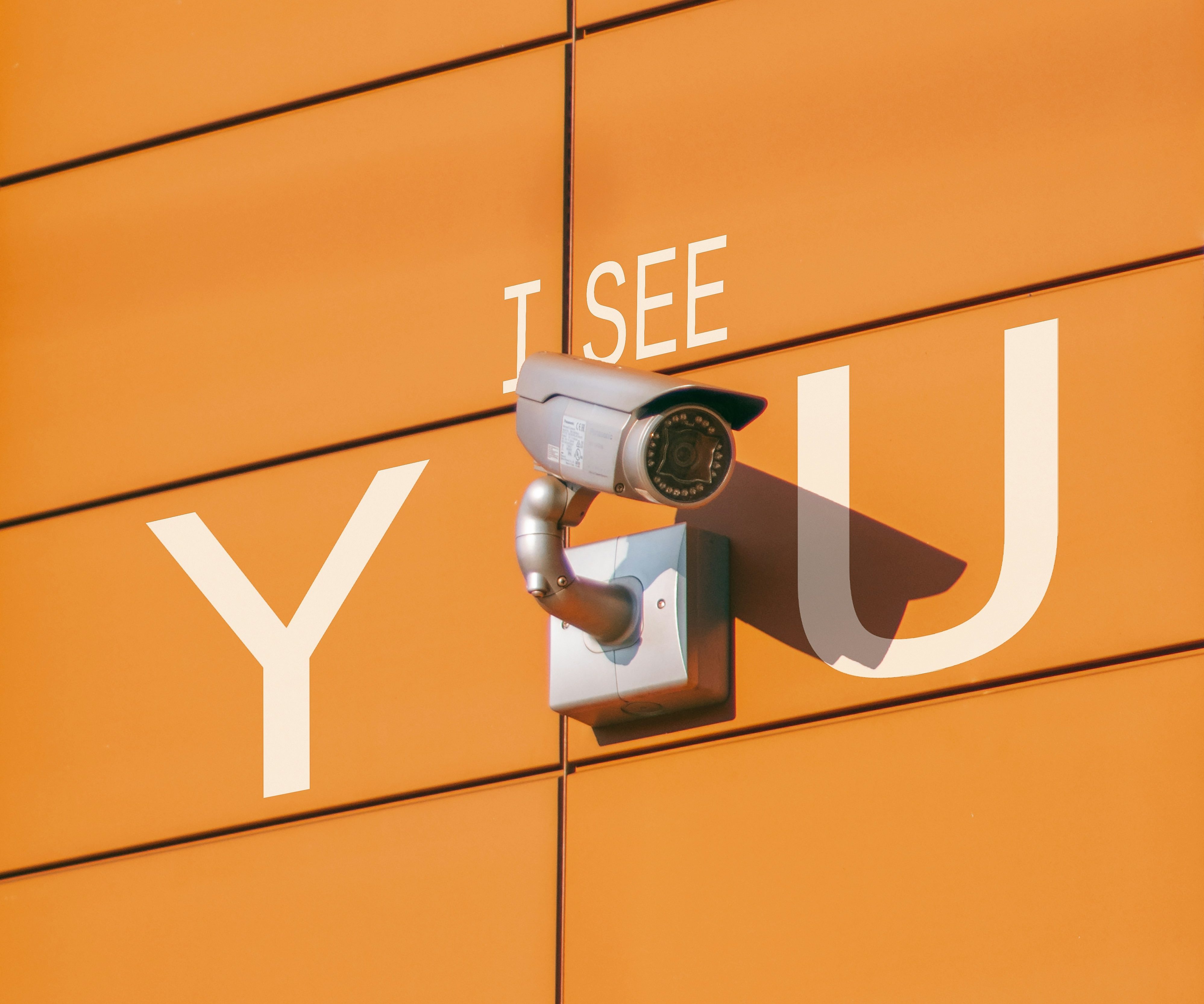
Since those early days, our every search, backspace, mouse movement, momentary pause, closure of tab, click, like, dislike, follow, unfollow, date, time and location have been hoovered up and sold to advertisers for profit.
The American scholar Dr. Shoshana Zuboff calls this Surveillance Capitalism.2 Where the last iteration of capitalism transformed the raw materials of the earth into products, “now it is human nature that is scraped, torn, and taken for another century’s market project.”3 In an even faster turnaround, the AI bubble seems to be inflating and threatening rupture along a similar trajectory, having announced integrated advertising – once deemed ‘uniquely unsettling’ by OpenAI’s founder.4 We would be extremely foolish to believe that predictive advertising is the end goal.
AI is increasingly playing an outsized role in warfare, from the obsolete data that propelled an AI-enabled tool to target 160 schoolgirls in Iran5 to Palantir’s Artificial Intelligence Platform making life-or-death determinations in Gaza.6 OpenAI’s military contracts with the Department of Defence7 and ICE’s violent detention of activists and vulnerable communities underscore how our very data is becoming a weapon of violence.
Why, then, do we keep choosing to share?
In sharing (and thereby handing over) our wants, step counts, doorstep visitors and home audio, we have not gained the capacity to live more mindfully, spiritually or optimistically. Our attempts to be seen or connected are excruciatingly short-lived or shallow. In his book, The Right to Oblivion, Pressly writes that what was originally framed in ‘humanistic terms’, privacy is now viewed as ‘property’, which we are happy to exchange for a value set by the market.8 And yet the exchange has never been transparent or worth the price.
Beyond even physical isolation, privacy encompasses the right to not be fully legible, available and, therefore, monetisable. No market, institution, state or employer should demand the murky stuff of personhood. In that space of ‘ambiguity’, we can be experimental, contradictory, repentant and forgiven by Allah, all within mere seconds, unknown to anyone else.
The silos of privacy ensure our separate pieces of information do not follow us around like unwanted shadows, pressing on top of each other to create a form of their own. A prayer app entry, virtual shopping list and menstrual cycle log may each appear to be innocuous bits of data in isolation, but when aggregated, they become dangerous mechanisms of coercion. That was the assessment of none other than NSA whistleblower Edward Snowden.9
Instead, by transacting our privacy, Pressly argues that we have lost something fundamental: we have lost the form of obscurity that allows for ‘ambiguity or potential’.8
Perhaps we have also lost an avenue to the divine.
Across history, seclusion was a prerequisite to miraculous, transformative events: in the small cave of Hira, far from the gaze of idol-worshippers, revelation came to the Prophet Muhammad ﷺ. It was on an isolated journey that Allah ﷻ spoke to Prophet Musa عَلَيْهِ ٱلسَّلَام and commanded him to stand before a tyrant and proclaim Truth. Under the layers of darkness, in the depths of the sea, came the miraculous rescue of Prophet Yunus عَلَيْهِ ٱلسَّلَام; and, in a room alone, the out-of-season fruits appeared to a woman whose purity would birth the Messiah. All of these moments were unseen as they happened, unrecorded by human means and, because of the humility and sincerity that complete privacy entails, resulted in Allah’s majestic favour.
Privacy is such a fundamental part of our submission to Allah that our faith has inbuilt mechanisms to safeguard it. Our worship is analogue and timeless; a resistance against surveillance, both physical and psychological. Our Salah is a private conversation with Allah, whether alone or standing shoulder to shoulder. Our fasting is beloved for its hidden sincerity; our pilgrimage allows for an internal reformation. Dhikr is a murmur of the tongue or beat of the heart; modesty demands we dignify ourselves and others by curtailing our sight. Crucially, our faith has never demanded an intermediary, neither in the form of a priest nor an app.
In disregarding this core tendency of humanness, we are flailing and overwhelmed, despite the many promises of clarity from the age of information. But, like Allah says in the Quran, “Verily, in the remembrance of Allah do hearts find rest” (Surah Ar-Ra’d 13:28).10 Thus, our worship is our protective cave and the first frontier against prying eyes. Far from being a retreat or neutralisation, this must be the foundation of our resistance. The more of ourselves we pour into our worship, the more we minimise what can be swallowed by the insatiable beast, ready to be purged out into an algorithmic casino and, more lately, the battlegrounds of violent geopolitics and state suppression.
Disclaimer: Material published by Traversing Tradition is meant to foster scholarly inquiry and rich discussion. The views, opinions, beliefs, or strategies represented in published articles and subsequent comments do not necessarily represent the views of Traversing Tradition or any employee thereof.
Photo by Alexey Sabulevskiy on Unsplash
Works Cited:
- Brin, Sergey, and Lawrence Page. “The Anatomy of a Large-Scale Hypertextual Web Search Engine.” Computer Networks and ISDN Systems, vol. 30, no. 1–7, 1998, pp. 107–17. [↩]
- Zuboff, Shoshana. The Age of Surveillance Capitalism: The Fight for a Human Future at the New Frontier of Power. PublicAffairs, 2019. [↩]
- Zuboff, Shoshana. The Age of Surveillance Capitalism: The Fight for a Human Future at the New Frontier of Power. PublicAffairs, 2019. [↩]
- Lunden, Ingrid. “Ads Might Be Coming to ChatGPT — Despite Sam Altman Not Being a Fan.” TechCrunch, 4 Dec. 2024, techcrunch.com/2024/12/04/ads-might-be-coming-to-chatgpt-despite-sam-altman-not-being-a-fan/. [↩]
- ”US May Have Struck Iranian Girls’ School After Using Outdated Targeting Data, Sources Say.” Reuters, 11 Mar. 2026, www.reuters.com/. [↩]
- Bamford, James. “How US Intelligence and an American Company Feed Israel’s Killing Machine in Gaza.” The Nation, 12 Apr. 2024, www.thenation.com/article/world/nsa-palantir-israel-gaza-ai/. [↩]
- Field, Hayden. “OpenAI Snags $200 Million Contract With US Defense Department.” Bloomberg, 17 June 2025, www.bloomberg.com/news/articles/2025-06-17/openai-snags-200-million-contract-with-us-defense-department. [↩]
- Pressly, Lowry. The Right to Oblivion: Privacy and the Good Life. Harvard University Press, 2024. [↩] [↩]
- Wong, Queenie. “Edward Snowden Says the Central Problem of the Future Is Control of User Data.” TechCrunch, 13 Dec. 2016, techcrunch.com/2016/12/13/edward-snowden-says-the-central-problem-of-the-future-is-control-of-user-data/. [↩]
- The Qur’an. Translated by M. A. S. Abdel Haleem, Oxford University Press, 2004. [↩]
Amirah Chati
Amirah Chati is an alimiyyah graduate with a Bachelor’s degree in the UK. An ardent follower of politics and current affairs, she hopes to center the role and values of a Muslim in her writing, combining her teaching in the local madrasah with policymaking and research.


Leave a Reply