
This is an English translation of an interview Dr. Qayyim Naoki Yamamoto and Dr. Elvida Ünal gave to Merve Yiğit. It has been translated by Merve Yiğit and edited by Traversing Tradition.
Dr. Qayyim Naoki Yamamoto completed his PhD at the Graduate School of Asia and Africa Studies, Kyoto University in 2018. He specializes in Ottoman Tasawwuf and traditional Japanese culture. His publications include a Japanese translation of Futuwwa and Introduction to Sufism: A Comparison with Shonen Manga.
Dr. Elvida Ünal completed her Ph.D. at Peking University in 2021. She specialized in Chinese Islamic thought, Chinese philosophy, and the history of Tasawwuf. She is currently working at Ibn Haldun University, Sabahattin Zaim University in Turkey.
Why should Muslim intellectuals turn their attention to the East Asian Islamic tradition?
Dr. Naoki Yamamoto: In his work On the Five Colors of Islam (Aux cinq couleurs de l’islam), the orientalist convert Vincent Mansour-Monteil divides Islamic civilization into five categories. These represent distinct Islamic traditions manifested in the Turkish, African, Malay, Arab, and Indo-Persian regions. However, I believe there is an important gap in these categories.
For example, I am a Japanese Muslim convert. According to this theory, where does an East Asian person stand? Is there no such thing as a Sino-Islamic culture, or is it something that has only just begun to emerge? In fact, the Sino-Islamic civilization can be considered one of the oldest cultures within the Islamic tradition, since there are accounts suggesting that one of the sahabah (Companions) reached China. Without an understanding of Chinese Islamic history, we cannot fully comprehend the broader tradition of Islamic civilization.
Dr. Elvida Ünal: As Naoki said, Islamic civilization is not limited to a few well-known regions and languages. Islam, as the final universal religion, embraces all of humanity, languages, and races. Yet, when Islam is mentioned in academic settings, it is usually the Middle Eastern or Western perspectives that come to mind.
However, beyond the Middle East, India-Pakistan, the Malay world, Africa, and the Western regions, there is also a significant Muslim population in China. When people hear “Chinese Muslims,” they often think only of the Uyghurs. But in China, there are Muslims from ten different ethnic groups—some of Turkic origin, such as the Uyghur, Kyrgyz, Kazakh, Uzbek, and Salar; some of Mongolian origin, like the Dongxiang. And some form a completely new nation: the Hui Muslims, who emerged from both within and beyond China, united around a common identity—Islam. Therefore, studying the Hui Muslims is especially important.
The second answer to why we should study the East Asian Islamic tradition is this: Islam reached China at the same time it spread to Anatolia, Africa, and India. For example, some of the earliest mosques in Islamic history were built in China. That is why we must understand the form Islam and culture took there. Through pilgrimage convoys, traveling dervishes, and the circulation of books across the Islamic world, China came to possess an Islamic heritage far greater than we might imagine. This heritage is an indispensable part of Islamic civilization as a whole. If one part is missing, the Ummah cannot truly know itself or become one body. We are, therefore, in urgent need of remembering and studying this legacy.
Why do we need to know about the Han Kitab and Chinese Islamic tradition?
Dr. Yamamoto: Chinese Muslims have always been a minority. As a Japanese convert, I am a minority too. This situation ignited in me a passion for the importance of East Asian Islamic thought. After all, the central question is: “How can we understand Islam in a place where it is not the system of the majority?”
After converting to Islam, I found myself asking, “What does it mean to be a Japanese Muslim?” “Am I supposed to be a Muslim like a Turk, an Arab, or a Malay?” I also wondered whether accepting Islam meant abandoning my past as a Japanese person and my Japanese culture. While reading different sources, I was most surprised by the Sino-Islamic works—books that felt as though they were written by a Muslim samurai. I noticed that Taoist, Buddhist, and Confucianist terms were used even more effectively than by Taoists, Buddhists, or Confucianists themselves. I realized that if we could revive this valuable heritage, it would be easier for us to build a Japanese-Islamic culture.
Therefore, studying Sino-Islamic culture is necessary not only to fill an academic gap but also to develop a proper method (usul) for Japanese Muslims. One fascinating aspect of Islamic civilization is how Islamic ideals have taken on linguistic and cultural expressions suited to their local contexts. For example, in the Malay region, Sufi saints used shadow plays to teach Islamic history and thought to the people. Many manuscripts written in the region’s various languages—Malay, Javanese, and Sundanese—still remain. The vision of Islam is universal, but the usul of experiencing it is diverse. If this is so, then there should also be a distinct usul for the Japanese to experience Islam. I hope to learn about the history of Islam in East Asia as a key to understanding such an usul.
Dr. Ünal: On this point, the 1,300-year history of Chinese Muslims and the Han Kitab offer important insights into how Muslims can live in societies where Islamophobia affects them. In an environment dominated by Chinese culture, Muslims not only preserved their own beliefs and moral values without clashing with the surrounding society but also integrated Chinese culture, philosophy, and ethics with Islamic faith.
In this sense, the Han Kitab introduced a new perspective into Chinese intellectual history and demonstrated how Islamic thought could engage with and relate to certain “foreign” ideas within Confucianism and Taoism. It also showed that, in addition to Arabic, Persian, and Turkish, the profound meanings of Islamic concepts can be beautifully expressed in the Chinese language.
What exactly does the corpus of Han Kitab cover?
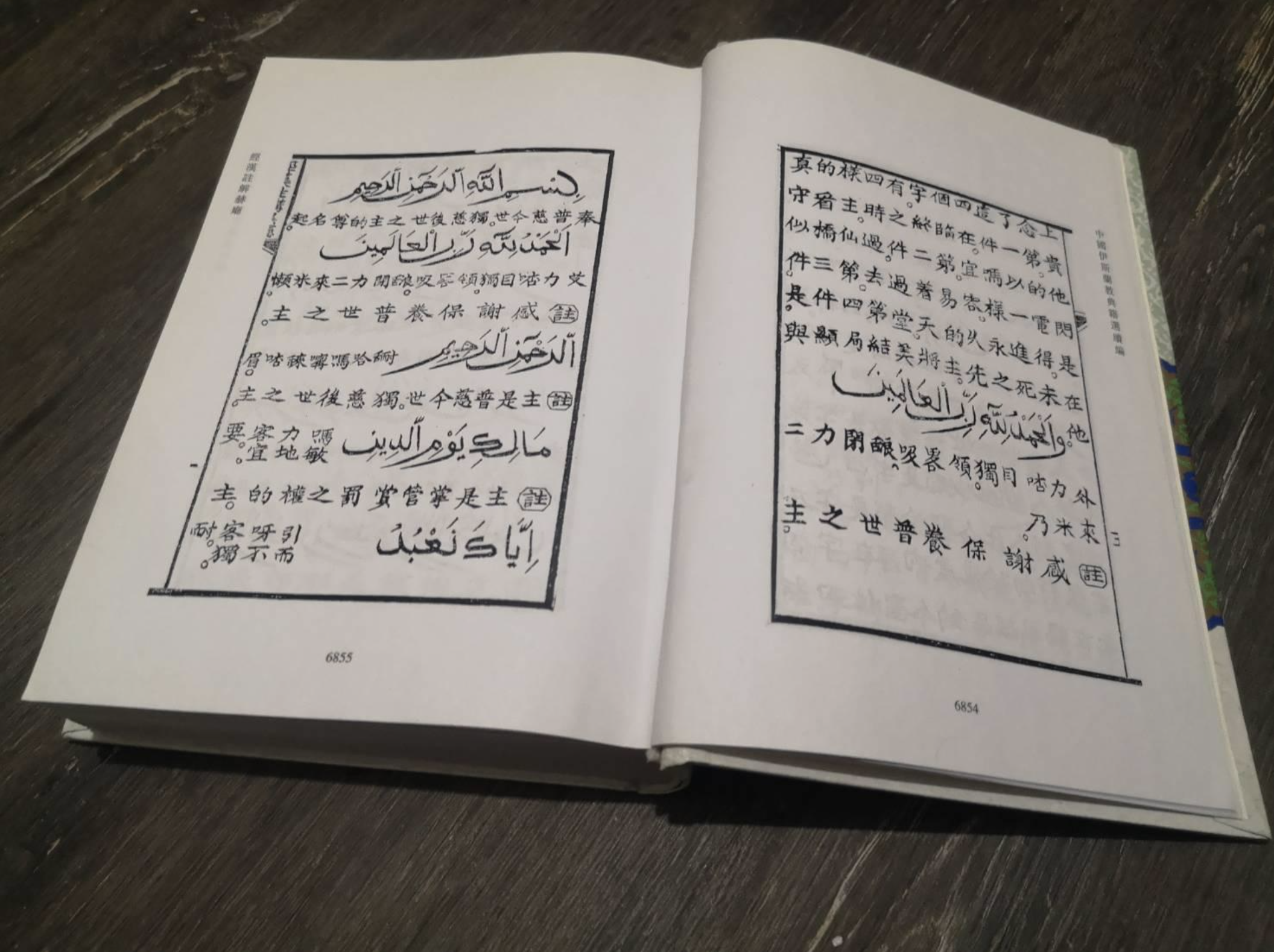
Dr. Ünal: It covers books written over approximately five centuries, from 1500 to the mid-20th century. According to the accepted view in academia, the last book of the Han Kitab corpus was written by Imam Da Pusheng in the 1940s. Within the Han Kitab corpus, we primarily find books translated from Arabic, such as the Qur’an, using Buddhist and Confucian terms. In addition, there are Persian translations, books originally written in Chinese, and works written in Chinese and later translated into Arabic. There are also books in which Chinese pronunciation is rendered in Arabic script for readers who could read the Qur’an but did not speak Chinese. In terms of content, the Han Kitab encompasses a wide range of subjects, including travelogues, pilgrimage memoirs, calendars, astronomy, poetry, hadith, Islamic creed (aqidah), and Sufism.
Dr. Yamamoto: Using concepts from traditional Chinese philosophy, Muslims sought to show that Islam is not distant from Chinese values. Most importantly, they expressed Islamic visions through the Chinese language.
Dr. Ünal: When we mention an “Islamic book,” we usually think of works written in Arabic or in other languages that use Arabic script. It often seems as though there is no alternative. However, we should recognize that, traditionally, Islamic thought was expressed in various scripts and languages—quite different from the linguistic frameworks of modern nation-states. Each language carries its own cultural and historical context, and languages interact with one another to form a complex web of culture. For example, to understand the Han Kitab in depth, one must learn not only classical Chinese but also Arabic and Persian. In addition, it is essential to understand the ideological and cultural backgrounds of these languages, such as Islamic and Chinese thought.
Dr. Yamamoto: To study Islamic civilization is to study such a complex web of languages and cultures. We often tend to simplify the world and absolutize each other’s cultural lenses, but until we overcome these prejudices, we will never understand the richness of Islamic civilization.
Can a Muslim living in China today easily access and understand Han Kitab when he/she attempts to read?
Dr. Ünal: Han Kitab is not a genre that ordinary people can easily read or understand. These books are usually addressed to scholars or high-ranking Chinese civil servants who are well-versed in Confucianism, Taoism, and Buddhism. They are more likely to be academic works written in classical Chinese—a language far more complex than modern Mandarin. In contrast, grammar books aimed at teaching Chinese and Arabic are accessible to everyone.
Dr. Yamamoto: Even though I might not be able to understand them deeply at first glance, I can read the Han Kitab as a Japanese because classical Chinese education continues in Japan. In essence, the Han Kitab was written not only for the Chinese but also for all peoples and scholars living within the Hanzi (漢字, Chinese character) civilization. In ancient times, Korea, Japan, and Vietnam—all used classical Chinese, so the Han Kitab could be read easily in the 18th century. The establishment of nation-states and national languages led to the destruction of this “curtain of Chinese characters” that once covered East Asia. Therefore, studying the Han Kitab is very helpful for recalling the unity of the Hanzi world.
Why should we read Han Kitab? What does Han Kitab teach us?
Dr. Yamamoto: For instance, I am currently reading a book titled Clearing the Doubt Against the Pure and True Teaching (清真釈疑) by Jin Tian Zhu (金天柱). This book, written at the end of the Ming Dynasty and the beginning of the Qing period, discusses the prejudices against Muslims in Chinese society during that time. For example, Confucian elites held biases against Muslims regarding their clothing, dietary habits, and burial practices. The author therefore wrote this book to challenge and overcome these prejudices.
We are now living in a similar era. Islamophobia continues to exist around the world, including in Japan. This is why the intellectual courage of Jin Tian Zhu and other Han Kitab writers is so important for Islam. Interestingly, this book asserts that “we Muslims are practicing Chinese values more faithfully than the Chinese themselves,” highlighting that the Sino-Islamic tradition lies at the core of Chinese civilization.
As another example, I would like to mention an important concept—kung fu (功夫)—discussed in the Han Kitab. Although kung fu is commonly known as a martial art, martial arts are only one part of it. Kung fu refers to the training of the soul (tarbiya al-nafs) in the pursuit of truth. Today, because of secularization and orientalism, many traditional practices and ideas in Asia have been reduced to exotic cultural artifacts displayed in museums or turned into consumable commodities. However, not only martial arts but also many other cultural practices in East Asia are, in fact, expressions of kung fu—spiritual disciplines aimed at cultivating the soul.
This structure of the East Asian spiritual world cannot be fully understood by reading English translations of classical texts. A good example is the Japanese tea ceremony. Sadou (茶道) is often translated into English as “tea ceremony,” but this translation misses its essence. Sa (茶) means tea, while Dou (道) means “the way.” The Japanese tea ceremony is actually a spiritual practice—a way of reaching truth by learning from a master how to serve tea to guests. In other words, the tea ceremony itself is kung fu! Yet, unless one understands kung fu as tarbiya al-nafs, its true meaning remains hidden.
Thus, I believe that understanding the terminology used in the Han Kitab equips us to grasp traditional Asian philosophy more accurately, since these terms have not yet been distorted by orientalism and have retained their “true” meaning. As a result, we not only learn more about Islam but also gain a deeper understanding of Asian civilization as a whole.
Dr. Ünal: When we read the Han Kitab with careful discernment, we gain insight into the entirety of Chinese philosophy, including Confucianism, Buddhism, and Taoism. It is also important to remember that the Han Kitab is deeply integrated into the fabric of the Chinese language. For example, in these books, the word Islam is written in a way that reflects its Chinese pronunciation rather than the Arabic. Similarly, the word halal is translated as the Chinese equivalent of “clean.” As an extension of this, a single paragraph of the Han Kitab may contain a verse from the Holy Qur’an, a Confucian doctrine, and a Taoist saying—each reinterpreted and “Islamized” in the light of Tawhid.
The Han Kitab teaches us that Islam does not belong to any single region. Moreover, it demonstrates that Islam, as the final universal religion, can be understood and practiced by people all over the world.
Dr. Yamamoto: Concerning “Islamization” of Confucianist, Daoist, or Buddhist terms, I should note here that Islamization of the terms does not mean exoticization. It means to develop a deeper understanding of East Asian civilization.
Is there any Han Kitab translation that you are working on right now?
Dr. Ünal: Yes, I am translating one of the first books of Han Kitab, Qingzhen Daxue (清真大學), into Turkish, and Dr. Yamamoto will hopefully make its editorship. Then we will continue with Turkish translations.
Disclaimer: Material published by Traversing Tradition is meant to foster scholarly inquiry and rich discussion. The views, opinions, beliefs, or strategies represented in published articles and subsequent comments do not necessarily represent the views of Traversing Tradition or any employee thereof.


Leave a Reply