
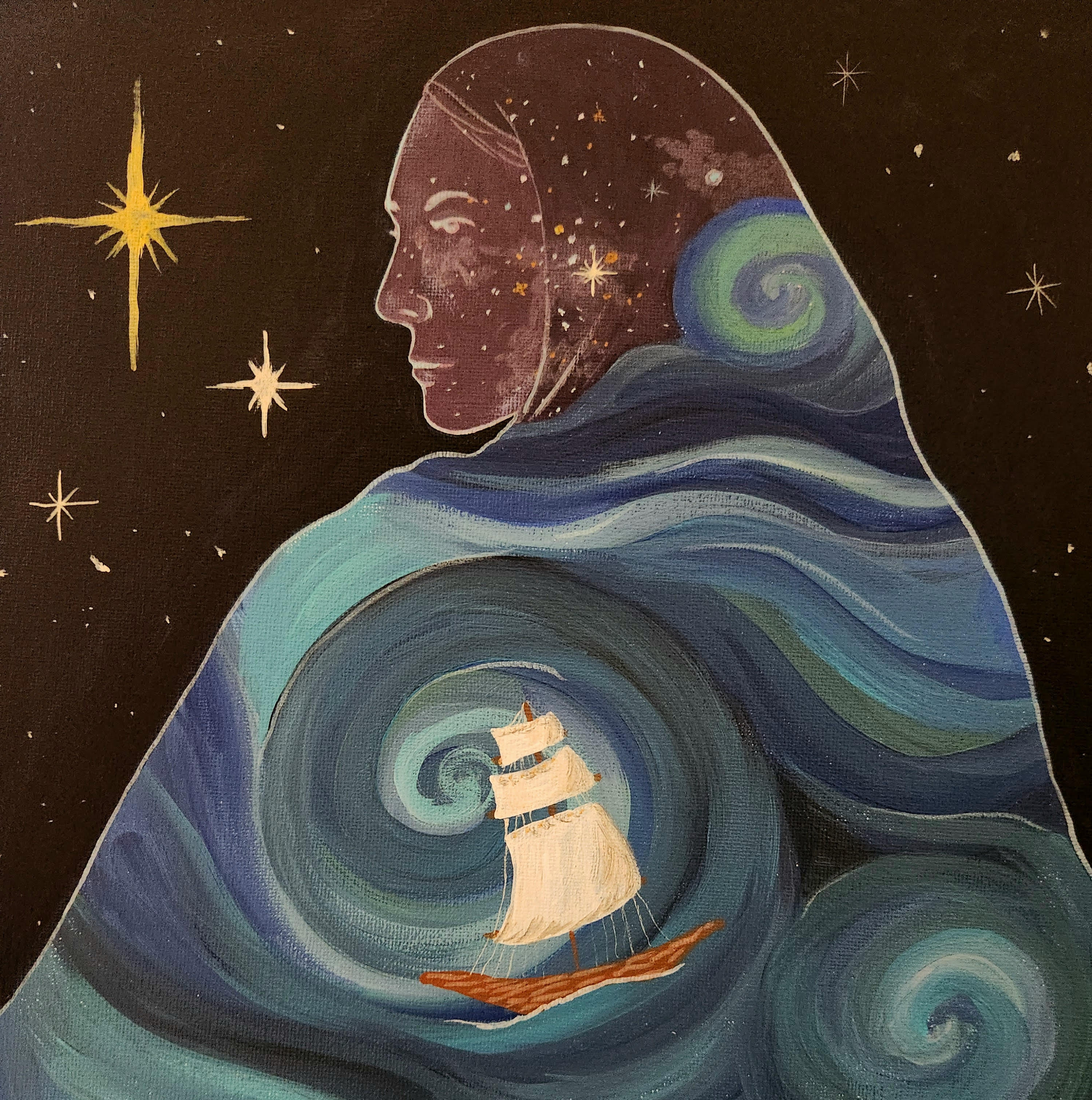
If you’ve ever visited an art museum with a gallery devoted to Islamic art, you probably saw many commonplace objects behind glass. Things like vases, plates, incense holders, and ink pots can be found in these galleries, adorned with intricate patterns and calligraphy. For the modern-day viewer, a question may arise when examining these highly detailed objects: What is the purpose of beautifying ordinary things?
In our modern society, shaped in part by postmodern thought, function, efficiency, and cost-effectiveness often take precedence over form in our homes and the objects we use within them. This can be clearly seen in the uninspired apartment buildings in shades of black and gray that have popped up all over cities in the last few decades, as well as in the quickly built cookie-cutter homes of the suburbs. We also see it in the dozens of identical products that can be found with a simple Amazon search, all made cheaply and with little regard for aesthetics. In this landscape, we may find ourselves wondering about the benefit of spending time and money to make objects pleasing to look at when we can get the same item faster and cheaper in a less pleasing form. But to succumb to this mindset is to completely miss a fundamental principle of beauty and, by extension, the arts: that is, our physical surroundings have a spiritual effect on us. This approach reduces these objects to their most basic functions, without concern for their spiritual impact.
As Muslims, we often look back longingly at our past artistic and cultural triumphs without recognizing the values that led to the creation of such cultural production. Artists and craftspeople of Islamic civilizations of the past understood the importance of beauty and its spiritual impact on all dimensions of life. This dedication is evident in both grand architectural masterpieces and everyday objects, and it is universally recognized. It’s the reason why structures like the Taj Mahal and Alhambra Palace are top tourist destinations and UNESCO World Heritage Sites. It’s why simple objects like doors and teapots are housed in Islamic art galleries in museums all over the world. Muslim artists viewed the work of beautifying buildings and objects as a form of iḥsān. The things that made up a person’s surroundings– from architecture to clothing to calligraphy– were made with the intention of reminding the viewer of the beauty of God and His creation. What does it mean if we, as Muslims, no longer think about the arts when we think about doing things with iḥsān?
This loss can be attributed to several factors, one of which is viewing art and beauty through a transactional lens. When we use this lens to look at the world, we can’t justify spending a few hundred dollars on a handmade piece of calligraphy. Instead, we buy something cheap and mass-produced, not thinking about how this will affect our spiritual state. We don’t consider what these individual decisions will mean if they become universalized in our communities, institutions of learning, and places of worship. Rather than pay an artist or designer, we use AI-generated “art” to promote our businesses, classes, and masjid programs, typically for the sake of saving time and money. We rarely reflect on how such choices shape our communities and their relationship with spiritual excellence, not to mention the broader ethical implications, including the environmental harm caused by AI technologies.
A community with a disregard for the arts and beauty cannot operate with iḥsān. When people are willing to shell out money for the newest halal food craze but are unwilling to invest in things like ethically made clothing and art meant to adorn our bodies and homes, it speaks to a spiritual sickness. If we want to be people of excellence, we must resist the tide of reducing the arts to dollars and cents and take seriously the spiritual impact of distorting what it means to make something beautiful.
Disclaimer: Material published by Traversing Tradition is meant to foster scholarly inquiry and rich discussion. The views, opinions, beliefs, or strategies represented in published articles and subsequent comments do not necessarily represent the views of Traversing Tradition or any employee thereof.
Katie Haseeb
Katie Haseeb is a visual artist and educator from Rockford, Illinois. She received a Bachelor of Fine Arts in painting from the Milwaukee Institute of Art and Design and has worked in museum education for close to a decade. Her paintings explore themes of spirituality and the contrast and harmony between Islamic and Western visual motifs. She currently lives in Philadelphia with her husband.


Leave a Reply