
Introduction
The Islamic intellectual tradition has never lived by doctrine alone. It has lived by its capacity to speak truly in the languages of the people who carry it. Each age tests the vitality of the faith by asking whether it can render the eternal intelligible without surrendering the essential.
Today, that test has returned in a new form. As Dr. Wael Hallaq argues, much of modern Muslim intellectual life has been shaped by a naïve mimicry of Western categories, adopting conceptual frameworks alien to the metaphysical and moral grammar of Islam.1 The problem, he suggests, is not contact with the West but epistemic and intellectual dependency, i.e. the uncritical assumption that our own tradition must justify itself in foreign terms.
I believe its remedy is twofold: internal repair, a disciplined return to our theological and ethical sources; and lateral expansion, the cultivation of dialogues beyond the West, engaging civilizational grammars that might enrich and test our own. Among such interlocutors, the Sino-Islamic tradition holds particular promise. It stands as a historical example of Muslims who achieved both independence and openness-translating Islam into a wholly different conceptual universe without forfeiting its truth.
At the center of this tradition stands Liu Zhi (ca. 1660–1730), whose writings forged a bridge between the worlds of Arabic/Persian-Islamic and Chinese-Confucian thought. His work shows that translation, rightly understood, is not the dilution of meaning, as too often understood. I see it as a sort of moral extension, or a way of carrying truth across civilizational boundaries. In what follows, I will argue that Liu Zhi’s project exemplifies what we might call an ethics of intellectual renewal, rooted in vernacular articulation and culminating in his masterpiece, Wugong Shiyi (The Explanation of the Five Pillars).
Vernacular Voices as a Method, Not a Compromise
To articulate Islam in a vernacular language is to reflect its universality. Every vernacular carries a world of metaphors, categories, and moral sensibilities, so to enter that world is to encounter both resistance and revelation. In this way, the act of translation is a philosophical discipline or an effort to determine what in Islam is essential and what can be rephrased without loss.
The early generations of Sino-Muslim thinkers understood this tension with great clarity. In their works they described a deeper double bind: to lean too heavily on the semantic world of classical Chinese risked distorting the core of Islamic doctrine, yet to avoid Chinese language and vocabularies altogether would render Islam perpetually foreign and unintelligible to most Hui and other Chinese readers. To overcome this tension, rather than simply and easily choosing “clarity” over “style,” they devoted themselves to the harder task of forging a Sino-Islamic semantic universe of their own; a field of meanings in which the principles of Islam could be expressed accurately through Chinese terms. Early scholars such as Ma Boliang (fl. 1670s) and She Qiling (ca. 1630–1710) spoke frankly of this struggle, insisting that expressing the faith “in the language of the East” was an intellectual and ethical necessity. Through their persistent efforts, this early labor of translation and conceptual invention gradually matured into a new confidence: by the time of Liu Zhi, writing in classical Chinese had become a viable way of conveying Islam’s universal truths without surrendering their substance.
Their guiding maxim—as Liu Zhi puts it, “the words may differ, but the meaning must not”—was not an easy formula. It was a challenge to wrestle with the non-equivalence between such different languages until a trustworthy bridge could be built. While direct transliteration into classical Chinese was certainly possible, such transliterated terms would have remained foreign bodies within the Chinese semantic world, unable to participate in its network of associations.
For this reason, the early scholars sought analogues within Confucian vocabulary: Zhenzhu (True Lord) for God, Shengren (the Sage) for the Prophet. They also drew selectively (key qualifier, here) on the Buddhist lexicon, engaging in what may be called semantic reconstruction (the process of deliberately reshaping the meanings and associations of existing religious terms so they can serve as precise equivalents for new concepts being introduced into the language). A notable example is sānshèng, a term that in Buddhism refers to the “three vehicles” leading beings from delusion to awakening-voice-hearers (śrāvaka), solitary realizers (pratyekabuddha), and bodhisattvas. The Sino-Muslim authors retained the Chinese characters but reassigned their meaning, interpreting the “three vehicles” as Sharīʿa, Ṭarīqa, and Ḥaqīqa: the revealed law, the path of disciplined refinement, and the realization of ultimate truth. They were able to borrow terminology and then transformed it to express Islamic categories with conceptual integrity.
These thinkers knew one-to-one equivalence was impossible, and redundant given the need learn Arabic. Vernacularization required the humility to acknowledge the constraints of any single linguistic world, and was about the resolve to create a new semantic space in which Islamic meanings could be expressed without distortion for the purpose of learning and understanding, so that faithful resonance of the core truths of Islam could live coherently and compellingly within a non-Islamic idiom and context.
Liu Zhi and the Bridge of Meaning
Liu Zhi’s trilogy, Tianfang Xingli (Nature and Principle of Islam), Tianfang Dianli (Ritual Law of Islam), and Tianfang Zhisheng Shilu (The True Record of the Utmost Sage of Islam), forms one model of integration. In each text, Liu Zhi builds on his predecessors and avoids simple lexical swaps and instead works toward structural correspondence: aligning Islamic concepts with Confucian categories in a way that preserves both integrity and intelligibility.
So, question: if Neo-Confucian li (principle) names the ordering pattern of reality, can it host the Islamic notion of divine wisdom that shapes creation? If dao (the Way) expresses a moral path of cultivation, can it serve as a vessel for the revealed Shariʿa that binds the conscience before God? These were the questions Liu Zhi confronted. His answers were both provisional and principled. Where equivalence was impossible, he confessed it, and where it was possible, he defended it. This is my objection to accusations of syncretism. His efforts were in translation as verification of the attempt to see whether meaning can cross without distortion. His repeated assurance that “words may differ” is a declaration of method, not in establishing difference.
His most luminous insight lies in his (re-)interpretation of ritual as the moral language of the body and soul through which divine order becomes visible in human action. Drawing on the Confucian category of li (ritual propriety), he re-reads Shariʿa’s system of commands to one that is of divinely revealed virtue that links the metaphysical and the ethical. The ethical discipline of li links the two. For Liu, every human act reverberates within the wider nature of being. On this account, even seemingly modest acts – to vow, to fast, to give, or to journey – participates in a cosmic rhythm, the pulse of Heaven and Earth reflected in the microcosm of the believer.
This concern for the fit between act and order is sharpened in Wugong Shiyi (The Explanation of the Five Pillars), Liu’s compact but accessible restatement of the larger trilogy. Though brief, the treatise reflects the same vision. The number of its chapters corresponds symbolically to the life of the Prophet Muhammad, whose example – understood by Liu as that of the Sage (Shengren) – serves as the axis through which the microcosm of the human being resonates with the macrocosm of creation. In following the Prophet, believers participate in more than mimesis. Following him is participation in the alignment of human virtue with the divine order reflected in the world.
In this vision, the Prophet is the one who most fully comprehends and embodies the divine wisdom through which the True Lord (Zhenzhu) orders creation. His life represents the perfected harmony between human virtue and the cosmic principles that govern the world. The testimony of faith (Shahada) rectifies the heart and clarifies principle (ming li). The words reflect an inward act of alignment orienting the heart toward truth and rendering that truth livable through sincerity and resolve. Prayer (Ṣalāh) honors Heaven and straightens the body, teaching humility through rhythm and posture. Fasting (Ṣawm) disciplines desire to nourish the heart, harmonizing physical restraint with spiritual lucidity. Almsgiving (Zakāh) rectifies human relations through yi (rightness), purifying wealth and restoring justice within community. Pilgrimage (Ḥajj) recalls origin and return, placing the self within creation’s geography. Each pillar is linked to a virtue within Confucian ethics but bound to divine command. The text’s success lies in the strength of its conceptual bridges: every Chinese term carries ontological weight and ethical force. Liu Zhi’s criterion of success is whether the Qurʾanic meaning arrives intact in Chinese. In Wugong Shiyi, this yields a compressed Chinese rendering of the Prophetic path. A kind of “li of Islam” that disciplines body and soul into responsiveness to divine order. Under this description, the five pillars are facets of a single structure of virtue that binds Heaven, human life, and revelation into a shared field of meaning.
Conclusion
Vernacular speech is itself an ethical choice. Translating a faith into another language entails responsibility for the shapes its truth will take. Liu Zhi demonstrates that this labor need not yield either copies or caricatures, provided it is carried by serious study and patience and learning.
In an age when many Muslim intellectuals remain constrained by Western-centric assumptions about language, philosophy, and knowledge, the Chinese Islamic tradition offers a timely reminder of Islam’s own linguistic richness and civilizational plurality. It shows that the faith has already lived coherently and with dignity within frameworks independent of the modern West. Recovering this heritage is not an antiquarian exercise for ivory towers. It is a way of reclaiming a broader humanistic imagination, one that allows contemporary Muslims to draw upon the full depth of their own civilizational resources. The Sino-Islamic tradition stands as a model for thinking across boundaries without being subordinated by them.
In Liu Zhi’s synthesis, “the words may differ, but the meaning must not” is a covenant for us to learn from as a commitment to safeguard truth while letting it breathe in new air. The task before contemporary Muslim thought is similar: to move beyond mimicry to intellectual sovereignty, and to speak Islam again in languages that test and honor its universality.
To build bridges of meaning, as Liu Zhi did, is to act with both courage and humility: courage to face difference without fear, humility to learn the limits of one’s own tongue. For in that meeting point where human words seek divine meaning, the mirror of truth is polished anew, and the linguistic world shaped by Muslims becomes once again intelligible, luminous, and alive across the horizons of the world.
A full English translation of Liu Zhi’s Wugong Shiyi (The Exposition of the Five Pillars of Islam), prepared by Naoki Yamamoto with an introduction, is forthcoming from Fons Vitae.
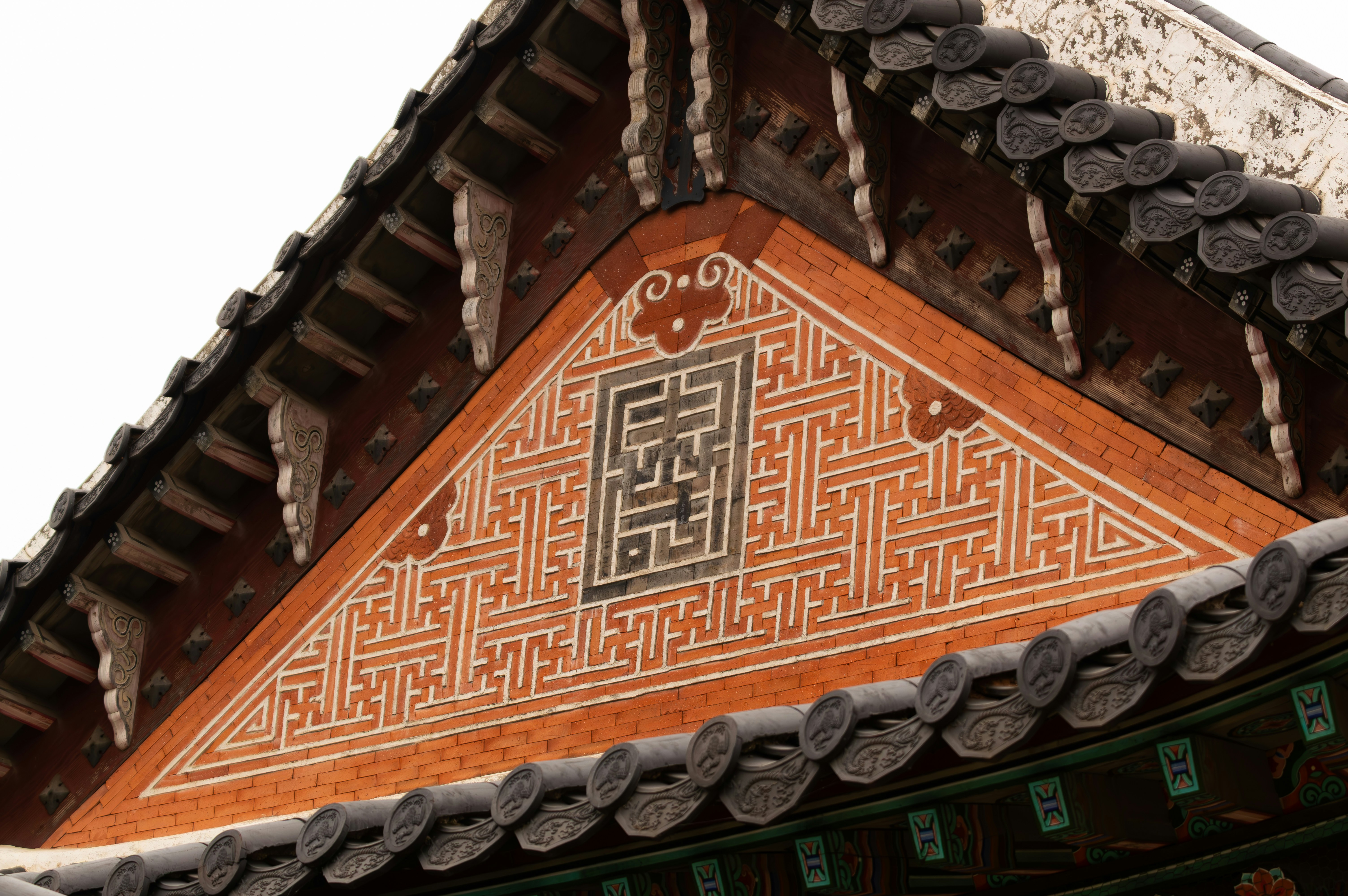
Photo by Artan Sadiku on Unsplash
Disclaimer: Material published by Traversing Tradition is meant to foster scholarly inquiry and rich discussion. The views, opinions, beliefs, or strategies represented in published articles and subsequent comments do not necessarily represent the views of Traversing Tradition or any employee thereof.
Works cited:
- Muslims and the Path of Intellectual Slavery: An Interview with Wael Hallaq (Part Two) https://www.jadaliyya.com/Details/30782. [↩]
Dr. Naoki Yamamoto
Dr. Yamamoto is currently an assistant professor at the Graduate school of Turkic Studies, Marmara University. He completed his PhD at the Graduate School of Asia and Africa Studies, Kyoto University, in 2018. He specializes in Ottoman Tasawwuf and traditional Japanese culture. His publications include a Japanese translation of Sulami’s Kitāb al-Futuwwa and Introduction to Tasawwuf: A Comparison with Shonen Manga (Shueisha Web Essay Series).
Leave a Reply