
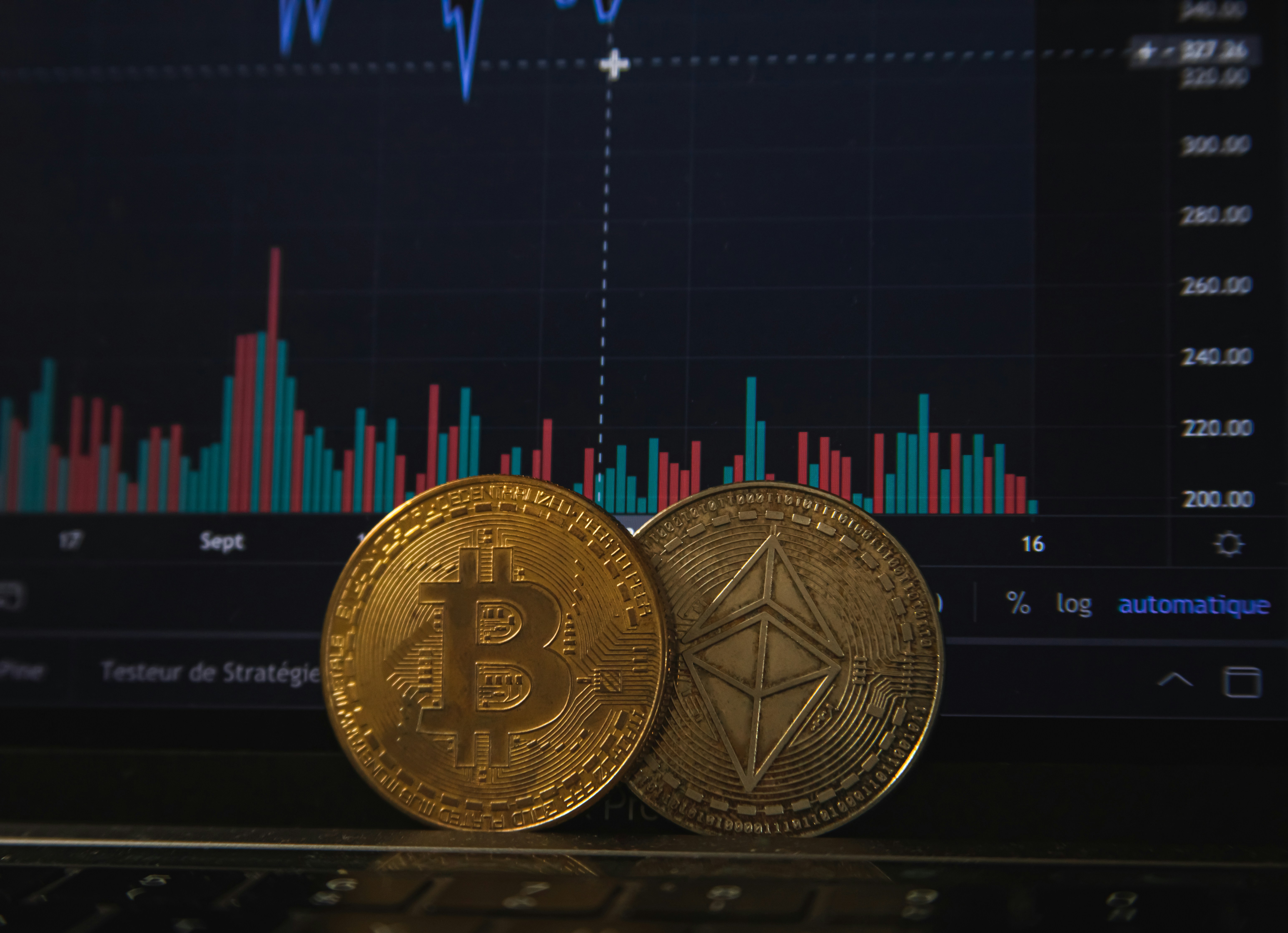
Hudhaifah Zahid, founder of Grynvault and Econommi, joins Hibatuallah Bensaid for a correspondence interview on Islamic economic ethics, debt-based money, and the promise and limits of Bitcoin as censorship-resistant infrastructure. Against a backdrop of fragmented fatwas and persisting debates, Zahid argues that the deeper question is not whether Bitcoin is too novel to trust, but whether modern fiat regimes have become so structurally saturated with riba that Muslims have lost the ability to imagine monetary sovereignty altogether.
HB: Hudhaifah, thank you for agreeing to this interview.
It has been more than a decade since we were students at an Islamic school in Malaysia, throwing ourselves into modest publications and newsletter projects with an intense moral seriousness. Perhaps some dispositions do not leave us. We seem to have arrived, once again, at a conversation animated by that same seriousness.
Since then, you have gone on to found and lead Econommi, a venture attempting to build interest-free, asset-based private market models through digitizing and tokenizing assets. Your broader work spans more than a decade across economics, finance, and blockchain, and your focus has been on risk scoring, debt-free financial systems, and the larger question of whether an asset-based economy can meaningfully reduce wealth inequality.
Let us begin, then, with your recently launched podcast, Riba Resistance. Where did the idea originate, and what intellectual or ethical problem did you feel was not being articulated with sufficient rigor in contemporary Muslim discussions on cryptocurrency? What kinds of questions or debates are you deliberately trying to reinvigorate?
HZ: Thank you for the introduction. Time does move quickly. But perhaps moral seriousness is one of the few things that resists that acceleration.
For me, this journey stopped being theoretical a long time ago. I was trying to build interest-free, asset-based systems in a world whose money is already structured by debt. The deeper I went, the more I felt a contradiction I could not ignore. At some point, the question was no longer whether I could design something more ethical on paper. It was whether I was willing to leave riba in my own life, and not just criticize it in public.
That is more painful than it sounds. It means giving up habits you were taught to call normal: credit cards, borrowed status, the expectation that you should be able to access comfort now and settle the cost later. It means rethinking what it means to save, to wait, to desire rightly, to build a home and a future without outsourcing your life to debt. It is not only a financial shift. It is a rewiring of the soul.
Riba Resistance emerged from that condition. It was an attempt to think through these contradictions with others who had also seen them up close, and to create a space where the conversation could become honest again. My conclusion, after living and building through this, is that even a transparent, asset-based, debt-free structure cannot truly emancipate people from riba if somewhere underneath it the banking system remains structurally unavoidable. That, for me, is the fault line.
More concretely, I can share my story. Alhamdulillah the podcast and the Bitcoin Majlis community have been critical in my transition away from riba in my personal life and embracing of sovereign technologies. It’s hard to give up things you have become so used to: credit cards and privileges, a nice car, expectations for owning a home with your wife. Don’t get me wrong, nice things can be achieved on a Bitcoin Standard, however, it takes a rewiring of the brain. Out here in the West, we are exposed to credit from the moment we enter adult life, beginning with student loans. The practice of saving for something better, truly valuing it, and using one’s time more efficiently because of that expenditure— this is an entire culture that is missing, and one that has to be rebuilt in community with others. Riba Resistance was exactly that invitation for me: as someone claiming to offer a halal Islamic finance platform, I had to live that life and walk the talk not only in my business, but with myself and my family, with no room for excuses.
My colleague, Muslim Bitcoiner, explains this succinctly in his essay, and even more comprehensively in his book: Anti-Riba Money, where he argues that riba is not merely an occasional abuse within modern finance but is built into fiat money itself: commercial bank lending, central bank operations, and even ordinary deposits all expand money through interest-bearing debt. He extends that claim globally, arguing that institutions like the IMF and World Bank reproduce this debt order internationally, while the dollar-based system is ultimately “backed” by interest-bearing government liabilities, rendering the entire structure foundationally implicated in riba.
HB: When you encounter Muslim skepticism toward Bitcoin, what are the dominant genres of objection—fiqh objections (riba/gharar/maysir), moral objections (greed, scam culture), political objections (anti-state, destabilization), or epistemic objections (“I don’t understand it, therefore it’s suspect”)? Which of these objections are most worth engaging seriously?
HZ: It is usually some combination of intellectual laziness, the inability to think for oneself, the lack of strategic thought in modern Islamic theology, a failure to grasp the incentive structures and power arrangements of our world, or else a naivety that the system of Riba can be transformed from within. I personally would prefer to deal with naivety than anything else. I guess that’s in the realm of epistemic objections.
Read The Bitcoin Standard by Saifedean Ammous. It’s an easy fix. He argues that throughout history, the most effective forms of money are those with high “stock-to-flow” ratios (hard to produce and resistant to inflation) making gold the dominant monetary standard before modern fiat systems. He contends that fiat currencies, enabled by central banks, erode savings, distort economic signals, and encourage short-term consumption over long-term capital formation. Bitcoin, in his view, restores “sound money” by offering a fixed supply and decentralized structure, aligning incentives toward saving, investment, and sustainable economic coordination…
At its core, money is simply a measure of time and how people most prefer to spend it. From that perspective, what matters about Bitcoin is not who created it or who stands behind it, but whether it functions as a credible and grounded monetary system. The search for Satoshi, be it an individual, group, Mossad or CIA, becomes a moot point. Especially given that no credible evidence has ever substantiated such claims.
HB: If Islamic law assigns the sovereign the role of regulating coinage, preventing fraud, and preserving justice in exchange, then where exactly does monetary legitimacy lie in the case of Bitcoin, which is neither state-issued nor decree-based? Does this debate invite a broader re-examination of the distinction between the state’s role in governing money and the underlying grounds of monetary legitimacy in Islam?
HZ: For the longest time, we delegated the authentication and preservation of monetary value, and effectively the sovereignty of our money, to the state because we had no good way of doing so otherwise because it’s onerous to try and verify the purity of gold when fulfilling a transaction. So, I understand the political objections that present Bitcoin as an anti-state agent with a destabilizing narrative. However, you must consider that if the state were truly doing a neutral job of validating, and enforcing monetary soundness, they would be the first to adopt Bitcoin and give up that onerous responsibility. The unfortunate truth is most states use money as a tool of control and manipulate it. I’d rather rely on my own computer, participating with thousands of others to verify the sovereignty of my money, than rely on a single power-hungry state actor, regardless of who created it. I’d much rather have it so code is law and code is sovereign.
Seriously though, money was historically always a secular object, long before states monopolized it in the service of monopolizing violence. That brings me to the next class of objection; moral objections, especially Bitcoin’s association with crypto scams. The greatest scam of all is the fractional reserve banking system and U.S. dollar—so the virtue signalling is misplaced.
Still, one could reasonably argue that in the present day, gold is being extracted through child labour or systematically looted from war zones, society would have good grounds to question its legitimacy as money. This is not a hypothetical concern, nor is this moral contamination unique to gold. The British Pound was historically inseparable from a brutal imperial order built on the exploitation of millions of Indians. Similarly, the U.S. dollar is propped up through a global system sustained on sanctions, coercion, and wars undertaken in defense of its petrodollar and reserve currency status. So, if one is abiding by those concerns, I will accept their argument that some Bitcoin comes from unsavoury sources, or is acquired via illegal means. The relevant question is not whether a monetary asset can be touched by injustice, because nearly every dominant form of money has been, but whether such contamination can be identified, scrutinized, and refused. The good thing with Bitcoin is that this concern can be more publicly traced, unlike nameless banking systems or accounts in Switzerland or the Cayman Islands.
As for gharar (speculation) and maysir (gambling)— those are matters of scholarly debate if one really wants to get into the nuances. My take is simply that money can be used to gamble and that does not make money haram. The same can be said for stocks. Meanwhile, I have far more certainty about the amount of Bitcoin in circulation, while the amount of dollars that are being printed and will be printed is a sure speculation. Anyone buying Bitcoin for the purpose of investment, or what we call “number go up”, is doing themselves and everyone else a disservice. You don’t invest in U.S. dollars as money. Why would you invest in Bitcoin? We advocate instead that everyone measures their wealth in it, fewer bits and sats, as they would with gold, more or less grams and ounces.
HB: How would you address the controversy surrounding CoinJoin and similar privacy-enhancing Bitcoin tools, particularly the claim that they raise obvious concerns around money laundering and other forms of criminal concealment?
HZ: This is a good extension of our previous point. Bitcoin is transparent, yet also protects privacy and offers tools to enhance anonymity where needed. This naturally leads to concerns around money-laundering, kidnapping and terrorism. Cash has the same issues, and it’s actually easier in cash, just not so globally spread. As for a more Islamic perspective, you keep covered whatever relates to people in their private exploits or concerns. Should there be social ills and harms as a result of this, there are tools to trace Bitcoin activity. I worked on such a tool early in my career out of school at Blockchain Intelligence Group where we performed risk analysis on Bitcoin addresses. Basically, even without knowing who is behind a transaction, we can easily filter coins that come from suspicious sources and refuse to do business. It doesn’t solve the money laundering problem, but it makes moral concerns easier to manage and enforce.
HB: Many Muslims adopt a “leave what makes you doubt” posture (shubuhāt) toward new financial instruments. Do you see that as a rational epistemic ethic here, or as a paralyzing stance that prevents Muslims from developing monetary agency? Where do you draw the line between commendable caution (wara‘) and an avoidance that cements dependency on the global financial infrastructure?
HZ: It is a paralyzing stance, and frankly one that is ready to set us back centuries, the same way our reluctance to adopt the printing press did. Free yourself of doubt. Better yet, direct your doubt where it actually belongs: at the dollars sitting in your bank account.
The shubuhāt principle was never meant to be a permanent resting place. In classical usage it was a tiebreaker for specific transactions, a trigger for investigation, not a license for permanent monetary passivity. When a Muslim applies it as a blanket veto on every new financial instrument while never once interrogating the system they already inhabit, that wara’ has quietly become waswas. It is a status quo bias dressed up in piety.
Here is the uncomfortable structural reality: the “safe” choice is not safe. Every dollar that exists was lent into existence through an interest-bearing loan. Fiat money operates on a “proof of Riba” algorithm, where new fiat tokens are created by someone or an institution willing to take out a loan and repay it with interest. Consider stablecoins too: the popular assumption is that they are backed by oil or real commodities, but in practice the major ones are collateralized against U.S. Treasuries, which are themselves interest-bearing debt instruments. The entire base layer of the global monetary system is a Riba contract. Holding fiat and calling oneself cautious is not avoiding the problem. It is marinating in it.
Muslim-majority nations adopted central banking largely out of a practical necessity to settle international transactions over the telegraph and later the internet. That is an understandable historical concession. But necessity became habit, habit became comfort, and now there is hesitation to transition to sound money on the grounds of shubha? The system has dug its claws in, and we are confusing the wound with the body.
I am afraid that many Muslims have come to enjoy the entrapment by some quiet justification that the world is a prison and one simply endures it. The key to the prison door has been thrown at our feet and we cannot see it, or we choose not to pick it up. We delegate the seeking of monetary knowledge to this shaykh or that one, wait for consensus that institutional scholars with state-affiliated funding have little incentive to produce, and in the meantime blame our leaders for our collective powerlessness. It is an abdication of responsibility that the tradition does not actually sanction.
The history of Muslim attempts to escape this system bears this out painfully. The Murabitun movement built a genuine blueprint around the gold dinar and silver dirham, got it partially adopted in Kelantan, and still failed because any gold standard ultimately has to interface with the existing fiat infrastructure to function. Even Shaykh Abdalqadir as-Sufi ultimately abandoned the project, recognizing that late capitalism had surrounded gold with prohibitive pricing and taxation that made the strategy unworkable. Every centralized attempt to exit the Riba system, whether from Muslim scholars, African heads of state, or others, has met the same fate.
The reason the shubuhāt posture cements dependency is precisely this: it outsources all monetary agency to whoever does engage with the financial system, which is not us. As Bitcoin Majlis has argued, the deeper resistance many Muslims have is not really to Bitcoin’s mechanics but to the anthropological shift it demands, namely the willingness to imagine oneself as an actor rather than a subject, as someone with genuine monetary sovereignty rather than a dependent of state centric structures. That prior disposition is what has to change before any technical conversation can even begin.
Commendable wara’ looks like this: a Muslim who, upon understanding that Riba is structural and systemic rather than incidental, uses that discomfort as fuel to investigate and eventually adopt instruments that genuinely lack a Riba issuer, a yield mechanism, and a debt-based creation process. Paralyzing avoidance looks like applying shubuhāt selectively to visible novelty while never once examining the invisible baseline. If we do not acknowledge the full extent to which Riba is embedded in our monetary lives, we will never find the exit. The key is on the floor. The question is whether we want to pick it up.
HB: If you had to concede the skeptics’ strongest point, what would it be? What is the most serious moral/fiqh/operational criticism Muslims raise that you think Bitcoin advocates often under-address? And what changes (in discourse or practice) would be necessary to answer it credibly?
HZ: No concession. Someone who does everything in life measured in grams of gold, or does not care for or deal with any sort of debt-backed money at all, is the only one truly excusable. That person is on the true path. Shubha may be your best defence with Allah, and I believe it is applied in the wrong direction. See, whatever is Haram is very clear in Islam. Everything else is generally speaking halal. Shubha is about staying away from halal things that look haram. If shubha is applied to Bitcoin, it should be applied to fiat currency as well. At the end of the day I do understand that scholars don’t want to declare it as an obligatory act/wajib, the way I see it. If all Muslims suddenly jump on it, then it suddenly drops in value as there’s not much economic activity, it’s a bad look and people will feel deceived. So, there is a hikma/wisdom in slower adoption.
We’re just out here trying to demonstrate that Bitcoin can be used as money in practice: that one can give charitably in it, pay global contractors in it, borrow and lend without interest, and just do business. In that sense, the Muslim Bitcoin Summit has become a valuable space for people to get connected, get set up and encounter that emerging ecosystem firsthand.
HB: Many Muslims feel they cannot responsibly engage Bitcoin until it is endorsed by a major fiqh council or a set of widely trusted scholars. How do you evaluate the public-facing Muslim scholarly discourse on Bitcoin? Why do scholarly and institutional positions diverge so sharply? had to diagnose the primary drivers of this fragmentation, what would they be?
HZ: Many Muslim scholars are working within institutional, legal, and political constraints that inevitably shape how emerging monetary questions are approached, and not all of them are positioned to engage these issues from the standpoint of lived commercial experimentation or entrepreneurial practice. That does not diminish their scholarly value, but it may help explain why certain questions in monetary theory and financial architecture remain underexplored.
Some of the greatest scholars in our history like Abu Hanifah combined jurisprudential depth with a striking degree of sovereign thinking coupled with a close familiarity with the logics of commerce. When it comes to the Islamic Finance industry, despite its shortcomings, the AAOIFI standards are the most advanced efforts to establish a serious framework for determining what is halal and haram in matters of money. There is still divergence in interpretations and practical applications across the full range of the standards, and Bitcoin is no exception. From that perspective, I will say there is no one standard that can pin it down as haram. There are however many other cryptocurrencies that are clearly haram. Part of the fragmentation in my view, as a result of Bitcoin being the “mother” of all cryptocurrencies, is often judged not on its own terms but by the wider deficiencies of all her “crypto-orphans”.
HB: Many Muslims accept riba as an inevitable property of certain contracts. What is your case to them? If fiat is structurally riba based, does this place Muslims in a quasi-permanent condition of ḍarūra with respect to money. If so, does that not risk turning anti riba discourse into a purely theoretical posture that never bites in practice? What does a realistic pathway look like that avoids fatalism?
HZ: I’m personally way past the discourse of accepting riba as a property of certain contracts. In my experience building Econommi, I can literally show you a visual graph that clearly distinguishes riba from bay’ or rents. Riba is a continuous guaranteed rate of return at any and all points in time between two things of the same nature, regardless of whether it moves up or down. One liter of milk for 1.1 liters of milk, regardless of quality, at all points in time, is an immeasurable exchange. Rents, fees and profits come from exchange, always measurable at a specific point in time as a ratio of another good or service, such that the rate of return is never guaranteed or knowable in advance and can only be measured in retrospect.
As a result of this insight, I see inflation in the money supply itself as riba. Riba refers to an unjustified increase. Coin clipping was an ancient Roman practice to inflate the money supply and redistribute wealth, a quiet tax on the population that no regime of price controls or government subsidies could quell, and it only compounded inefficiencies in markets where the price function was completely distorted. Central bank interest rates today distort prices throughout the economy in the same way, always lagging the actual economy and as a result always over and under correcting. If we actually stopped fractional reserve banking and the printing of money, we’d be back in a riba-free world.
On ḍarūra: I take the principle seriously but it is being badly misapplied. Necessity can temporarily permit what is otherwise prohibited, but only under strict conditions. It has to be genuine, immediate and unavoidable, and crucially it has to admit an exit. When scholars invoke ḍarūra to justify participation in interest-bearing mortgages and conventional banking, they are effectively declaring the entire modern financial architecture a permanent emergency. But a condition that is permanent and structural, that entire generations are born into and die within, with no effort made to dissolve it, has stopped being an emergency. It has become the new normal, and ḍarūra is just the justifying theological language.
Anti riba discourse has in many circles become a purely theoretical posture, affirmed in khutbahs and academic papers but with zero friction against how Muslims actually conduct their financial lives. The prohibition is upheld in principle and bypassed in practice, and ḍarūra provides the bridge between the two. If that bridge is never removed, if nobody is actually building the exits, then invoking ḍarūra stops being a concession to genuine hardship and starts being a permanent license. That is a serious institutional and spiritual failure, and blaming it entirely on the system lets the global Muslim community off the hook.
The way out is a layered project and there are no shortcuts. The first layer is definitional precision, which is what I have been working toward with Econommi. You cannot construct alternatives if you cannot clearly identify what you are replacing. Once you can distinguish riba from legitimate return with mathematical and visual precision, you can actually engineer compliant instruments from first principles rather than relabeling conventional products with Arabic nomenclature and hoping nobody looks too closely. And that relabeling is most of what calls itself Islamic finance today.
The second layer is institutional. We need equity-based financing structures, commodity-anchored exchange mechanisms and cooperative credit models that are genuinely functional and economically competitive, not just technically permissible on paper. The infrastructure has to actually work for ordinary people or they will keep choosing the conventional system and invoking ḍarūra to sleep at night.
The third layer is monetary. Fiat money is the root problem. Its inflationary bias is baked into the architecture from the ground up, and that architecture is structural riba. Advocating for sound money, whether through commodity backing, hard supply constraints or parallel exchange systems, is therefore a religious necessity. None of these layers alone resolves the problem, but together they constitute a pathway that is serious, buildable and genuinely non-fatalistic. Treating ḍarūra as a permanent condition and calling it realism is just capitulation.
HB: If Bitcoin plausibly functions as an exit from riba, does that constitute an implicit indictment of contemporary Islamic finance as structurally reproducing debt logics under Sharīʿa formalisms?
HZ: Yes and no. There are definitely still some companies out there that adhere to the real spirit and principles of Islamic Finance. Those ones will just do even better on a Bitcoin standard, with Bitcoin reserves. As a tangent, capital efficient giants like Walmart and Costco become a lot more valuable compared to their banking counterparts through a Bitcoin lens—although both and almost all multinational companies today are actually just finance businesses at the top. It’s the only way they can compete.
Back to Islamic Finance structures though, yes most sukuk become worthless. AAOIFI standards already indicate many are just straight up debt. Organized tawarruq will also fall apart, and wa’d/promise-based contracts like diminishing musharakah/Partnerships will be forced to consider taking on more rent-like fixed-fee shapes. These are things I know in my gut that only time and potentially retrospective academic work can help connect the dots on. I’m already including Bitcoin as a core component of our auto finance program called Grynvault with the intention to capture many more assets and businesses in our Bitcoin-denominated deal structures.
HB: If Muslims adopt Bitcoin at scale, what happens to zakat and redistribution in practice. Does it deepen real transfer and institutional resilience? What mechanism links Bitcoin adoption to actual moral economic outcomes, and what institutional design is required for that mechanism to work rather than remain aspirational.
HZ: So I’m hearing this question with regard to deflationary currencies leading towards hoarding of wealth and potentially making zakat a more difficult task. Zakat on a Bitcoin Standard definitely deepens real transfers, but also fiat currencies won’t just disappear and I imagine that we will continue to use it to pay zakat as well. Generally speaking, I do not see this as a concern.
As for the second part of the question, meaning no disrespect, Bitcoin doesn’t care about moral economic outcomes anymore than the gold on your finger does, and by its very nature, will resist any sort of institutional design. That’s not to say institutions won’t or shouldn’t adopt it, but just that such an approach remains at odds with its design, and we’ll mostly see mini-tribes start forming. The Bitcoin Majlis is actually a collection of such mini-groups centered around skill sets and areas of interest. People with the goals of bringing Muslim Bitcoiners together and educating the Ummah about sound money and true sovereignty are always welcome. Overall, for me, if Bitcoin does the job of simply being a third neutral economic power in the world that acts as a check and balance against monopoly over money and by extension, monopoly over violence, it has succeeded.
HB: Some have argued that Bitcoin’s design and culture strongly incentivize hoarding, long horizon holding, and scarcity-based narratives in need of reconciling a hard-money ethos with Islamic ethical pressures toward circulation, generosity, and social obligation. What are your thoughts on that?
HZ: When money appreciates, it’s easier to part with. This is purely fear-mongering by people who have no idea what sound money and sovereignty feels like. When you are always ten minutes early, well rested, and loved— only then do you have the capacity and room to take care of the needs of a random stranger. God only increases the sadaqah. There is no barakah in riba money.
HB: When Muslims envision greater sovereignty through Bitcoin, what is the realistic hope here? Is it mere personal financial dignity, community resilience, or is it possible to prophesize something greater?
HZ: To prophecy may be un-ironically the best word. There is significant literature on accelerationism around artificial intelligence and many eschatological expectations converging within different groups of society, both religious and irreligious. The idea of the Antichrist is pervasive and the stories of good and evil, however misguided, are too prevalent to just ignore, for their impact on humanity and our psyche. We are a meaning-making and meaning-seeking creature with a strong self-preservation drive. It helps to get out of bed energetic when you have an ideal world you are out to build together with a group of your friends— to protect yourself and your kids and your loved ones and best position them for an uncertain and chaotic world. We must seek to be a generation of Muslims in internalising Islam—not only as true, but as beautiful and profoundly livable in the digital age. I believe I speak for many Muslim Bitcoiners when I say it’s literally the key handed to us to get ourselves out of our prison minds and debt-money dungeons. We’re here for something much greater, whether it comes sooner or later, it matters not.
HB: If Bitcoin is, as you suggest, a form of sovereign infrastructure, could it become a meaningful tool for Muslim communities and liberation movements living under occupation or sanctions within a global monetary order where dollar-centric structural asymmetries are wielded coercively? How far can we realistically imagine Bitcoin’s role in underwriting resistance, autonomy and communal resilience before the argument slips from serious strategic thinking into technological romanticism?
HZ: Yes, and the case is more grounded than romantic if you understand what dollar hegemony structurally does. As Bitcoin Majlis documents, the U.S. does not merely trade with the world. It exports an extractive order: other nations are compelled to hold U.S. Treasury securities as their central bank reserves, which means they are perpetually underwriting American fiscal deficits and military apparatus simply by participating in international trade. The U.S. now rules not through its position as world creditor but as world debtor, making other countries lenders to itself simply by building up their own central bank reserves in the form of U.S. Treasury securities. Sanctions weaponize this dependency. When a country or community is cut off from SWIFT or dollar clearing, they are not just losing a payment rail. They are being excommunicated from the only ledger the global economy recognizes.
Bitcoin’s structural answer to this is efficient and technical. It is the job of miners to include transactions in the network and they spend a lot of resources to win the fees and rewards from doing so. Meanwhile, the validity of transactions are enforced by non-mining nodes which can harshly penalize a miner should it try to subvert the network. This is the essence of what we call “proof of work.” This process ensures that more than mere money is always at stake, thereby ensuring the honesty of the network. This is in stark contrast to “proof of stake” networks like Ethereum or Solana where simply having access to capital is enough. Now you might argue that a well capitalized actor may still acquire a ton of resources and energy through printing of money or excess borrowing and therefore take up all mining power on Bitcoin and start dictating what transactions are allowed or not. This attack vector is handled by Bitcoin’s difficulty adjustment. Essentially, Bitcoin expects 1 block of transactions to be published every 10 minutes. When a lot of compute enters the network, blocks speed up – so the network pushes back by requiring a proportionally higher cost of computational resources to bring the time between blocks back to 10 minutes. Essentially, if one person discovered a technology to 10x mining efficiency – they would only gain something like a 10% advantage until the whole network catches up. Put another way, if the largest players want to censor a transaction, they could not do so without slowing down everything else and risking many multiples in lost revenues. Despite all that, a smaller, dissenting participant could single-handedly include the transaction intended to be censored and win a massive payoff. The end result is that users do not need to rely on the services of a company, bank, state, or other intermediaries and achieves a lifelong dream cypherpunks were hoping for and exploring since the 1960s and the earliest form of the internet. For a community living under sanctions or occupation it is a functional alternative to financial erasure.
The honest position is that Bitcoin is already meaningful sovereign infrastructure at the savings layer, and increasingly viable at the payments layer. The serious strategic argument is not that Bitcoin solves everything now, but that it is the only monetary technology in existence that cannot be captured by the same centralized forces that have neutralized every previous attempt at Muslim monetary autonomy. That is a narrow but genuinely important claim, and it does not require romanticism to defend it.
HB: Muslim Bitcoiner describes “Digital Hijra” as the deliberate reorientation of Muslim life away from extractive, surveillance-driven platforms and riba-fueled systems toward self-hosted, user-owned infrastructures and habits more conducive to privacy, agency, and vicegerency. What would a serious program of Digital Hijra actually require at the level of technology, economics, community formation, and everyday practice?
HZ: A fantastic way to bring this all to a wrap. The Bitcoin Majlis is not out here to sell Bitcoin or make money. We have brothers that have businesses and farms and expertise to share and exchange which is fine, but the key alignment for all of us is about transitioning our lives from systems of oppression to systems of empowerment and to live on a sound money standard.
When you want to make Hijra, what you’re really doing is changing your community and environment so it’s easier to transform as an individual. Digital Hijra is deep soul work. Beyond that, it’s also a lot of technical work. Self-hosting your data, maintaining full control of permissions with regard to who has access to what you share on social media, connecting with people without algorithms feeding you dopamine, installing GrapheneOS on your phone, making sure you can stay connected even if you don’t have an internet service provider—there are levels to this. We’re barely scratching the surface, but we are making great progress.
We hope to educate communities, mosques and even participate in nation state curricula later on. Specifically on an economic stance we see that as a big angle for incentivizing people to participate. Our marketplaces are developing and people are earning Bitcoin income for sharing their life and thoughts on Nostr. Beyond that, we’re exploring ways to provide trade finance and partnerships with regard to acquiring and using productive assets like cars and homes in a way that is not just riba-free but even cheaper than going to the bank. A further shared experience in the community is about children and their upbringing— passing on the torch and educating them with books like Bitcoin is Halal, or games like Frontier Crown.
There will be hurdles, because people arrive with preconceived notions, competing worldviews, and vastly different philosophical and political backgrounds. That is not a problem to solve. Bitcoin is for everyone, and the diversity is the point. What we are really building right now is a tribe, a community of people finding belonging in a shared commitment to sound money and self-transformation. The technical adoption follows from that. At the heart of it all remains the intention: doing this for the sake of Allah, and letting that anchor everything else.
Photo by Pierre Borthiry – Peiobty on Unsplash
Disclaimer: Material published by Traversing Tradition is meant to foster scholarly inquiry and rich discussion. The views, opinions, beliefs, or strategies represented in published articles and subsequent comments do not necessarily represent the views of Traversing Tradition or any employee thereof.
Hibatuallah Bensaid
Bensaid holds a Master’s degree in Sociology from Ibn Haldun University. A mother and freelance editor, she is deeply interested in the sociology of religion, processes of social change, the moral dimensions of sustainability, governance, and institutional development.


Leave a Reply