
Scholarship has increasingly examined historically grounded, textually cultivated traditional Muslim religious schools and their influence on the everyday life-worlds of the communities surrounding them. These institutions, as centres of religious education and spiritual practice, have played a central role across the Muslim world in shaping, informing, and reforming the daily engagements of believers. In doing so, they have generated enduring questions about the ethical dimensions of life.
Here, we try to investigate the roots of ethically anchored patterns within the madrasa systems, explore how these institutions function as central figures that challenge various linear dimensions of modern discourses, and look at perspectives on knowledge production and selfhood. Mainly, three questions would guide this fundamental inquiry related to the pedagogical approach of Islamic knowledge. They are (i) what fundamental embodied practices enabled the imagination of a world beyond the modern systems, and how did these practices question the turns imposed by the modern frameworks? (ii) how did knowledge and embodiment, sustained through expansive scholarly networks, contribute to the reproduction of communities structured around the concept of adab (discipline)? and (iii) what epistemic transformations allowed Muslims to cultivate a distinctive intellectual confidence, setting them apart from other communities elsewhere?
The studies related to the functions of knowledge and its legitimisation through habitual practice and daily engagement have been a long-standing concern in human history. Knowledge systems—particularly from non-Western contexts—are often evaluated through their operational logics, ethical frameworks, modes of selfhood, and societal orientations, as well as their adaptability to differing geographical circumstances. In line with contemporary philosophical efforts to “think across borders,” recent scholarship has turned to epistemic practices that were overshadowed by the civilizing rhetoric of European Enlightenment thought.1 We examine a different intellectual terrain that existed alongside the celebrated West yet offered a different approach. Often, Walter Mignolo’s notion of the “darker side of modernity” would provide a critical framework for understanding these dynamics.2
Knowledge serves as both the foundation and mediator in shaping paradigms and facilitating comparative analysis. We, therefore, engage with knowledge and embodiment within the medieval Muslim intellectual tradition, analysed through its narrative forms, networked civilizational structures,3 and practices of ethical formalities. As elsewhere in the Muslim world, in South India, particularly Kerala, a significant number of traditional Muslim schools operate under this philosophy of knowledge. Institutions—referred to by various names in vernacular usages, such as Oothupalli (reading centers), Dars (learning circles), Madrasa (schools), or Sharia-Da‘wa Colleges (religious law and propagation colleges)—share intellectual and pedagogical roots with centers across the Middle East and North Africa. These institutions have historically served as nuclei shaping distinct worldviews, ensuring ethical discipline, and enabling pluralistic coexistence.
Disciplining the Body and Anticipation of Self
Knowledge has long been considered the very soul of the religion, often described as nur (light) revealed by the divine and transmitted to humanity through various chains that primarily relied on oral transmission, supplemented later by written texts. Education, or the idea of knowing in the Islamic knowledge tradition, is not simply about absorbing texts, conducting experiments, or engaging in practice; it is deeply entwined with the embodiment of knowledge, integrating what is learned into both mind and body. Unlike the rationalist or empiricist perspective, particularly the Cartesian binary that separates mind and body, the Islamic tradition views the body not as a barrier to knowledge but as an extension of the intellect, facilitating understanding without distortion. As Rudolph W. Ware observes:
“In scholarly studies of Islam, ‘the text’ still hangs over ‘the body’ like a veil hiding its role in shaping Islam.”4
A preordained disposition of body and mind is essential for the reception of knowledge. This process, which orients both body and mind toward devotional attentiveness, is known as adab (discipline). Sayyid Muhammad Naqib al-Attas defines adab as:
“The discipline of body, mind, and soul; the discipline that ensures recognition of one’s proper place relative to one’s physical, intellectual, and spiritual capacities; and the acknowledgement that knowledge and being are hierarchically ordered according to various levels (maratib) and degrees (darajaat).”5
By cultivating such disciplined comportment, knowledge emerges within the intellect, through external acquisition, and continuation of the internal revelation of knowledge itself. This adab-oriented intellectual cosmopolis is exemplified in traditional Muslim religious schools (madāris), particularly in the Indian subcontinent. The pedagogical structures of these institutions are grounded in disciplinary practices developed over fifteen centuries, tracing back to the formative period of Islam in Arabia. Unlike conventional Western schools, madāris integrate textual study with embodied spiritual practice which also extends their scope to a wider social construct among them.
Teachers—known variously as “Ustādh,” “murshid,” or “shaykh”—guide students (muthallim, Murīd, or ṭālib) in all aspects of life. The training encompasses tongue, heart, intellect, and limbs, aiming to cultivate a holistic integration of body and mind for the reception of knowledge. Practices such as ritual fasting, enduring hunger or thirst, and even corporal discipline serve to prepare the body for engagement with the divine word.
Beyond reading, writing, and recitation, qualities such as ḥubb (love and devotion to the master), khidma (service), and hadiya (gifts to the master) are cultivated to shape moral, emotional, and spiritual sensibilities. Crucial to this process is suhba—companionship with the teacher—which facilitates not only the transmission of knowledge but also the internalisation of adab. Through these practices, students receive the teacher’s guidance and blessings, cultivating veneration and aligning their embodied disposition with ethical and spiritual norms.
ʿIlm (Knowledge) and ʿamal (Practice)
ʿIlm (knowledge) and amal (practice) are inseparable, operating as mutually reinforcing dimensions of knowledge embodiment. Amal refers to the internalisation of knowledge into the body, guided proportionally by the master during the formation of adab in taʾdīb (disciplinary instruction) or tarbiyya (spiritual guidance). Variations in the proper cultivation of adab are often cited as underlying causes of spiritual decay, which could also result in the rise of logocentric or liberal-centric Islam and civilizational crises within Muslim societies. Sayyid Muhammad Naqib al-Attas observes:
“I am here referring to the loss of discipline—the discipline of body, mind, and soul; the discipline that ensures recognition of one’s proper place relative to self, society, and community; the acknowledgement of one’s physical, intellectual, and spiritual capacities; and the understanding that knowledge and being are hierarchically ordered. Since adab entails recognition of one’s proper place, station, and condition in life, and the self-discipline to enact one’s role accordingly, its presence in the individual and society as a whole reflects the condition of justice.”5
Once the self has internalised the ethical and spiritual dimensions of knowledge, the master guides the student to cultivate diverse forms of intellectual growth, integrating practice alongside textual study. This approach contrasts sharply with Western modes of linear thinking and the temporality imposed by modern liberal epistemologies. Beyond disciplining the body, it emphasises discipline toward society and the hierarchical structuring of knowledge, enabling the student to accommodate multiple intellectual traditions.
Traversing the madrasa curriculum also reveals a remarkable engagement with diverse systems of thought—including Greek, Persian, Jewish, and Christian traditions—integrated with their speculative theology, legal theory, and other intellectual approaches in a carefully sequenced and hierarchically organised manner.6 This synthesis positions the medieval Muslim intellectual tradition as a site of open civilizational dialogue, and its communities as exemplars of an open society, which provides a model for reimagining harmonious structures in the face of alienation and global disorder.
Pristine Islamic sources are studied in light of the Salaf al-Ṣāliḥ (the pious forebears), thereby structuring religious practice in a way that cultivates human integrity and a principled ethos of restraint. This framework resists distorted interpretations and rationalist misreadings that became more pronounced following the Napoleon Bonaparte invasion of Egypt—a pivotal moment often associated with the introduction of modern epistemologies into traditional Islamic modes of learning.
In modern times, modern reformist movements have attempted to redefine self and society by disengaging from the adab-oriented intellectual tradition. These movements selectively distance themselves from the ethical and pedagogical ethos of traditional madāris. In doing so, they realign Islamic thought with rationalist and empiricist Western epistemologies, a trajectory ultimately shaped by the processes of Enlightenment and liberal modernity.
The Isnād Paradigm and Networked Knowledge
Islamic knowledge has circulated across time and space through a carefully structured discursive framework known as the Isnād paradigm. (Isnād is the plural form of sanad, meaning backing, support, ascription, documentary proof, or chain of authority.) As Talal Asad has noted, this discursive tradition allows the past and future to serve simultaneously as reference points, producing a fluid trajectory of heterogeneous articulations. Yet, to fully appreciate this discursive order, attention to embodied practice is equally essential for configuring a contemporary understanding of Islam.7
Long before the advent of printing and recording technologies, teachings were transmitted—from early Arabia to Isfahan, Damascus, Egypt, Central Asia, Yemen, India, and Andalusia—through meticulously organized networks, which later evolved into the science of Ḥadīth in one hand.8 These networks were time-stratified and multi-layered, ensuring the preservation of early Islamic teachings against error, forgery, or external interference. According to Ibn Khaldūn, such networks laid the foundation for a distinctive civilizational model in the medieval Muslim world.9
The narrative methodology of knowledge production and transmission facilitated the development of social structures capable of filtering and reimagining Muslim affairs. In this sense, the Isnād paradigm provides a legitimised framework for understanding the dynamics of Muslim communities from the sixth century to the present, offering an alternative to frameworks derived from secular modernity. As Prof. Recep Şentürk observes:
“Despite its size, durability, and social, political, and religious implications, this enormous teacher-student network, and the rich literature about it, which have the potential to drastically transform our understanding of history and network analysis, remain completely neglected by sociologists of science, religion, and network studies.”10
We attempt to examine the tradition of knowledge through the grounded morals of the Muslim intellectual tradition. Moving beyond reductive modern paradigms, it emphasizes the study of Islamic belief, law, and embodied practice as coherent systems capable of informing ethical and social life.
By engaging with the tools of theology, jurisprudence, and pedagogy, this civilizational approach allows for inclusive dialogue across ideological differences, cultivating confidence to think beyond the secularised “clash of civilisations” that Samuel P. Huntington identified as a potential source of future global conflict.11 In doing so, it frames Islamic knowledge not merely as a historical artefact but as a dynamic resource for understanding human society, ethics, and governance in both past and contemporary contexts.
At the intersection of divergent possibilities, through the adab-centered social structure—systematic disciplinary precepts and practices within the medieval Muslim intellectual tradition—we understand the cosmopolis of Muslims society. Such an epistemological shift constitutes a foundational step in differentiating approaches, articulating a new Muslim cosmopolitanism that moves beyond the legacies of modern understanding.
Final Note
The cosmopolis shaped by traditional Muslim schools across the Muslim world generates distinct social and cultural capital. Beyond functioning as educational centres, these institutions disseminate moral values and ethical norms to shape communal identity, political consciousness, and public opinion. The circulation of texts along defined intellectual trajectories creates a foundation that supports both inward (esoteric) and outward (exoteric) engagements. By harmonising normative Islam with local folk practices, these schools sustain a community rooted in indigenous epistemologies.
Transformations within Muslim societies, including the emergence of reformist, fundamentalist, or puritanical movements, have at times challenged these intellectual cosmopolises. A careful historical analysis of Islamic educational centres and their epistemic lineages can dispel claims of “intellectual decline” or “civilizational decay” by foregrounding the enduring discipline and ethical frameworks embedded in traditional pedagogy. Moreover, the juxtaposition of modern frameworks across diverse geographical contexts interacts, often imperceptibly, with the social and intellectual outputs of various Muslim communities. Understanding these intersections is crucial for locating the articulation of knowledge, ethics, and social practice within traditional religious schools.
In the case of various Muslim societies, this approach illuminates the ways in which madāris anticipate and shape the social resonances of Muslim communities, bridging historical tradition with contemporary civic life. Ultimately, to live within the life-world of Islam is to engage with the contemporary while remaining rooted in the adab-centric and isnad-based paradigm.
Therefore, to the people: find a murshid, be a murid, and through this relationship, bring meaningful change.
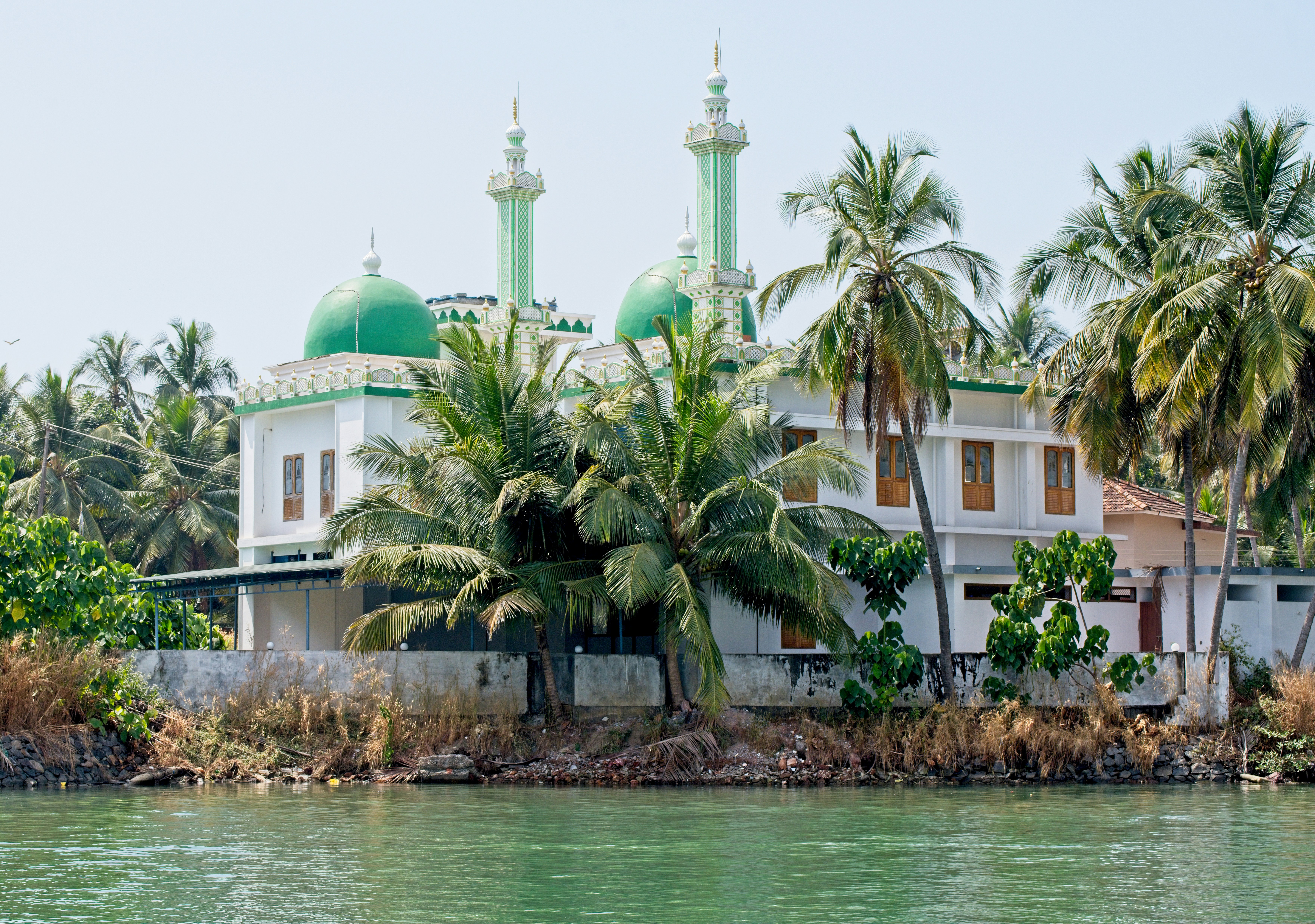
Photo by Brian Scott on Unsplash
Disclaimer: Material published by Traversing Tradition is meant to foster scholarly inquiry and rich discussion. The views, opinions, beliefs, or strategies represented in published articles and subsequent comments do not necessarily represent the views of Traversing Tradition or any employee thereof.
Works Cited:
- Banerjee, P. (2016). The work of theory: Thinking across traditions. Economic & Political Weekly, LI(37), 46. [↩]
- Mignolo, W. (2011). I am where I do: Remapping the order of knowing. In The darker side of modernity: Global futures, decolonial options (pp. 77–117). Duke University Press. [↩]
- Gilmartin, D. (2005). A networked civilization? In M. Cookie & B. B. Lawrence (Eds.), Muslim networks from Hajj to Hip-Hop (pp. 51–68). University of North Carolina Press. [↩]
- Ware III, R. T. (2014). Introduction: Islam, the Quran school, and the Africans. In The walking Quran: Islamic education, embodied knowledge, and history in West Africa (pp. 39–76). University of North Carolina Press. [↩]
- Al Attas, S. M. N. (1993). Islam: The concept of religion and the foundation of ethics and morality. In Islam and secularism (pp. 51–95). International Institute of Islamic Thought and Civilization (IIITC). [↩] [↩]
- Senturk, R. (2011a). Unity in multiplexity: Islam as an open civilization. Journal of the Interdisciplinary Study of Monotheistic Religions, 7, 49–60. [↩]
- Asad, T. (1986). The idea of an anthropology of Islam. Occasional Paper Series, Centre for Contemporary Arab Studies, Georgetown University, 1–30. [↩]
- Senturk, R. (2011b). Towards an open science: Learning from the Ottoman humanities. In J. Upton-Ward (Ed.), New millennium perspectives in humanities (pp. 55–73). Institute for the Study and Preservation of Ancient Religious Texts, Brigham Young University. [↩]
- Pattasseri, N. (2015, March 11). Origin and evolution of human society in Ibn Khaldun’s philosophy of human development. Centre for Islamic Pluralism. http://www.islamicpluralism.org/2469/origin-and-evolution-of-human-society-in-ibn. [↩]
- Senturk, R. (1995). Narrative social structure I: Anatomy of Hadith transmission network of Prophet Muhammad (610–1505 AD). In M. G. Everett & K. Rennolls (Eds.), International conference on social networks – London, UK Papers (Vol. 2, pp. 37–40, 6–10 July). [↩]
- Huntington, S. P. (2016). The clash of civilizations and the remaking of world order. Random House India. [↩]
Noorudeen Mustafa
A Research Fellow at the Berlin Institute for Islamic Theology, Humboldt University of Berlin. He also serves as the Director of Malaibar Foundation for Research and Development, an initiative dedicated to the local history of the Indian subcontinent. His research interests include law and society in the Muslim world, Indian Ocean Islam, South Asian Islam, and Islamic intellectual history.

Leave a Reply