
In Crestone, Colorado, a wooden stretcher lies atop the carefully arranged logs of a pyre, the flames ready to scorch through bones and flesh as loved ones bid farewell.
Nestled in the Rocky Mountains, this town holds a unique distinction in the United States as the only location where open-air pyre cremations are permitted. While Crestone’s allowance of pyres might be a rare exception, the broader landscape of death, burial, and funerals is no less peculiar: dying in the United States is a patchwork of common law, cultural practices, regulations, and religious traditions.
There are many options for the newly-dead: above-ground entombment, cremation, in-ground burial in a coffin (or without a coffin) and lately, for the rich and technocrats, cryopreservation (freezing bodies to preserve them for “future use”). Then there are the traditions around death: vigils, memorial services, open-casket viewings, hiring moirologists to wail, mourning periods, ashes scattered into the seas or even mixed into the soil to grow trees. The post-mortem body can also be subject to cadaverous creativity: excarnation (removing organs), mummification (also removing organs), and autopsy (may or may not involve removing organs).
Some methods are completely illegal (as opposed to ‘mildly’ illegal home burials without permits or scattering ashes in unrestricted areas) including but not limited to: viking funerals (even if one casts aside metaphysical reservations, dead bodies floating about only to suddenly crop up on shores pose public policy issues), and Zoroastrian sky burials (leaving human bodies to be scavenged by the elements in what is considered a return to nature).
When Qabil killed his brother, it was not only a story of self-wrought misguidance, but a divine message to teach mankind one of the first lessons of death, “was I not even able to be as this crow and to hide the dead body of my brother?” How needy is the condition of man that a soul departs and no statutory health and safety schemes can adequately tell us what is good and just, only what is possible.
Cremation and Changing Values
Much discussion around death focuses on honoring the wishes of the deceased. However, this raises questions about the extent of self-determination, especially when it contravenes Divine Law. Moreover, few people who are not in their sixth or seventh decade spend much time thinking about death or preparing a will or advance directive. A Muslim would want to be honored the way God has ordered it, but what they want may still not be allowed by the nation-states that be. Take the case of Muslim prisoners, many of whose conversions to Islam remain unbeknownst or rejected by family members. In these cases, the family cannot adequately determine what they would have wanted. Even in those cases where it is clear that the prisoner does not want to be cremated, there are seldom prison-facilitated processes for an Islamic burial (an Islamic burial is a minimally invasive process, requires bathing of the body by the right person, enshrouding, performing Salat Al-Janazah, and a burial directly in the ground as soon as possible positioning the body towards the qibla).
Cremation as the de facto method of disposition is a relatively new phenomenon in America and Europe. Jewish law forbids cremation, and most of Europe historically forbade it by law. The movement to reintroduce cremation was fraught. Some support rode on the coattails of secularism, especially in Italy where the “pioneers of cremation were doctors, scientists, progressives, Positivists; they were republicans and supporters of the Risorgimento; they were anti-clerical.”1 In Germany, support came from those “who wanted to align themselves with progress, with the forward march of history defined in a number of ways.”1
In the U.S., the national average rate of cremation rose from 3.56% in 1960 to 53.1% in 2018, and surveys from the last few decades suggest a primary motivation is to save costs. Even so, it would be amiss to ignore the charged language amidst the rise of the “funeral industry”2 as more individuals and religious groups began to embrace the idea that the body was not central to the afterlife (alternatively, that there was no afterlife to begin with). Joseph Henry Louis Charles, the first person to be cremated in America in 1876, had left a request that his body be disposed of “in a fashion that would illustrate the Eastern notions of death and immortality.”3 Some witnessing this hallmark cremation were fascinated; others horrified at the cackling bones. Authors like Hugo Erichsen viewed cremation through the lens of land and resources. As urbanization increased, burial space in crowded cemeteries became limited, so cremation was pursued as a practical and space-efficient alternative. Additionally, scientists spoke of public health benefits, though it is worth noting that today, there is no evidence that human remains pose an epidemic risk barring specific cases, such as Ebola, cholera or anthrax.
The COVID-19 pandemic revisited some of these concerns and, as with face masks and attending religious sermons, reignited the debate over the line between religious freedoms and the seemingly neutral value of public health. In our conscientiousness of choice, we’ve become irreverent of death. A funeral director of 50 years had this to say about the shift to drive-by cremations and quick funerals: “this is the first generation of our species that tries to deal with death without dealing with the dead.”4
Today, we remain largely neglectful of this history. Cremation is considered standard practice, justified by public health, overcrowding, and the pragmatic concerns of those usually unconcerned with the afterlife. This neglect of adab surrounding death extends beyond the physical handling of the deceased into broader social practices. The Shari’a emphasizes comforting the deceased through prayers and supplications, visiting the family to offer condolences, and observing a period of mourning to support the grieving. These practices not only honor the departed but also provide solace to the bereaved. However, the larger contemporary trend, influenced by societal shifts and individualism, has contributed to a decline in these observances. Modern lifestyles and capitalist work culture, geographic scattering of families, and a focus on immediate practicalities often overshadow the spiritual and communal aspects of dealing with death. Death as a topic of genial conversation is too taboo, too macabre—the sort of philosophizing that should be done only with an alcohol-addled brain or in the privacy of one’s home.
Unclaimed Bodies
Increasingly, people are dying alone. Death and what proceeds are very much solitary endeavors once one passes to the stage of barzakh, but what of the before? Elderly abandonment and abuse are on the rise. More Americans meet their end on a bed, surrounded by strangers after suffering years of declining physical health and mental deterioration. Anecdotes of broken families, a drug epidemic, or economic downturn contribute to social atomization and hardening hearts. When news of a fallen family member arrives, it is no longer uncommon to witness hesitation or outright refusal to take responsibility for the burial.5
Although there is no federal agency recording the number of unclaimed bodies, some state data sheds light on the situation. For example, in Maryland, unclaimed bodies accounted for more than 4% of all deaths in 2020. More conservative estimates remain at 1% – 2%. However, even these lower percentages represent a substantial number of individuals whose remains are never claimed by family or loved ones. This kind of “ambiguous loss” creates a psychological state where families endure a lack of closure, not knowing whether their loved one is truly gone or what has become of them.6
Unclaimed bodies create a public health and practical crisis for states. No federal law governs the handling of unclaimed bodies except for unclaimed veterans.7 Most morgues in the United States are operated and funded by government agencies. These morgues are often part of larger government departments responsible for determining the cause and manner of death in cases that fall under their jurisdiction. Larger regions may have independent, non-governmental morgues or forensic pathology services. While many religious organizations have their own funeral homes or cemeteries, morgues used for forensic purposes are usually separate entities. This means that the deceased requires a family member or a funeral agent to claim the body.
Even if the identity of the body is known, if the next of kin cannot be contacted, coroners often opt for cremation as it is a cheaper alternative to burial. Despite the existence of a free federal program—the National Missing and Unidentified Persons System, or NamUs—that can help families looking for loved ones, many coroners and medical examiners do not post the names of unclaimed dead to the federal database.8 Local governments opt for direct cremation to handle unclaimed bodies if they remain unclaimed for a certain period of time; some states will even donate the bodies to medical schools for dissection. In a minority of states, there are provisions for respecting religious rights concerning the handling of unclaimed bodies. For example, California requires that reasonable efforts be made to notify religious organizations if the deceased is known to belong to one so that religious rites can be performed. The New Jersey Administrative Code similarly notes that “[a]n unclaimed body shall be cremated where it is reasonably believed that it would not violate the religious tenets of the deceased inmate.”9 10
Unfortunately, in addition to the problem of unclaimed bodies, Muslims in prison also face many legal hurdles in exercising their right to an Islamic burial. As previously mentioned, for a Muslim inmate to avoid cremation upon death, a proper burial must be initiated by either a family member or a funeral agent, To obtain an agent is a lengthy process, and this too is conditioned on financial ability, which many prisoners do not have.11
Indeed, We Belong to Allah
There are two reflections to emphasize here: one, that we live strangely dispossessed and dispersed lives where dependence on tight-knight familial bonds is no longer a given. Two, we reside in secular nation-states where absent a pro-active expression of faith, default laws keep their hold on not only everything we own, but our bodies too.
As to the second, Muslims in the U.S. have begun to build robust methods to implement Divine Law of dying. Shari’a compliant trusts and wills are two legal instruments to ensure that a Muslim’s end-of-life wishes, especially those regarding burial and the disposition of the body, are carried out in accordance with the Shari’a to the extent permitted under federal and state laws. This can include specifying the method of disposition of the body, prohibiting cremation and post-mortem examinations (like autopsies) to the highest degree possible, and designating trustworthy and pious individuals to help carry out these wishes.
As to the first, we recall—or reinvent—a society in which it is a civilizational value to care for the soul through each phase. Bodies mean something—and not only in the language of de-colonial references to black and brown ones—but because it is the flesh and blood of that which will carry a soul again on Judgment Day.
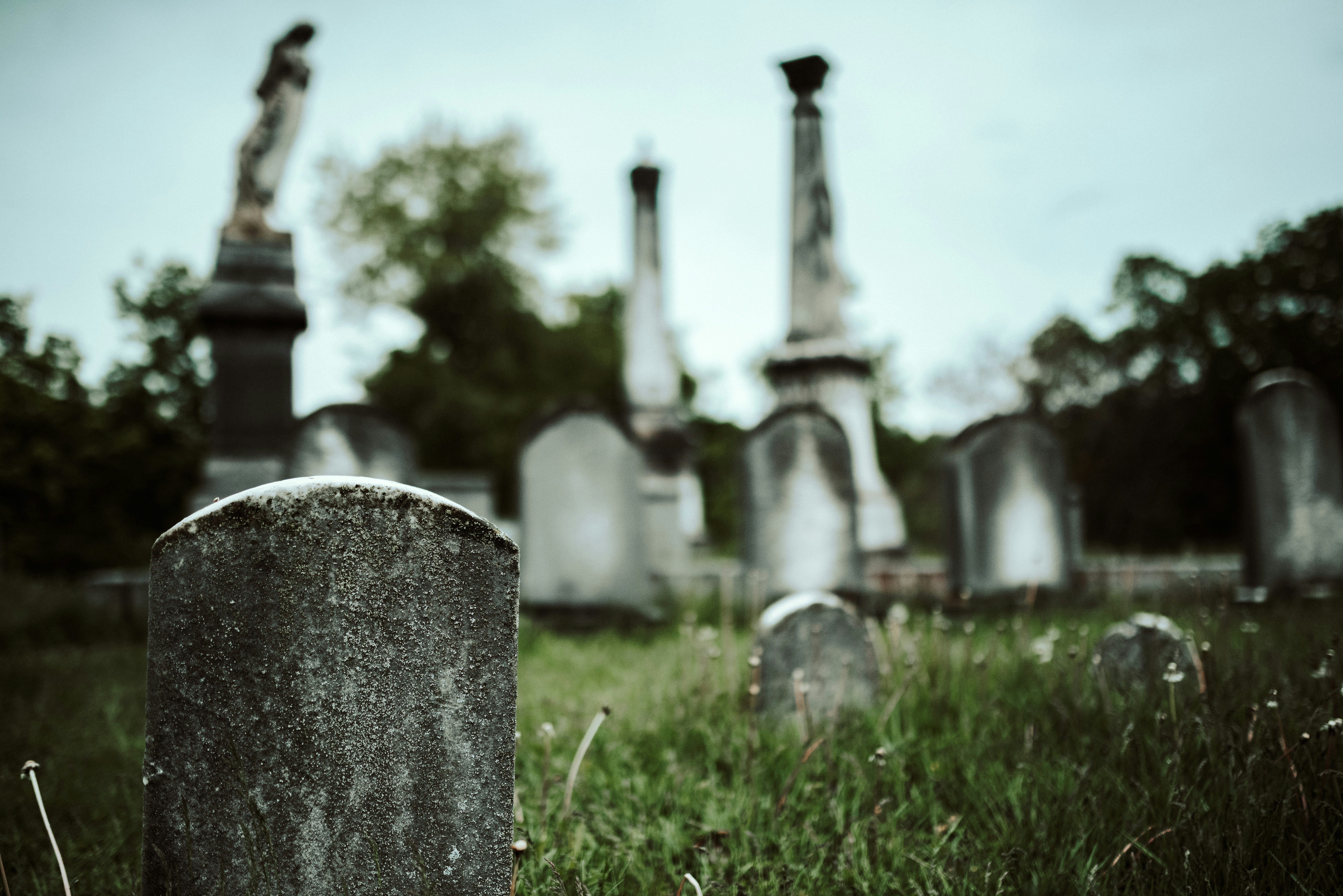
Photo by Sandra Seitamaa on Unsplash
Disclaimer: Material published by Traversing Tradition is meant to foster scholarly inquiry and rich discussion. The views, opinions, beliefs, or strategies represented in published articles and subsequent comments do not necessarily represent the views of Traversing Tradition or any employee thereof.
- https://www.theguardian.com/books/2015/oct/30/burning-question-how-cremation-became-last-great-act-self-determination-thomas-laqueur [↩] [↩]
- https://blogs.loc.gov/law/2022/09/evolution-of-american-funerary-customs-and-laws/ [↩]
- Stephan Prothero, Purified by Fire: A History of Cremation in America (2002) [↩]
- https://www.washingtonpost.com/lifestyle/2022/04/18/cremation-death-funeral/ [↩]
- https://www.washingtonpost.com/nation/2021/09/17/alone-death/ [↩]
- Suwalowska, Halina, et al. ““The Nobodies”: unidentified dead bodies — a global health crisis requiring urgent attention.” The Lancet Global Health 11.11 (2023): e1691-e1693. [↩]
- Dignified Burial and Other Veterans’ Benefits Improvement Act of 2012, Public Law 112-260, 112 Congress, 126 Stat. 2420 (2013). [↩]
- Mike Hixenbaugh, Rich Schapiro & Jon Schuppe, How America’s patchwork death notification system leaves families in the dark (Dec. 19, 2023), https://www.nbcnews.com/news/us-news/namus-database-coroner-medical-examiner-pauper-cemetery-rarely-used-rcna129741 [↩]
- N.J. Admin. Code § 10A:16-7.5 [↩]
- It is worth noting that New Jersey has a variety of end-of-life statutes that are uniquely accommodating to religious beliefs, such as challenging a death on the basis of neurological criteria for cardiovascular death. [↩]
- Tariq MaQbool, As a Muslim prisoner in the US, I worry I will be cremated when I die, Al-Jazeera (Nov. 21, 2023), https://www.aljazeera.com/features/2023/11/21/as-a-muslim-prisoner-in-the-us-i-worry-i-will-be-cremated-when-i-die [↩]
Hashmi is best known for her project, Muslims Condemn. She is an Attorney based in the U.S. with a background in Molecular, Cellular, & Developmental Biology and Linguistics. Her interests include the Islamic sciences, specifically legal philosophy and Maliki fiqh, cognitive linguistics, and bioethics.

Leave a Reply