
A Review of the Novelette The Merchant and the Alchemist’s Gate by Ted Chiang
*Disclaimer: this review contains spoilers.*
Ted Chiang’s Baghdad tale arrives dressed in classical adab and the wonder of speculative physics. The greeter at the threshold is no jurist nor theologian nor Amīr. A merchant by the name of Fuwaad ibn Abbas chronicles to the Caliph his fateful meeting with Bashaarat, an alchemist who’d opened “a Gate of Years” allowing one to sojourn twenty years into the past.
The questions this device raises are the quintessential theological stuff of any time-bending grand story: What is the relation between divine decree (qadr) and human action? Are the past and future fixed? Does foreknowledge empty our choices of meaning and consequence? Is anything a choice, ever? Chiang and his exploration cannot be accurately called fatalistic or even strictly deterministic. I’m not a mutakallima, and I have not yet time-travelled, but let’s call it a story of compatibilism. Through nested exempla and a penitent merchant’s journey, he stages a recognizably familiar story of time wherein the past is sealed, and while the future is entirely known to Allah, He tests us without absolving us of responsibility.
Bashaarat’s explanation is disarmingly simple: “Using the Gate is not like drawing lots… rather, like taking a secret passageway in a palace. The room remains the same.” He warns Fuwaad early on that the Gate can only reveal and it can’t rewrite the past. There’s no room for new cause and effect, and anything effectuated by the traveler was indeed already, and originally, done. What changes is what the traveler knows and, therefore, how he bears what was already decreed.
Bashaarat also advises, “The Gate does not change how [Allah] regards you,” because it is all a matter of perspective. There’s no room for new cause and effect, and anything effectuated by the traveler was indeed already, and originally, accounted for. Perhaps this a distillation of Māturīdī and Ashʿarī insight. Allah creates our actions but human beings still “acquire” (kasb) acts and are accountable. “You do not will except that Allah wills”1 and yet “Allah will not change the condition of a people until they change what is in themselves.”2
The Gate only dramatizes this, in which case, what’s the point of travelling or new knowledge acquired anyway?
“Using the Gate is not like drawing lots, where the token you select varies with each turn. Rather, using the Gate is like taking a secret passageway in a palace, one that lets you enter a room more quickly than by walking down the hallway. The room remains the same, no matter which door you use to enter.”
This surprised me. “The future is fixed, then? As unchangeable as the past?”
“It is said that repentance and atonement erase the past.”
Nested Tales
The novella’s first-half is built from three embedded stories about previous entrants to the gate, Hassan the rope-maker, Ajib the weaver, and Raniya.
Bashaarat first tells the narrator about Hassan the rope-maker, who travels to the future and receives punctual warnings from his older self to be spared needless harm. Hassan’s future self withholds total prophylaxis when a pickpocketing incident is allowed to proceed so that younger Hassan can taste pursuit, anger, and then demonstrate mercy towards the boy who stole from him. The straightforward lesson for Fuwaad ibn Abbas is that some hardships are decreed to cultivate virtue.
The second story of Ajib the weaver showcases an outré ought experiment: if your future self’s wealth is really yours, can you steal it? His answer (“no” in word, “yes” in deed) triggers a two-decade moral unraveling. Going to the future and finding his older self still poor in appearance but hiding a chest of gold, Ajib steals it, goes back through the Gate, spends lavishly, marries the woman he desires, and promptly draws the attention of robbers who kidnap her for ransom. Stripped of his fortune, he vows to repay the “other man” and slips into decades of joyless miserliness with his wife. From one angle, it’s the existence of the Gate that allowed Ajib to commit this wrong (as stealing from oneself is a crime currently remains impossible). From another, the meta-point is that he, having acquired knowledge of the future, thinks he can change it, and still becomes the very miser he once despised. Foreknowledge does not give him the how and why he becomes that way, until he experiences it and the commensurate guilt.
The last story feauturing Raniya, Hassan’s wife from the future, is the strangest. Structurally, it completes the pedagogical arc. The first lesson was about cultivating virtue, the second about guilt, and the this one about the interaction between agency and veiled knowledge until God permits a new angle of sight.
My main gripe is whether it had to be done this way: in sum, a lady named Raniya travels to the past and, under the veil of anonymity (literally), rescues the younger version of her husband, who her younger self has yet to marry, from thieves. Then, though the scene is not too graphic, she is intimate with him for many days to “teach” him conjugal expertise so that when he later marries her younger self, he will already possess the confidence and skill she remembers from early days of their marriage. A time loop like Ajib’s, except instead of the future providing the cause of suffering (and vice versa), her own satisfaction in the past is partly the result of lessons she herself provided, which always existed in Chiang’s time travel canon. All this to say, however cleverly framed by the time-travel conceit, Raniya’s actions transgress Islamic law, all the more so because the younger man does not know he is with his future wife, and the relationship is not (in legal form) a marriage at that moment. (I asked a student of fiqh, who undoubtedly has better things to do than to entertain my serious tomfoolery, the following for the sake of sheer pedanticism, and the answers to “Is it adultery to be intimate with a current spouse in the past who is not yet halal?” and “Once married, always married, past and future?” are yes and no, respectively.)
Two points keep the analysis fair. First, Chiang is a speculative fabulist deploying an Arabian-Nights themed science-fiction, not teaching Islamic ethics or fiqh (sci-fiqh, hah). Second, the story itself explains that the takeaway of her story is making a choice, one that existed and its consequences all along. What is agency from one perspective is decree from another. Even so, readers are right to feel tonal dissonance. The characters and narration frequently invoke the Divine, and its frame mimics pious narration before a Caliph. Within that, the Raniya episode initially is a clever and unnecessarily sexual temporal puzzle. It’s only later on that the reader sees the benefit of it for Fuwaad and his discovery of the past.
Fuwaad’s Tawbah (Repentance) Within a Fixed Past
The frame narrative of Fuwaad ibn Abbas addressing the Caliph finally shifts in the second half. Now he discusses what he did and why he went through the Gate.
Fuwaad’s primary sin is his harsh words to his wife Najya following an argument over his trading of slaves. He promptly departs for work, and days later, receives word that she died when a mosque wall collapsed. Though he frees the slaves and becomes a fabric merchant, he spends decades mired in guilt and seeking atonement.
“It was clear from [Basharaat’s] stories that I could not change what I knew to have happened. But the tale of Raniya, which lay hidden within the tale of Hassan’s life without his knowing it, gave me a slim hope: perhaps I might be able to play some part in events while my younger self was away on business.
Could it not be that there had been a mistake, and my Najya had survived? Perhaps it was another woman whose body had been wrapped in a shroud and buried while I was gone. Perhaps I could rescue Najya and bring her back with me to the Baghdad of my own day.”
And so, he embarks on his journey spatially and temporally. He travels back through the Gate in a desperate bid to reach Najya before the wall falls. But every turn delays him and he arrives, tragically, the day after the accident. He learns that there is no time-travel-shaped knowledge of her secretly having survived. He cannot unsay the words or place his body between the mosque wall and its collapse. What he is permitted instead is news from a woman who tended to Najya before she died, that his wife’s last words were of love, which helps his grief and seals his long repentance with a kind of acceptance.
Fuwaad’s journey is tawbah, Ah, remember Bashaarat? “It is said that repentance and atonement erase the past.” The Gate offered no true magic, really. It simply offered him a setting to make sabr (patient perseverance) and tawakkul (trust) more intelligible and material.
Chiang is careful to inoculate readers against fatalism with Bashaarat’s metaphor of the palace passageway and insistence that foreknowledge does not cancel obligation. Hassan still must keep to the north side of a street to avoid injury; Ajib couldn’t, indeed shouldn’t, have plundered his own chest; Fuwaad must still choose acceptance. Every character’s knowledge of the future was an additional moral datum he is responsible to heed.
Past and Future in Chiang’s “Story of Your Life”
Contrasting the novella with Chiang’s “Story of Your Life” (which the movie Arrival is based on) explains the distinctness of the qadr lesson here. In “Story of Your Life,” the linguist Louise Banks acquires a non-linear cognitive frame from the heptapods’ language so the past and future appear simultaneously to her. She knows her daughter will die young and still chooses the marriage and the day-by-day love for her.
“What if the experience of knowing the future changed a person? What
if it evoked a sense of urgency, a sense of obligation to act precisely as she knew she would?”-Ted Chiang, “Story of Your Life”
Story of Your Life treats foreknowledge as perceptual: one sees the future as vividly as the past, so “choosing” becomes acting in harmony with a timeline already seen. It’s closer to a phenomenological necessity. Chiang plays with the idea that knowing the future changes one’s concept of what a choice and decision is, not that knowledge forces in a mechanical sense.
The Merchant and the Alchemist’s Gate runs the experiment of foreknowledge differently. Glimpses of the future come as reported memories from others or as one’s own witnessing of it after stepping through the Gate, but repeatedly, the concept of hidden/veiled knowledge is emphasized. The traveler still confronts a future that is mostly unknown, and even in instances where it is revealed, it is experienced as a moral test rather than an inevitability. The Gate’s raison d’être is to nudge a person into tawbah. Arrival remains one of my favorite movies, but this ascendance to penitence is why The Merchant and the Alchemist’s Gate‘s approach to time is much more poignant.
Conclusion
Barring the aforementioned gripes, The Merchant and the Alchemist’s Gate is a coup worthwhile a reader’s time. Chiang’s stylistic choices and invocations (“O Mighty Caliph… Allah is the beginning of all things…”) add an autochthonous Muslim flair, not to mention the quintessential nested parables to emulate moral storytelling endemic to the Islamic world. Analysis is one thing, but at the end, I simply enjoyed reading it.
“Now my tale has caught up to my life, coiled as they both are, and the direction they take next is for Your Majesty to decide. I know many things that will happen here in Baghdad over the next twenty years, but nothing about what awaits me now. I have no money for the journey back to Cairo and the Gate of Years there, yet I count myself fortunate beyond measure, for I was given the opportunity to revisit my past mistakes, and I have learned what remedies Allah allows. I would be honored to relate everything I know of the future, if Your Majesty sees fit to ask, but for myself, the most precious knowledge I possess is this:
Nothing erases the past. There is repentance, there is atonement, and there is forgiveness. That is all, but that is enough.”
Disclaimer: Material published by Traversing Tradition is meant to foster scholarly inquiry and rich discussion. The views, opinions, beliefs, or strategies represented in published articles and subsequent comments do not necessarily represent the views of Traversing Tradition or any employee thereof.
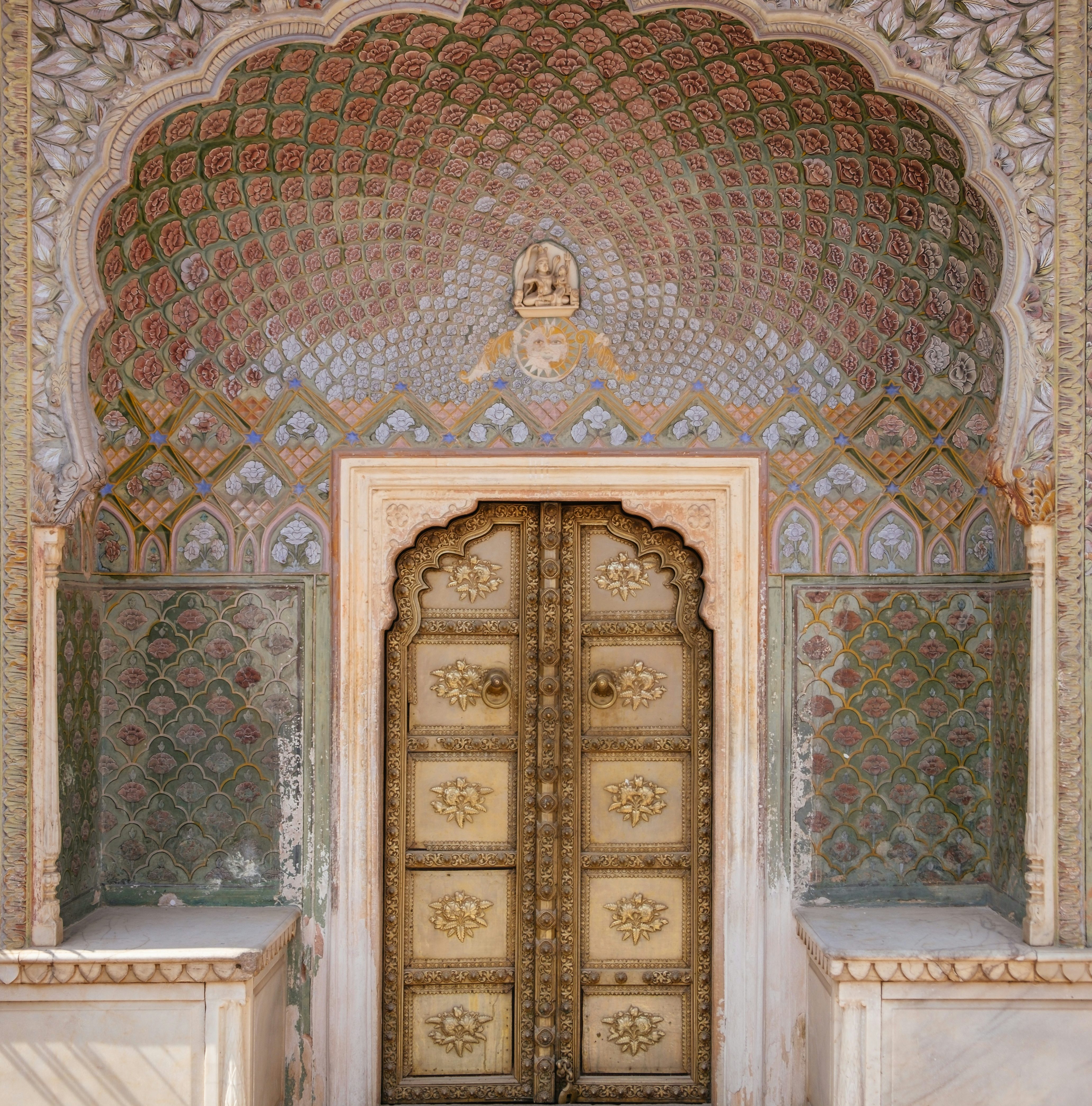
Photo by Johan Mouchet on Unsplash
Hashmi is best known for her project, Muslims Condemn. She is an Attorney based in the U.S. with a background in Molecular, Cellular, & Developmental Biology and Linguistics. Her interests include the Islamic sciences, specifically legal philosophy and Maliki fiqh, cognitive linguistics, and bioethics.
Leave a Reply