
While the 1930s are remembered in the European context as a decade of ideological upheaval—a period thoroughly mined by historians of fascism, communism, and the collapse of liberal order—far less attention has gone to how comparable currents reshaped political thought in colonial India, particularly among Muslims. Adeel Hussain’s Law and Muslim Political Thought in Late Colonial North India takes up this neglected decade, arguing that colonial legal debates—far from being a mere instrument of domination or governance—became a crucial site for the reconfiguration of Muslim political concepts. Where previous scholarship has examined how Muslim intellectuals negotiated cultural, political, and religious autonomy under colonial rule, or has focused on themes of colonial legal history, theological institutions, and Muslim nationalism, Hussain instead traces an intellectual genealogy linking law, sovereignty, religion, and community that has remained largely absent from existing accounts of colonial Indian Muslim politics. Reading landmark legal battles between religious communities between 1927 and the 1940s—and drawing on key thinkers including Sir Syed, Ameer Ali, Jinnah, and Muhammad Iqbal—Hussain shows that legal thought possessed a relative autonomy of its own, functioning as the medium through which Muslim political subjectivity, collective rights, and competing visions of political community were shaped, and through which the political fractures that culminated in Partition in 1947 were ultimately produced.
His book has six chapters, starting with the political positioning of Sir Syed against British Political and Legal Normativity. According to Hussain, modernity as the marker of the colonial era includes violence, coercion, people being pushed out of their own ways of life, “alienation”. That is the dark side of modernity, even though the people living in colonial reign evidenced all that damage, it did not destroy their hope that things could progress.
Applied to the same, Sir Syed specifically, different people imagined progress differently, of course the modernity introduced many positive values. On the other hand modernity can’t escape from the darker side of itself. Instead, experiencing the violence of modernity many indigenous thinkers did not abandon the idea of progress itself. Sir Syed was against colonial repressive rule but still cherished the progressive ideals of modernity.
The critique to the British rule and praise for the adjudication of new intuitions in India by Sir Syed, he appeared in the centre stage of the book. Hussain’s understanding reflects that Sir Syed challenged liberal principle on which British governance was legitimized; he challenged the state’s exclusive authority to determine legal validity. He demanded recognition of indigenous norms and effectively repositioned the debate from state discretion of indigenous norms effectively repositioned the debate from state discretion to questions of juridical legitimacy and recognition, exposing tensions within the colonial governance.
The position of Sir Syed Ahamd Khan was shaped by historical crossroads between the old world of Mughal’s Islamic order and the emerging British order. Hussain clearly made out that Sir Syed believed in human progress and material wellbeing is central to the logic of his idea of Muslim’s regeneration. Sir Syed viewed that colonial states rooted in liberal norms were not based on mere force or conquest. Hussain substantiated it through Sir Syed’s view that he not merely reduced the liberal norms — in Nietzsche’s words — as “foreign”, but order of law was based and embedded in constitutional logic. If it is aligned with the rationale of justice and governance, it could sustain a good moral and political order.
Hussain’s reading of Sir Syed as reconciling Islam with liberal legality underplays the tension and contradiction within Sir Syed’s own thought, particularly regarding colonial power asymmetries. While invoking global intellectual history is useful, the book does not operationalize this method in its empirical chapters. Initial chapters of the book covered the disenchantment of the post-Khilafat era across the globe in across the Islamicate which developed due to the end of outward looking political imagination through Khilafat as an institution. An aspiration was developed among Indian Muslim intellectuals and leaders to develop an evolving legal and constitutional framework within India. The focus shifted towards newly emerging legal order, negotiation framework and redefining Muslim political identity within a territorially bounded nation-state.
This shows a significant transition among Muslim intellectuals and their strategic domain to negotiate their demand through national legal and institutional channels rather than transnational religious solidarity. Legal controversies in regard to desecration (damage to sacred text, symbols and spaces) between the communities were not like events but uncovered how philosophically distinct their communities are constructed. Vulnerabilities and desecration of sacred sites exposed enmity and difference as new ideas between communities, the reach of this difference concluded in partition.
Hussain also explored partition debate deeply without simply retelling the history of it. Depiction of Ayesha Jalal’s work shows the power politics of elite negotiations and strategy; Faisal Dvejis’ work takes a spot in power of ideas and religious imagination; and Venkat Dhulipala’s work reflects the pre-existing Islamic vision of state, which convinced us that Muslims’ religious identity was contested and evolving, not fixed.
In doing so, the author uses these debates to highlight the different ways of understanding Muslim political thought. Citing the multiplicity of partitions never shows that partitions can’t be logically defined only through a single framework. Partition debates reflect that Muslim political thought and the idea of Pakistan emerged from a complex interaction of elite strategy, religious imagination, and historical conditions, thereby challenging any single, linear explanation of Muslim modernity. While Hussain engages these scholars selectively, he does so without fully addressing the methodological tensions between their approaches.
Chapter two entitled “In Search of Lost Vulnerabilities” deals with the spectacular event of Rangila Rasul Pamphlet 1924, published by Mahashe Rajpal, which portrayed a provocative character of the Prophet in Islam. This issue outraged and angered Indian Muslims resulting in violence but generated a judicial and legislative process in colonial India. The author argues this event marked the Prophet as a vulnerable figure, whose honour required active legal and political defense by believers. Thus, protecting the Prophet’s honor became a collective political project. The colonial legal order failed to provide adequate protection to Muslims religious sentiments which intensified the demand for new legal safeguards among Muslims of India, culminating in section 295A of the Indian Penal Code in 1927 which criminalized deliberate and malicious acts intended to outrage religious feelings This event defined Muslim identity where sacred honour was translated into legal argument.
Rangila Rasul controversy not only broadened the terrain of blasphemy but also tied to the question of public order, territorial presence and representation in colonial state. This controversy linked the sacred space with political claims within the colonial legal order. Now the religious injury was transformed into a constitutional and territorial question. This perfectly demonstrated how vulnerability, sacredness and legal contestation converge to produce new forms of political subjectivity well before partition, and yet deeply formative for later developments. Hussain’s overemphasis on legal transformation overlooks how popular mobilization and street politics shaped the trajectory of the controversy, which was clearly a marker in this controversy.
Chapter three deals with the conflict of Shahidganj Mosque, highlighting how Sikh and Muslim communities contested the sites of demolition and its transformation from a mosque to a gurudwara following Maharaja Ranjit Singh’s conquest. Hussain argued that this issue brought legal and political representation on the forefront, while competing interests or understanding of time ranging from evolutionary and religious vision to moments of political rupture shaped the claim of ownership and identity. Moving beyond the conventional path of spatial and legal interpretation, Hussain innovatively analyses the conflict through the lens of temporality, arguing that sacred sites acquire shifting meanings across different historical regimes (Mughal, Colonial and Nationalist). Drawing on Ludwig Wittgenstein’s idea of “family resemblance,” he indicates that these temporal frameworks do not fully overlap but share partial connections, making claims to the site inherently contested and unstable. While examining the dispute in its historical context, Hussain argues that law, politics, and competing ideas of temporality worked together, influencing later territorial demands for Pakistan as a Muslim homeland. While Adeel’s focusing on temporality is conceptually innovative, risking over-theorizing the conflict and underplaying its material and political dimensions, especially the role of power, community mobilization, and colonial governance in shaping the consequences.
Chapter four focuses on the period of the 1930s, a somewhat neglected decade in the history of partition. Hussain argues that Muhammad Ali Jinnah’s political ideas took shape during the intense debates of the 1930s. In exchange with Pt. Jawahar Lal Nehru, Jinnah clearly emphasized the importance of the Muslim question, criticizing the Congress for downplaying Muslim concerns while viewing Indian society mainly through the economic lens.
In the beginning, Jinnah’s political ideas did not produce a space to accommodate indigenous community differences based on the basis of religious distinctions. Subsequently, Jinnah had disagreement on two bases; (a) the nature of political configuration (Hobbesian state of nature) where he assumes that Hindu-Muslim issue could not be resolved through legal lens or legal structure produced by colonial power, rather by looking beyond this limited framework (b) the downplaying of Muslims question in the Congress domain.
Adeel Hussain argues that during the 1930s, Jinnah’s legal thinking focused on the limits of compromise within existing national and constitutional frameworks. He believed that law itself had become a source of systematic violence against Muslims, and that merely negotiating within the legal system could not resolve this problem. Hussian argued that. Jinnah became disillusioned with the legal framework, but he does not fully examine how economic factors and electoral politics also shaped Jinnah’s view.
Chapter five reflects on Allama Muhamamd Iqbal’s political and philosophical perception on defining Muslim identity and Muslim Nationhood. Hussain argues that Ahmadiyya’s issue prompted Iqbal’s philosophical, political and spiritual vision of republicanism, transnationalism and solidarity in his thought. The author argues that Iqbal centrally critiqued the idea of European nationalism because it weakens universal moral or religious principles:
“The particularities of European nationalism, with their differences centred on language, ethnicity, and culture, for Iqbal, made lasting stability in a non- imperial transnational context impossible (p.162).”
Despite his critique of European nationalism, Hussain argues that Iqbal had a vision of a separate polity, and he sought to reconcile spiritual universalism with the political necessity of collective self-determination. In response to Ahmadiyya’s theological claim that Mustafa Ghulam Ahmad Qadiyani is a Prophet, Iqbal firmly emphasised that finality of prophethood is essential to Muslim Identity. He kept Ahmadiyya’s outside the fold of Islam and clearly constructed it in political and legal context.
Iqbal’s focus on religious conflict is apparent in his intervention in Ilmuddin Gazi’s funeral arrangements, heading the commission for reconciliation in the Shahidganj dispute, and the aforementioned Rangila Rasul pamphlet controversy. More broadly it was a question of Muslim identity, law and power where he was keen enough to understand the tension of Universal spiritualism and political boundaries. Moreover, he thought about the possibilities and limits of establishing Muslim solidarity.
Through these incidents and instances of Iqbal on these events, Hussain highlights how Iqbal’s philosophical, legal, and political thought ultimately manifested itself in a single issue. Iqbal was actively redefining the Muslim’s legal and political identity under colonial conditions and for him, law became a tool to define the limit of boundaries of community. While authors read Iqbal primarily through legal and political lens, in this work, a mere reduction of Iqbal’s broader vision of philosophical and metaphysical thought.
While at the end, Hussain’s arguments across Law and Muslim Political Thought in Late Colonial North India are persuasive and strong, an overemphasis on legal discourse is clearly visible at the cost of socio-economic factors. The author’s methodology of focusing on the elite class’s textual reliability obscure the mass view of politics which exactly leads to underrepresentation of subaltern and regional perspectives. The chapters feel episodic rather than cumulative, overemphasising on case studies without synthesis. Hussain strongly tried to convince the reader through the demonstration of how legal discourse transformed religious injury into political bargaining; his examination is limited to elite reasoning and does not adequately account how these ideas were received or contested at the popular level or mass level. Hussain’s consideration of the colonial state, though critical, could benefit from deeper engagement with its structural contradictions. His analysis reflected the state’s failure to protect minority interest, yet stop short of interrogating how colonial governance itself may have actively produced the conditions for such conflicts through classificatory and legal interventions. In sum, the author needed to engage with social and cultural dimensions, which would have further strengthened its contribution to understanding the making of Muslim Political identity in late colonial north India.
Disclaimer: Material published by Traversing Tradition is meant to foster scholarly inquiry and rich discussion. The views, opinions, beliefs, or strategies represented in published articles and subsequent comments do not necessarily represent the views of Traversing Tradition or any employee thereof.
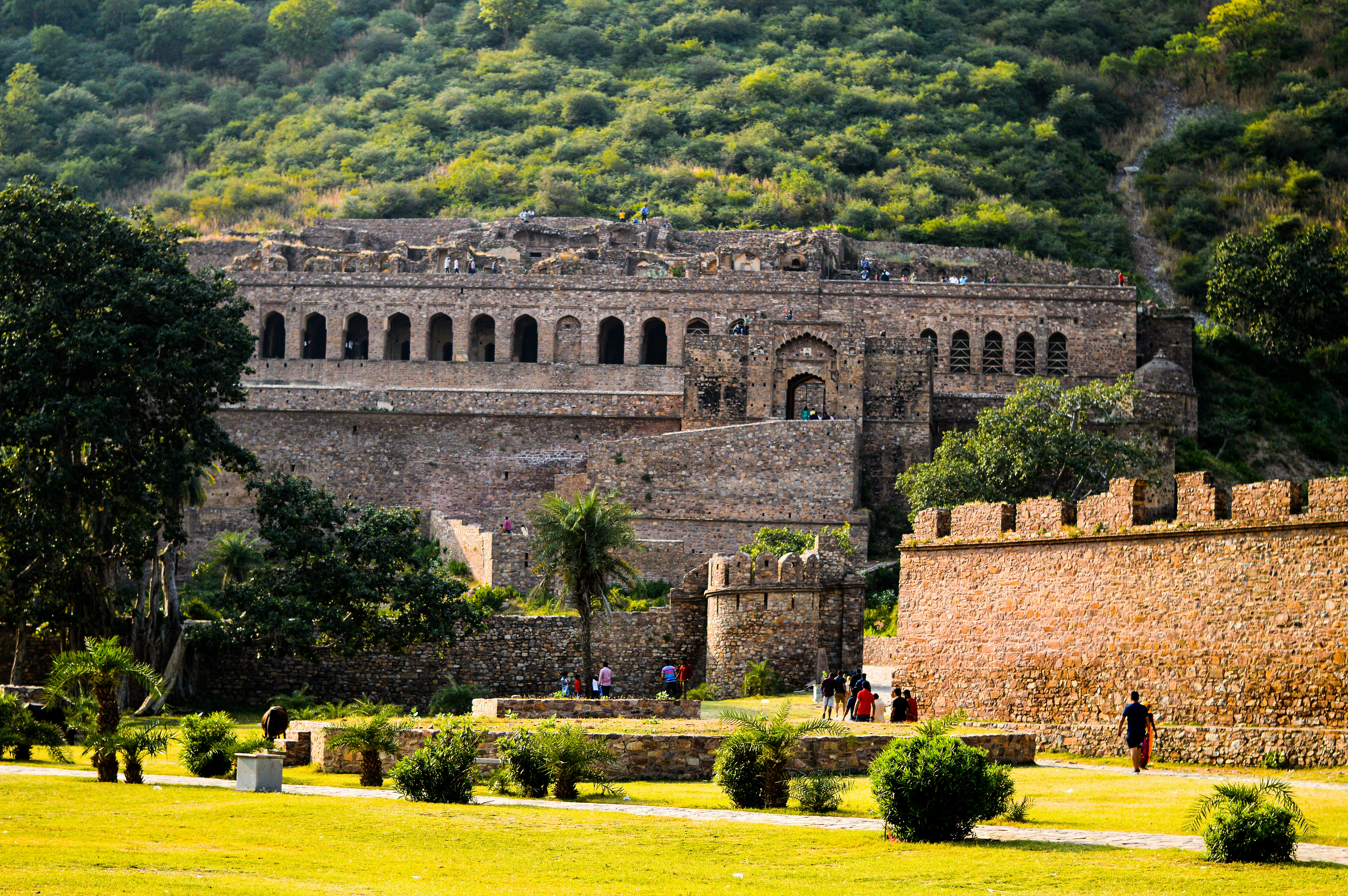
Photo by Deepak Kosta on Unsplash
Mohammad Saif
Mohammad Saif is a Ph.D. candidate at the Department of Political Science at Aligarh Muslim University, focusing on Political Thought/Theory, Religion in Politics, Minority Politics and the Muslim Question in India. His research contributions include publications in esteemed journals and conferences (including at Kings India Institute, London,UK, University of Istanbul, National University of Singapore and University of Melbourne, Australia), where he has presented papers on various topics. In addition to his academic pursuits, Saif has engaged in workshops on research methodology and has contributed articles to online platforms like Awaam India and Two Circle.net. His scholarly interests revolve around understanding the complexities of political systems, societal dynamics, and the role of religion in shaping governance structures.
Leave a Reply